
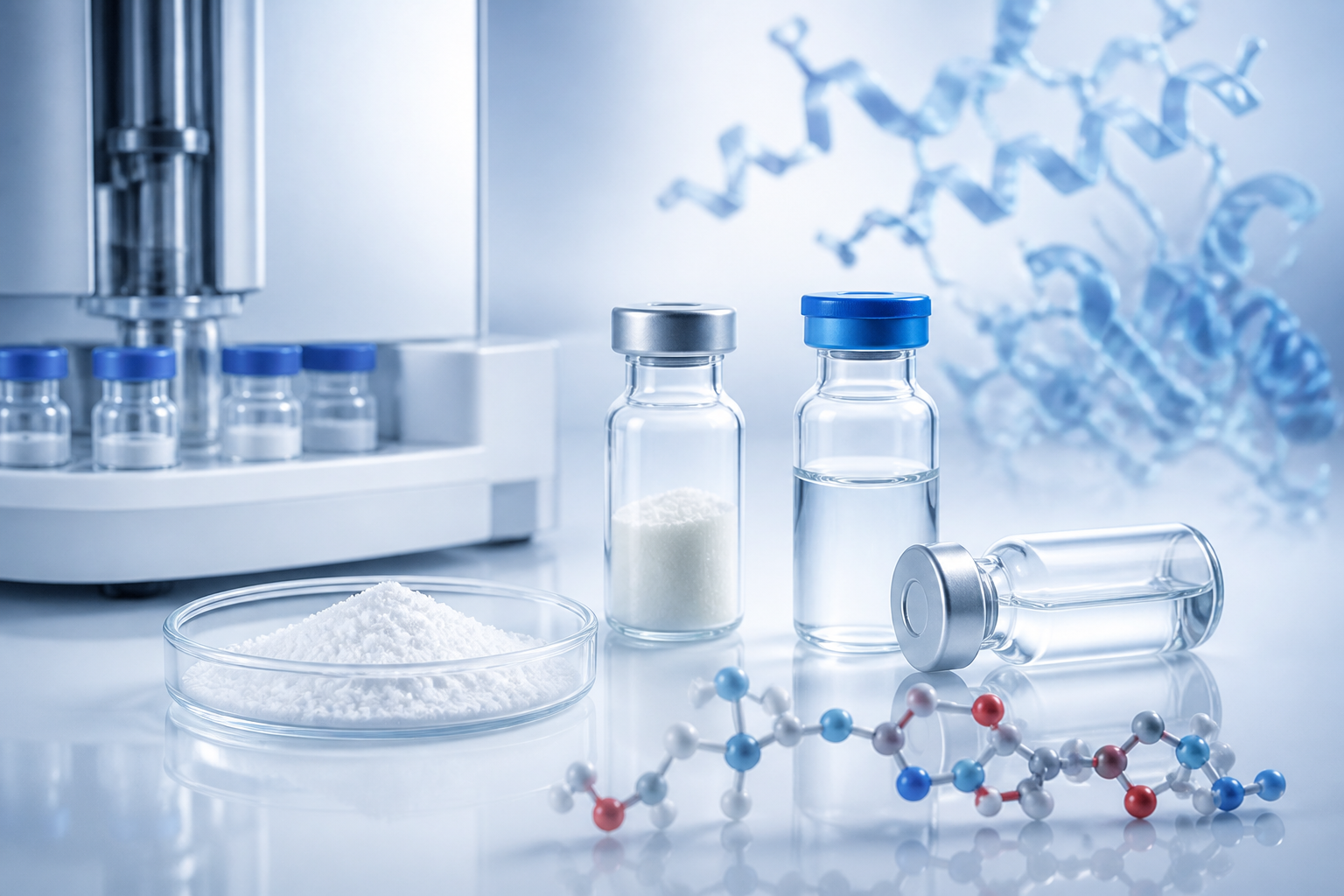
Peptide quality control standards are central to the reliable use of synthetic peptides in research, diagnostics, drug discovery, and manufacturing. Because peptides can vary in sequence length, chemical modification, hydrophobicity, charge state, and susceptibility to degradation, a single quality metric is rarely sufficient. Robust quality control requires a defined set of analytical tests, acceptance criteria, documentation practices, and storage controls that are appropriate for the intended application.
For laboratory researchers and scientific purchasers, understanding peptide QC standards helps in comparing suppliers, interpreting certificates of analysis, and selecting specifications that are fit for purpose. A peptide used as an immunogen, for example, may not require the same analytical depth as a peptide intended for quantitative bioassays, cell signaling studies, or regulated method development. The goal is not only to confirm that a peptide was synthesized, but also to verify identity, estimate purity, characterize relevant impurities, and document handling conditions that may affect performance.
What Peptide Quality Control Standards Are Intended to Address
Peptide synthesis, whether performed by solid-phase peptide synthesis or solution-phase methods, can generate a range of related substances. These may include deletion sequences, truncated products, incomplete deprotection products, oxidation products, diastereomers, hydrolysis products, residual protecting groups, counterions, salts, and solvents. Quality control standards define how these attributes are measured and reported.
At a practical level, peptide QC standards answer several questions: Is the peptide the expected sequence and molecular mass? What is the chromatographic purity? Are major impurities visible and controlled? How much peptide material is present relative to salts, water, and counterions? Has the product been handled and stored under conditions consistent with its stability? The answers determine whether the material is suitable for downstream experiments or development work.
Core Quality Attributes for Synthetic Peptides
Identity
Identity testing confirms that the supplied peptide corresponds to the intended amino acid sequence and modification pattern. Mass spectrometry is the primary method for identity confirmation because it can verify the molecular mass of the peptide and, in some cases, provide sequence-related information through fragmentation analysis.
For routine custom peptides, identity is commonly assessed by electrospray ionization mass spectrometry or matrix-assisted laser desorption/ionization time-of-flight mass spectrometry. For complex peptides, heavily modified sequences, cyclic peptides, stapled peptides, or peptides containing non-natural amino acids, higher-resolution methods or tandem mass spectrometry may be appropriate.
Purity
Purity is usually reported as chromatographic purity, most often by reversed-phase high-performance liquid chromatography. This value represents the relative area of the main peak compared with detected peaks under a defined analytical method. It is important to note that chromatographic purity is not identical to absolute peptide content. A peptide may show high HPLC purity while still containing water, salts, counterions, or residual solvents that reduce net peptide content by weight.
Common peptide purity grades include crude, desalted, above 70%, above 80%, above 90%, above 95%, and above 98%, although exact categories vary by supplier. Selection should be based on the application. Screening assays may tolerate moderate purity, while quantitative biological assays, structure-activity studies, and reference materials generally require higher purity and more extensive documentation.
Peptide Content and Net Peptide Quantity
Net peptide content refers to the amount of actual peptide in the supplied material, excluding water, salts, and other non-peptide components. This distinction is especially important for quantitative studies where molar concentration affects interpretation. Peptide content may be determined by amino acid analysis, elemental analysis, quantitative nuclear magnetic resonance, UV absorbance when applicable, or other validated approaches.
For peptides supplied as acetate, trifluoroacetate, hydrochloride, or other salts, counterions can contribute significantly to the measured mass. Hygroscopic peptides may also absorb water during handling. When precise dosing is required, researchers should consider net peptide content rather than relying only on gross powder weight.
Impurity Profile
Impurity characterization is a key part of peptide quality control, particularly for peptides used in sensitive assays or regulated development. Related peptide impurities can arise from incomplete coupling, amino acid deletion, racemization, oxidation of methionine or tryptophan, aspartimide formation, deamidation, disulfide scrambling, or side-chain protecting group remnants.
Not every impurity requires full structural identification in early research use, but major impurities should be assessed when they may affect biological activity, analytical specificity, or safety evaluations. In regulated environments, impurity thresholds, identification, qualification, and control strategies may need to follow applicable pharmacopeial or ICH expectations.
Physical Form, Appearance, and Solubility
Peptides are often supplied as lyophilized powders, but their physical appearance can vary from white to off-white, fluffy to compact, or film-like depending on sequence, salts, and lyophilization conditions. Appearance alone is not a sufficient quality measure, but unusual discoloration or aggregation may warrant additional investigation.
Solubility should be considered during specification review. Hydrophobic peptides, highly basic peptides, and peptides with extensive modifications may require specific dissolution strategies. Quality documentation may include recommended solvents or reconstitution guidance, although researchers should verify compatibility with the intended assay system.
Analytical Methods Used in Peptide Quality Control
Reversed-Phase HPLC and UHPLC
Reversed-phase HPLC is the most widely used method for peptide purity assessment. It separates peptide components based on hydrophobic interactions with the stationary phase, commonly using water-acetonitrile gradients with acidic modifiers. The chromatogram provides a relative purity estimate and can reveal closely related impurities under the selected conditions.
Method parameters matter. Column chemistry, gradient slope, temperature, detection wavelength, and mobile phase additives can all influence separation and peak integration. For critical applications, a single generic HPLC method may be insufficient. Orthogonal chromatographic methods, such as ion-exchange or hydrophilic interaction chromatography, can provide additional resolution for certain peptides.
Mass Spectrometry
Mass spectrometry supports identity confirmation and impurity assessment. The observed molecular ion should match the theoretical mass within an appropriate tolerance for the instrument and method. For modified peptides, mass spectrometry can help confirm expected modifications such as phosphorylation, acetylation, amidation, biotinylation, fluorescent labeling, lipidation, or disulfide formation.
When impurities are detected by HPLC, LC-MS can be used to associate chromatographic peaks with molecular masses. This is especially useful for identifying deletion sequences, oxidation products, or adducts. However, ionization efficiency can vary among components, so MS signal intensity should not always be interpreted as a direct measure of abundance.
Amino Acid Analysis
Amino acid analysis can estimate peptide content and confirm amino acid composition after hydrolysis. It is particularly useful when accurate concentration is important and the peptide lacks a reliable chromophore for UV-based quantification. Limitations include incomplete recovery of some residues and the potential degradation of labile amino acids during hydrolysis.
Water, Residual Solvents, and Counterion Testing
Water content may be measured by Karl Fischer titration, particularly for hygroscopic materials or quantitative reference applications. Residual solvents can be assessed by gas chromatography when required. Counterion analysis may be relevant for peptides purified with trifluoroacetic acid or converted to acetate or hydrochloride salts. These tests help define the true composition of the supplied material and support accurate molar calculations.
Setting Fit-for-Purpose Peptide Specifications
Peptide QC standards should be aligned with intended use. A general research peptide used for antibody production may have different requirements than a peptide used as an analytical standard or a candidate therapeutic intermediate. Over-specification can increase cost and lead time without improving the scientific outcome, while under-specification can compromise reproducibility.
For exploratory in vitro studies, identity confirmation by mass spectrometry and HPLC purity may be adequate. For quantitative assays, additional peptide content determination and high-purity specifications may be necessary. For cell-based studies, endotoxin testing may be considered, particularly for immune-related assays. For peptides intended for regulated use, additional requirements may include validated methods, impurity qualification, stability data, microbial limits, bioburden, sterility, or GMP manufacturing controls.
Documentation and Certificates of Analysis
A certificate of analysis is the primary document used to communicate peptide quality. A complete CoA typically includes peptide name or sequence, molecular formula or molecular weight, lot number, synthesis scale or batch reference, purity result, analytical method references, mass spectrometry result, appearance, storage recommendation, and date of release. For higher-control materials, it may also include peptide content, water content, counterion data, endotoxin result, residual solvent data, and stability or retest information.
Scientific purchasers should review whether reported results are method-specific and lot-specific. Generic statements without batch data provide limited assurance. Chromatograms and mass spectra are valuable supporting documents because they allow users to assess peak shape, integration, observed mass, and the presence of secondary peaks. For regulated or quality-managed laboratories, documentation traceability is often as important as the numerical purity value.
Stability, Storage, and Handling Controls
Peptide quality can change after release if storage and handling are not controlled. Many peptides are best stored as dry lyophilized material at low temperature, protected from moisture and repeated freeze-thaw cycles. Once reconstituted, stability depends on sequence, pH, solvent, concentration, temperature, and exposure to oxygen or light.
Sequences containing methionine, cysteine, tryptophan, asparagine, glutamine, or aspartic acid may be more susceptible to oxidation, disulfide exchange, deamidation, or isomerization under certain conditions. Aliquoting stock solutions, using appropriate buffers, minimizing time at room temperature, and documenting reconstitution conditions can reduce variability. When long-term use is planned, laboratories should consider in-house stability checks under their actual storage conditions.
Regulatory and Pharmacopeial Considerations
For peptides used only in early research, supplier quality systems and analytical documentation may be sufficient. For clinical, diagnostic, or manufacturing applications, additional standards may apply. Relevant frameworks can include ICH quality guidelines, pharmacopeial chapters, GMP expectations, ISO-based quality systems, and application-specific regulatory requirements.
Regulated peptide programs generally require controlled raw materials, qualified analytical methods, batch records, change control, deviation management, stability protocols, and defined impurity control strategies. Even when a peptide is not yet manufactured under GMP, early alignment of analytical methods and specifications can reduce later redevelopment work.
Best Practices for Selecting and Reviewing Peptide QC Standards
Before ordering a peptide, laboratories should define the intended use, required purity, quantity basis, modification requirements, salt form, solubility needs, and documentation expectations. For complex or critical peptides, it is advisable to discuss analytical feasibility before synthesis begins. Some sequences are difficult to synthesize or purify, and realistic QC expectations should be established early.
When reviewing a delivered peptide, confirm that the CoA matches the ordered sequence, modifications, termini, and salt form. Review HPLC purity and mass spectrometry results together, not in isolation. If quantitative work is planned, verify whether the weighed material represents gross mass or net peptide content. If results are unexpected in downstream assays, consider whether impurities, concentration error, degradation, aggregation, or solvent compatibility may be contributing factors.
Conclusion
Peptide quality control standards provide the analytical basis for confidence in peptide identity, purity, composition, and suitability for use. The most appropriate QC package depends on the scientific or regulatory context, the complexity of the peptide, and the sensitivity of the application. By evaluating identity testing, chromatographic purity, peptide content, impurity profile, documentation, and stability controls, researchers and institutions can make better-informed purchasing decisions and improve experimental reproducibility.