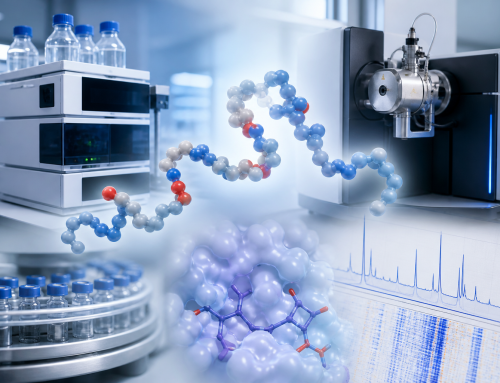
Peptides are widely used in biochemical research, assay development, structural biology, analytical method development, and preclinical discovery workflows. Their stability, however, can vary substantially depending on sequence, purity, counterion, residual moisture, formulation, concentration, container system, and storage environment. Long-term peptide storage therefore requires more than placing a vial in a freezer; it involves controlling the physical and chemical conditions that can promote degradation over time.
This article summarizes practical considerations for storing research peptides over extended periods. Specific storage recommendations should always be confirmed against the certificate of analysis, product data sheet, and internal laboratory quality procedures, because peptide behavior is sequence-dependent.
Why Long-Term Peptide Storage Requires Careful Planning
Peptides occupy a middle ground between small molecules and proteins. They are often more structurally simple than proteins, but they contain reactive functional groups that may undergo oxidation, hydrolysis, deamidation, aggregation, or adsorption. Some peptides remain stable for years as dry powders under appropriate conditions, while others show measurable degradation after relatively short exposure to moisture, oxygen, repeated freeze-thaw cycles, or unsuitable pH.
Long-term storage planning is especially important when peptides are purchased or synthesized in larger quantities, used as analytical standards, incorporated into longitudinal studies, or shared across multiple laboratories. In these settings, degradation can affect quantitative results, assay reproducibility, and comparability between experimental runs.
Key Degradation Pathways Affecting Stored Peptides
Hydrolysis and Moisture-Driven Degradation
Water can promote hydrolysis of peptide bonds or labile side-chain modifications. Although most peptide bonds are relatively stable under neutral, dry conditions, specific sequences and modifications can be more sensitive. Moisture may also increase molecular mobility in lyophilized material, accelerating other degradation reactions. For this reason, dry storage with effective moisture control is a central requirement for many long-term peptide inventories.
Oxidation
Peptides containing methionine, cysteine, tryptophan, tyrosine, or histidine may be susceptible to oxidation. Oxidation can be promoted by oxygen, light, trace metals, peroxides in solvents, and elevated temperature. For cysteine-containing peptides, disulfide bond formation or scrambling may occur if redox conditions are not controlled. Oxidative changes can alter mass, binding activity, solubility, and chromatographic behavior.
Deamidation and Isomerization
Asparagine and glutamine residues can undergo deamidation, particularly under conditions that allow molecular mobility or at certain pH ranges. Aspartic acid residues may undergo isomerization. These modifications can be difficult to detect without suitable analytical methods because the mass change may be small or, in some cases, absent. For peptides used as quantitative or functional standards, even minor modifications may be relevant.
Aggregation, Adsorption, and Precipitation
Hydrophobic peptides, amphipathic peptides, and peptides with strong self-association tendencies can aggregate in solution. Others may adsorb to glass or plastic surfaces, especially at low concentrations. Aggregation and adsorption reduce the effective concentration available for an experiment and can introduce variability. These risks are typically greater after reconstitution than in the dry state.
Storage Format: Lyophilized Powder Versus Reconstituted Solution
Lyophilized Peptides
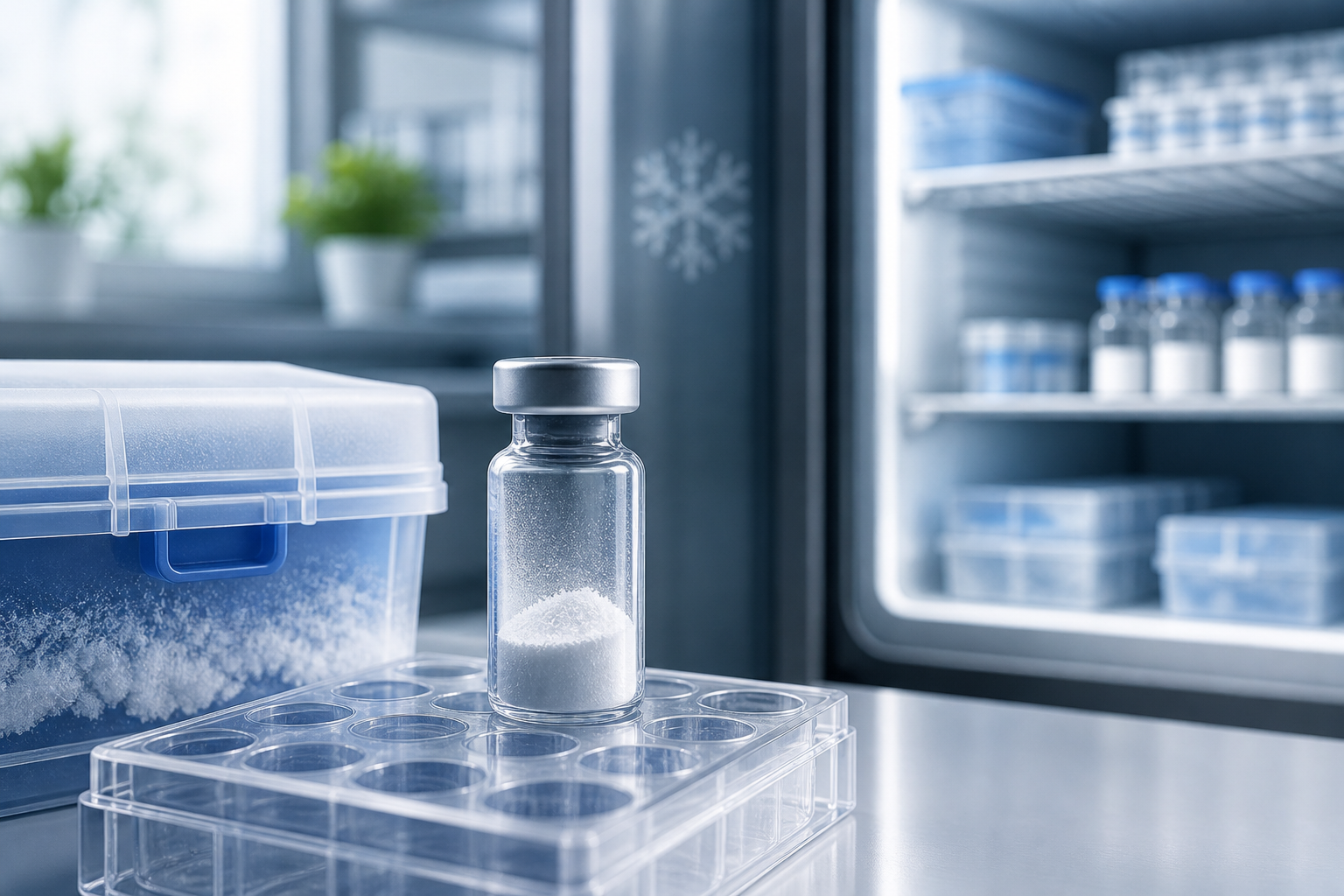
For most research peptides, the lyophilized form is preferred for long-term storage. Removal of bulk water reduces hydrolytic reactions and often improves physical stability. Lyophilized peptides should generally be stored tightly sealed, protected from moisture, and kept at low temperature. Many laboratories store unopened peptide vials at -20°C or below, while particularly sensitive materials may be stored at -80°C depending on supplier guidance and institutional practice.
Lyophilized material should be allowed to equilibrate to room temperature before opening. Opening a cold vial can cause atmospheric moisture to condense on the peptide, introducing water that may compromise stability. This is a common but avoidable source of degradation, especially in humid environments.
Reconstituted Peptides
Peptides are usually less stable once dissolved. In solution, reactions such as oxidation, deamidation, hydrolysis, and aggregation occur more readily. If a peptide must be stored in solution, laboratories should use aliquots sized for single use or minimal reuse. Storage at -20°C or -80°C is common, but the optimal temperature depends on peptide properties, solvent composition, and intended use.
Short-term refrigerated storage may be suitable for some working solutions, but it is not a universal strategy for long-term storage. The stability of a peptide solution should be supported by supplier data, published evidence, or internal stability assessment when the peptide is critical to an assay.
Temperature Considerations
Room Temperature
Room temperature storage is generally unsuitable for long-term peptide storage unless the peptide has been specifically validated for such conditions. Brief handling at room temperature is usually unavoidable and may be acceptable for many lyophilized peptides, but prolonged exposure can increase degradation risk, particularly in the presence of moisture and light.
Refrigerated Storage
Refrigeration at 2-8°C may be appropriate for short-term storage of some peptides, particularly dry materials that are used frequently. However, refrigerated storage can still expose peptides to humidity if vials are not tightly sealed or are repeatedly opened. Condensation risk should be managed by allowing vials to reach room temperature before opening.
Freezer Storage
Freezer storage is widely used for peptide inventories. Lyophilized peptides are commonly stored at -20°C for extended periods, while -80°C may be selected for sensitive sequences, valuable reference materials, or peptides requiring long retention times. For reconstituted peptides, lower temperatures may slow degradation, but they do not eliminate it. Freezer performance, temperature monitoring, and backup systems are important for critical materials.
Freeze-Thaw Management
Repeated freeze-thaw cycles can accelerate aggregation, precipitation, oxidation, and concentration changes due to evaporation or adsorption. The most effective control is aliquoting. After reconstitution, divide peptide solutions into small volumes appropriate for planned experiments. Avoid repeatedly thawing a master stock. If a peptide is especially sensitive, consider single-use aliquots and document each thaw event.
Moisture, Oxygen, and Light Control
Moisture Protection
Moisture control is one of the most important factors for dry peptide stability. Store lyophilized peptides in tightly sealed vials. Secondary containment, such as sealed bags or desiccator containers, may be useful for long-term storage. Desiccants should be appropriate for the storage environment and replaced or regenerated according to laboratory procedures.
When removing peptides from cold storage, keep containers closed until they have warmed to room temperature. This step reduces condensation. Laboratories in high-humidity regions may need additional controls, such as low-humidity handling areas or rapid weighing procedures.
Oxygen Exposure
For oxidation-sensitive peptides, minimizing oxygen exposure can improve stability. Options may include storage under inert gas, minimizing vial headspace, using oxygen-impermeable containers, and avoiding unnecessary opening. These practices are most relevant for peptides containing methionine, cysteine, or tryptophan, as well as peptides with oxidation-sensitive modifications.
Light Protection
Some amino acids and peptide modifications are light-sensitive. Fluorescently labeled peptides, photoactive groups, and certain residues may degrade or isomerize under prolonged light exposure. Amber vials, foil wrapping, light-protective boxes, and limited bench exposure can reduce photodegradation risk. Light protection is particularly important for analytical standards and labeled probes.
Container and Closure Selection
The storage container can influence peptide stability and recovery. Glass vials are widely used for lyophilized materials and may be suitable for many peptide powders. However, adsorption can occur with both glass and plastic surfaces, depending on peptide charge, hydrophobicity, and concentration. Low-binding polypropylene tubes are often used for peptide solutions, particularly at low concentrations.
Closures should provide an effective moisture barrier and maintain seal integrity during frozen storage. For long-term inventories, avoid containers that are prone to cracking, cap loosening, or solvent incompatibility. Label durability is also important; labels must remain legible after exposure to low temperatures, frost, solvents, and handling.
Reconstitution Strategy for Long-Term Use
Selecting a Solvent
The best solvent depends on peptide sequence and intended application. Sterile water, buffered aqueous solutions, dilute acid, dilute base, dimethyl sulfoxide, acetonitrile, or mixtures of aqueous and organic solvents may be used in different contexts. Hydrophobic peptides may require organic solvent or a stepwise dissolution procedure. Peptides with acidic or basic residues may dissolve better when pH is adjusted carefully.
Solvent choice can affect stability. For example, some buffers may accelerate deamidation or oxidation, while some organic solvents may contain peroxides or be unsuitable for downstream biological assays. Use high-quality solvents and avoid repeated exposure to contaminants. If the peptide is used in cell-based or enzymatic assays, confirm solvent compatibility with the assay system.
Concentration and Aliquot Size
Higher-concentration stocks may reduce adsorption-related losses, but they may also increase aggregation risk for some peptides. Low-concentration working solutions can be convenient but are often less stable and more prone to surface loss. A practical approach is to prepare a concentrated stock, aliquot it into single-use volumes, and dilute freshly into assay buffer as needed.
pH and Buffer Effects
Peptide stability in solution is often pH-dependent. Extreme pH can cause hydrolysis or side-chain modification, while neutral to mildly acidic conditions may be preferable for some sequences. However, there is no universal pH optimum. Buffers should be selected based on peptide chemistry, assay requirements, and available stability information.
Special Considerations for Modified and Complex Peptides
Cysteine-Containing and Disulfide Peptides
Peptides containing free cysteine may form disulfides during storage or handling. Conversely, peptides with defined disulfide bonds may undergo reduction or scrambling under inappropriate conditions. These peptides may require controlled redox conditions, minimized oxygen exposure, and careful analytical monitoring.
Phosphorylated, Glycosylated, and Labeled Peptides
Post-translationally modified peptides and labeled peptides may have additional stability concerns. Phosphorylated peptides can be sensitive to phosphatases if biological contamination occurs, while fluorescent labels may be light-sensitive. Biotinylated, lipidated, PEGylated, or otherwise conjugated peptides may show different solubility and adsorption behavior compared with unmodified analogs.
Hydrophobic and Aggregation-Prone Peptides
Hydrophobic peptides may be difficult to dissolve and may precipitate after freezing or dilution. For these materials, storage in carefully selected solvent systems and avoiding unnecessary dilution may be important. Visual inspection alone is not sufficient to confirm complete solubility, because subvisible aggregates may still be present.
Documentation and Inventory Control
Long-term peptide storage should be supported by clear documentation. At minimum, records should include peptide name or sequence, batch or lot number, purity, counterion or salt form if known, date received, date opened, storage location, reconstitution solvent, stock concentration, aliquot volume, and freeze-thaw history. For regulated or quality-controlled environments, chain of custody and controlled access may also be required.
Inventory systems should help prevent unnecessary vial opening and prolonged storage beyond validated periods. Where possible, maintain unopened reserve vials separately from working materials. This separation reduces contamination risk and preserves material for repeat analyses or troubleshooting.
Monitoring Peptide Integrity Over Time
For critical applications, storage conditions should be supported by periodic integrity checks. Analytical methods may include HPLC or UPLC purity assessment, LC-MS mass confirmation, UV or fluorescence measurements for labeled peptides, amino acid analysis, or functional assay comparison against a reference lot. The appropriate method depends on the peptide and the intended use.
Stability testing does not need to be overly complex for every peptide, but laboratories should apply greater scrutiny to reference standards, peptides used in longitudinal studies, and materials with known instability. If a peptide shows unexpected assay drift, reduced solubility, new chromatographic peaks, or mass changes, storage-related degradation should be considered as a possible cause.
Practical Long-Term Storage Workflow
A controlled workflow can reduce variability and preserve peptide quality:
- Review supplier storage recommendations and the certificate of analysis upon receipt.
- Store lyophilized peptide at the recommended temperature, commonly -20°C or lower for long-term use.
- Protect dry peptide from moisture by keeping vials sealed and using secondary containment when appropriate.
- Allow frozen vials to equilibrate to room temperature before opening.
- Reconstitute using a solvent compatible with peptide chemistry and downstream application.
- Prepare concentrated stocks when feasible and aliquot into single-use or limited-use volumes.
- Protect sensitive peptides from oxygen and light as needed.
- Maintain complete records of reconstitution, aliquoting, storage location, and freeze-thaw events.
- Periodically assess integrity for critical peptides or long-duration studies.
Common Storage Errors to Avoid
Several routine handling practices can reduce peptide stability. Opening a cold vial immediately after removal from the freezer can introduce condensation. Repeatedly thawing a master stock can increase degradation and variability. Storing dilute peptide solutions for extended periods can lead to adsorption or loss of activity. Using an unsuitable solvent may cause incomplete dissolution or chemical instability. Finally, relying only on visual appearance can be misleading, because chemical degradation may occur without visible change.
Many of these risks can be reduced through simple procedural controls: aliquot early, minimize exposure, label clearly, document handling, and avoid assumptions about stability across different peptide sequences.
Conclusion
Long-term peptide storage depends on controlling temperature, moisture, oxygen, light, solvent conditions, and handling frequency. Lyophilized peptides are generally more suitable for extended storage than reconstituted solutions, but sequence-specific properties and modifications can alter stability requirements. A combination of appropriate storage conditions, careful reconstitution, aliquoting, documentation, and periodic integrity checks helps maintain peptide quality and supports reproducible laboratory results.