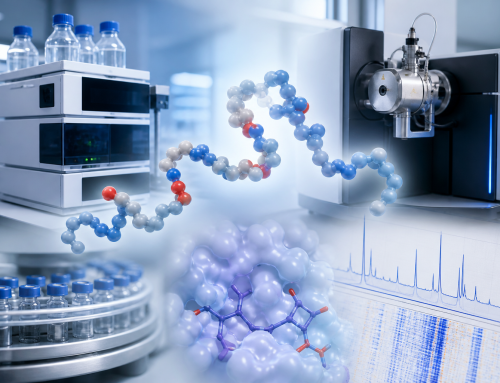

Quality control laboratory testing is a core element of modern manufacturing, product development, and regulatory compliance. Across sectors such as pharmaceuticals, biotechnology, food and beverage, medical devices, cosmetics, chemicals, and materials science, laboratory testing provides objective evidence that products, raw materials, processes, and environments meet defined specifications.
Effective quality control is not limited to running analytical tests. It includes sampling strategy, method selection, method validation or verification, instrument qualification, data review, documentation, and investigation of unexpected results. When properly designed and controlled, a quality control laboratory helps organizations reduce variability, identify defects, support batch release decisions, and maintain confidence in product quality.
What Is Quality Control Laboratory Testing?
Quality control laboratory testing refers to the planned and documented analysis of samples to determine whether they conform to established quality requirements. These requirements may be internal specifications, customer requirements, compendial standards, regulatory limits, or industry norms.
Testing may be performed on incoming raw materials, in-process samples, finished products, stability samples, environmental monitoring samples, packaging materials, cleaning verification samples, or complaint-related samples. The results are used to support decisions such as acceptance or rejection of materials, process adjustment, product release, shelf-life assignment, and corrective action.
Quality Control vs. Quality Assurance
Quality control and quality assurance are closely related but distinct functions. Quality control is typically focused on inspection, measurement, and testing of materials or products. Quality assurance is broader and includes the systems, procedures, audits, training, and documentation used to ensure that quality requirements are consistently met.
In practice, the QC laboratory generates analytical evidence, while the QA function often oversees compliance, approves procedures, reviews deviations, and ensures that the quality management system operates effectively.
Common Types of Quality Control Laboratory Testing
The specific tests used in a QC laboratory depend on the product type, regulatory environment, and intended use. However, several categories are widely applied across industries.
Chemical and Analytical Testing
Chemical testing evaluates the composition, purity, potency, identity, or contamination profile of a sample. Common techniques include high-performance liquid chromatography, gas chromatography, ion chromatography, titration, UV-visible spectroscopy, infrared spectroscopy, inductively coupled plasma analysis, and mass spectrometry.
These methods may be used to quantify active ingredients, assay preservatives, measure residual solvents, detect impurities, confirm raw material identity, or evaluate degradation products. Analytical testing is especially important where product safety or performance depends on precise chemical composition.
Microbiological Testing
Microbiological quality control assesses the presence, absence, or quantity of microorganisms. Examples include total aerobic microbial count, yeast and mold count, pathogen screening, sterility testing, bioburden testing, endotoxin testing, antimicrobial effectiveness testing, and environmental monitoring.
Microbiological testing is critical in sterile manufacturing, pharmaceutical production, biotechnology, food safety, cosmetics, and water systems. Because microbial contamination may be unevenly distributed and organisms can be sensitive to handling conditions, sampling and method control are particularly important.
Physical and Mechanical Testing
Physical and mechanical tests evaluate measurable properties such as hardness, tensile strength, viscosity, density, particle size, friability, disintegration, dissolution, moisture content, color, appearance, dimensional characteristics, and packaging integrity.
These tests are often used to confirm that a material or finished product will perform as intended. For example, a tablet may require dissolution testing to confirm appropriate release characteristics, while a polymer component may require tensile testing to verify mechanical performance.
Environmental and Facility Testing
Environmental testing is used to monitor controlled spaces, production areas, utilities, and cleanrooms. Parameters may include airborne particles, viable microorganisms, compressed air quality, water quality, surface cleanliness, temperature, humidity, and differential pressure.
Facility-related testing supports contamination control, cleanroom classification, process validation, and ongoing monitoring. Trending these results over time can help identify shifts in environmental control before they affect product quality.
Stability Testing
Stability testing evaluates how a product changes over time under defined storage conditions. Typical parameters include potency, degradation products, pH, appearance, moisture, microbial limits, dissolution, or preservative effectiveness.
Stability programs support shelf-life assignment, storage condition justification, packaging evaluation, and ongoing product monitoring. Accelerated and long-term stability studies are commonly used, depending on regulatory expectations and product type.
The Quality Control Testing Workflow
A reliable QC testing program follows a controlled workflow from sample collection through final reporting. Each step can affect data quality and must be documented appropriately.
Sample Collection and Chain of Custody
Testing begins with representative sampling. A scientifically sound sampling plan defines how many samples are collected, where they are taken, how they are labeled, and how they are transported or stored. Poor sampling can produce misleading results even when the analytical method is technically sound.
Chain of custody documentation is important when sample traceability is required. It records sample identity, collection time, handler, storage conditions, transfers, and receipt by the laboratory. This information helps demonstrate that the tested sample is linked to the correct batch, lot, location, or investigation.
Sample Preparation
Many laboratory methods require preparation before analysis. This may include weighing, dilution, extraction, digestion, filtration, homogenization, incubation, or derivatization. Sample preparation should be described in approved procedures and performed using qualified equipment and suitable reagents.
Preparation steps are common sources of variability, so laboratories often control them through analyst training, standardized worksheets, calibrated balances, defined holding times, and system suitability checks.
Instrumental or Manual Analysis
Once prepared, samples are analyzed using validated or verified methods. Instrumental analyses may require calibration curves, blanks, standards, controls, and system suitability criteria. Manual tests may require defined endpoint criteria, controlled incubation conditions, or analyst qualification.
During analysis, laboratories should document critical parameters such as instrument identification, reagent lot numbers, run sequence, raw data files, calculations, and any deviations from the approved method.
Data Review and Result Approval
Data review is a central part of QC testing. The review process confirms that the method was followed, acceptance criteria were met, calculations are accurate, controls performed as expected, and results are scientifically justified.
Many regulated laboratories use a two-stage review process: a technical review of the analytical data and a quality review for compliance with procedures and data integrity requirements. Final results are then approved and reported according to laboratory procedures.
Standards and Regulatory Considerations
Quality control laboratories may operate under multiple standards depending on their industry and geography. Understanding the applicable framework is essential for designing procedures, records, training programs, and audit readiness.
Good Manufacturing Practice
In pharmaceutical, biotechnology, medical device, and related industries, Good Manufacturing Practice requirements establish expectations for laboratory controls, method validation, specifications, sampling, stability testing, out-of-specification investigations, equipment qualification, and documentation.
GMP laboratories must demonstrate that results are reliable and that decisions based on those results are adequately controlled. This includes maintaining approved procedures, controlling changes, investigating deviations, and preserving complete records.
ISO/IEC 17025
ISO/IEC 17025 is an international standard for the competence of testing and calibration laboratories. It addresses impartiality, personnel competence, method validation, measurement uncertainty, equipment control, traceability, sampling, reporting, and quality system requirements.
Accreditation to ISO/IEC 17025 can provide evidence that a laboratory operates under a recognized technical and quality framework. It is often relevant for contract laboratories, environmental testing, materials testing, calibration services, and other analytical fields.
Compendial and Industry Standards
Many QC tests are based on pharmacopeial or industry standards, such as USP, Ph. Eur., JP, ASTM, AOAC, ISO, or other recognized methods. Compendial methods may be required for specific materials or products, while industry methods may be used when they are suitable for the intended purpose.
Even when a published method is used, the laboratory may need to verify that it performs acceptably under local conditions, with the specific product matrix, instruments, analysts, and reagents used in routine testing.
Method Validation and Verification
Method validation provides documented evidence that an analytical procedure is suitable for its intended use. The validation requirements depend on the method type, product, regulatory context, and risk associated with the result.
Key Validation Characteristics
Common validation characteristics include accuracy, precision, specificity, linearity, range, limit of detection, limit of quantitation, robustness, and system suitability. For microbiological or qualitative methods, parameters may include inclusivity, exclusivity, recovery, detection capability, repeatability, and ruggedness.
The acceptance criteria should be predefined and scientifically justified. Validation reports should summarize the protocol, experimental results, deviations, statistical evaluations, and final conclusion regarding method suitability.
Verification of Standard Methods
When using an established standard method, full validation may not always be necessary. Instead, method verification may confirm that the laboratory can perform the method correctly for its intended application. Verification can include precision checks, recovery studies, system suitability, analyst qualification, or comparison with historical data.
Verification is particularly important when the sample matrix is complex or differs from the matrix used in the original method development.
Data Integrity in Quality Control Laboratories
Data integrity refers to the completeness, consistency, and accuracy of data throughout its life cycle. QC laboratory data must be attributable, legible, contemporaneous, original, accurate, complete, consistent, enduring, and available.
Practical controls include unique analyst logins, audit trails, controlled worksheets, restricted data deletion, electronic record backup, review of raw data, secure storage, and documented corrections. Laboratories should also ensure that analysts understand expectations for recording observations, handling errors, and reporting unexpected results.
Electronic Systems and Audit Trails
Laboratory information management systems, chromatography data systems, electronic laboratory notebooks, and instrument software can improve traceability when properly validated and controlled. However, electronic systems also require user access management, audit trail review, backup procedures, and change control.
Audit trails should be reviewed in a risk-based manner to identify changes that may affect data reliability, such as reprocessing, integration changes, repeated injections, deleted results, or modified sample information.
Handling Out-of-Specification and Atypical Results
Out-of-specification results occur when a test result falls outside established acceptance criteria. Atypical or out-of-trend results may still be within specification but differ from expected patterns. Both situations require a structured and scientifically sound investigation.
An investigation typically begins with laboratory assessment, including review of calculations, standards, reagents, instrument performance, analyst technique, sample preparation, and raw data. If a clear laboratory error is identified and documented, retesting may be justified according to approved procedures. If no laboratory error is found, the investigation may expand to manufacturing, sampling, storage, or process-related causes.
Retesting should not be used to test into compliance. Procedures should define when retesting is allowed, how many preparations or replicates may be performed, and how final conclusions are documented.
Selecting a Quality Control Testing Laboratory
Organizations may perform QC testing internally, outsource to a contract laboratory, or use a combination of both. Selecting a laboratory requires evaluation of technical capability, quality systems, regulatory experience, capacity, communication practices, and data reporting standards.
Key Evaluation Criteria
- Experience with the relevant product type, matrix, and test methods
- Appropriate accreditation, licensing, or regulatory inspection history
- Validated or verified methods suitable for the intended use
- Qualified instruments, calibrated equipment, and controlled facilities
- Documented analyst training and competency assessment
- Clear sample handling, storage, and chain of custody procedures
- Robust data integrity controls and transparent reporting practices
- Defined processes for deviations, OOS results, change control, and investigations
Quality agreements are often used to define responsibilities between a customer and a contract laboratory. These agreements may cover method transfer, sample retention, notification timelines, record retention, audit rights, subcontracting, and reporting requirements.
Best Practices for Reliable QC Testing Programs
A strong QC testing program is built on scientific rigor and procedural consistency. Important practices include maintaining approved specifications, using risk-based sampling plans, validating methods before routine use, qualifying instruments, controlling reagents and standards, and training analysts on both technical and compliance expectations.
Laboratories should also trend results over time. Trend analysis can identify gradual shifts in process performance, environmental control, analyst variability, instrument behavior, or raw material quality. Early detection of trends can support preventive action before a specification failure occurs.
Periodic review of methods, procedures, investigations, and audit findings helps ensure that the laboratory remains aligned with current expectations. Continuous improvement should be evidence-based and managed through formal change control when changes may affect validated methods or reported results.
Conclusion
Quality control laboratory testing provides the analytical evidence needed to evaluate materials, products, processes, and controlled environments. Reliable testing depends on more than the analytical method itself; it requires representative sampling, validated or verified procedures, qualified personnel, controlled equipment, complete documentation, and careful data review.
For organizations that depend on laboratory results for product release, compliance, or scientific decision-making, a well-managed QC testing program is an essential component of quality risk management and operational control.