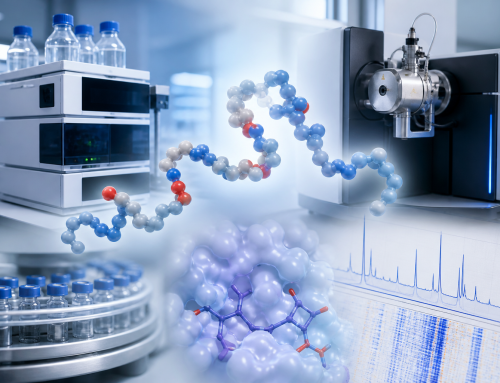
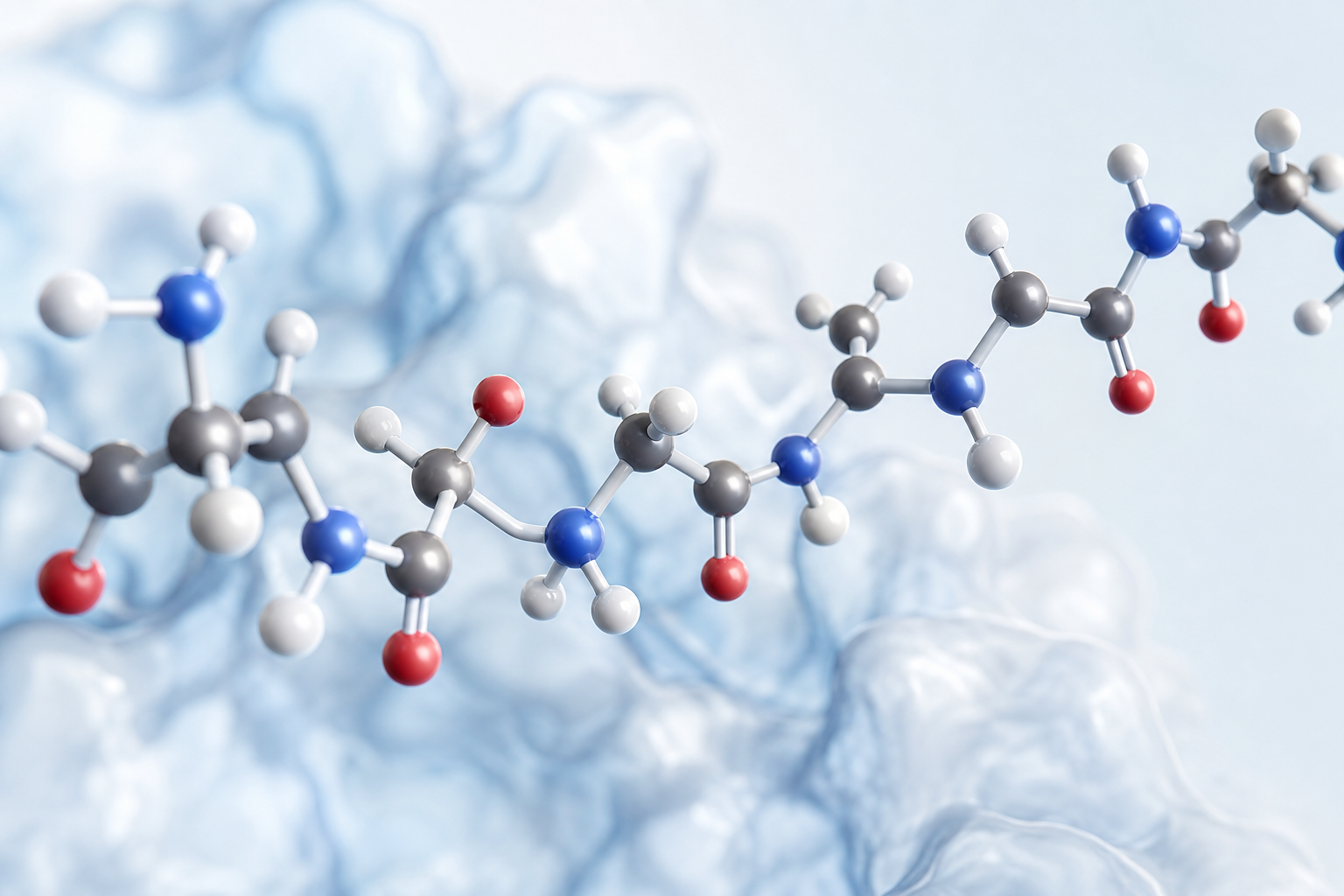
Peptide chains are fundamental molecular structures in biology, chemistry, and biomedical research. They are built from amino acids linked in a defined order, and they serve as the structural basis for peptides and proteins. Although the term is often used broadly, understanding peptide chains requires attention to their chemical bonds, sequence directionality, structural behavior, synthesis, and analytical characterization.
For laboratory researchers and scientific purchasers, peptide chains are relevant across many workflows, including assay development, immunology, enzymology, cell signaling research, drug discovery, and biomaterials science. Their properties are strongly influenced by sequence composition, length, charge, hydrophobicity, and post-translational or synthetic modifications. A clear understanding of these variables helps support experimental design, supplier evaluation, and reproducible results.
What Is a Peptide Chain?
A peptide chain is a linear sequence of amino acids connected by peptide bonds. Each amino acid contains an amino group, a carboxyl group, a hydrogen atom, and a side chain attached to a central alpha carbon. The side chain, often referred to as the R group, gives each amino acid its distinctive chemical properties.
When amino acids join together, they form an amide linkage known as a peptide bond. The resulting chain has a direction: one end contains a free amino group, called the N-terminus, while the other end contains a free carboxyl group, called the C-terminus. Peptide sequences are conventionally written from the N-terminus to the C-terminus.
Peptides, Polypeptides, and Proteins
The distinction among peptides, polypeptides, and proteins is partly based on chain length and partly on biological function. Short amino acid chains are commonly called peptides. Longer chains may be called polypeptides. Proteins are typically one or more polypeptide chains that fold into stable three-dimensional structures and perform defined biological functions.
There is no universally fixed length at which a peptide becomes a protein. In practice, peptides are often considered to be shorter than approximately 50 amino acids, while proteins are generally larger and more structurally complex. However, context matters. Some short peptides have highly specific biological activities, while some longer polypeptides may remain disordered or function as segments within larger proteins.
How Peptide Bonds Form
Peptide bonds form through a condensation reaction between the carboxyl group of one amino acid and the amino group of another. During this process, a molecule of water is eliminated, and a covalent amide bond is created. In living organisms, peptide bond formation occurs on ribosomes during translation, using messenger RNA as a template and transfer RNA molecules to deliver amino acids.
In the laboratory, peptide bonds can be formed through chemical synthesis. Solid-phase peptide synthesis is one of the most widely used approaches. In this method, the C-terminal amino acid is attached to an insoluble resin, and protected amino acids are added sequentially. After each coupling reaction, protecting groups are removed to allow the next amino acid to be attached. Once the full sequence is assembled, the peptide is cleaved from the resin and purified.
Chemical Features of the Peptide Bond
The peptide bond has partial double-bond character due to resonance between the carbonyl group and the amide nitrogen. This restricts rotation around the bond and contributes to the planarity of the peptide backbone. As a result, peptide chains do not behave like fully flexible strings; instead, their conformations are constrained by bond angles, steric effects, and interactions among side chains.
The peptide backbone includes repeating nitrogen, alpha carbon, and carbonyl carbon atoms. The allowed rotations around the bonds adjacent to the alpha carbon are described by phi and psi angles. These angles influence the formation of secondary structures such as alpha helices and beta sheets.
Directionality and Sequence
Peptide chains are directional molecules. The amino acid order from N-terminus to C-terminus determines the primary structure. Even if two peptides contain the same amino acids, a different order can produce different chemical and biological properties. For example, changes in sequence can alter solubility, receptor binding, enzymatic cleavage, immunogenicity, and aggregation tendency.
Sequence information is commonly represented using one-letter or three-letter amino acid codes. For example, glycine may be written as G or Gly, and lysine as K or Lys. The one-letter code is efficient for long sequences, while the three-letter code can be useful in documentation where clarity is important.
N-Terminal and C-Terminal Effects
The terminal groups of a peptide can influence its charge, stability, and biological activity. A free N-terminus is usually positively charged under many physiological conditions, while a free C-terminus is often negatively charged. Synthetic peptides may be modified at either end to alter these properties. Common modifications include N-terminal acetylation and C-terminal amidation.
Terminal modifications can improve resistance to enzymatic degradation or better mimic native biological forms. However, they can also change binding behavior, solubility, or analytical mass. For research applications, terminal chemistry should be specified clearly when ordering, documenting, or comparing peptide materials.
Amino Acid Composition and Side-Chain Properties
The behavior of a peptide chain depends strongly on its amino acid composition. Amino acids are commonly grouped by side-chain properties, including nonpolar, polar uncharged, acidic, basic, aromatic, and sulfur-containing residues. These properties determine how the peptide interacts with water, membranes, ions, proteins, and surfaces.
Charge and Isoelectric Point
Peptides containing lysine, arginine, or histidine tend to carry positive charges, depending on pH. Peptides containing aspartic acid or glutamic acid tend to carry negative charges. The balance of these residues influences the peptide’s net charge and isoelectric point, which is the pH at which the net charge is approximately zero.
Charge affects solubility, chromatographic behavior, electrophoretic mobility, and binding to nucleic acids or cell membranes. Highly charged peptides may dissolve readily in aqueous buffers, while peptides with extensive hydrophobic content may require alternative solubilization strategies.
Hydrophobicity and Solubility
Hydrophobic amino acids, such as leucine, isoleucine, valine, phenylalanine, and tryptophan, can promote interactions with lipid membranes or hydrophobic protein pockets. However, sequences rich in hydrophobic residues may show reduced aqueous solubility and increased aggregation.
For experimental planning, solubility should be considered before peptide synthesis or purchase. Factors such as sequence length, net charge, terminal modifications, counterions, and storage form can influence reconstitution. Researchers often test small-scale dissolution conditions before preparing concentrated stock solutions.
Structural Levels of Peptide Chains
Peptide chains can be described at several structural levels. Primary structure is the amino acid sequence. Secondary structure refers to local folding patterns, such as alpha helices, beta sheets, turns, and random coil regions. Tertiary structure describes the overall three-dimensional arrangement of a single chain. Quaternary structure applies when multiple chains associate into a larger assembly.
Secondary Structure Formation
Alpha helices are stabilized by hydrogen bonding between backbone carbonyl and amide groups. Beta sheets form when extended strands align and hydrogen bond with neighboring strands. Turns and loops allow chains to reverse direction and connect structural elements. Not all peptides adopt stable secondary structures in solution; many remain flexible or adopt structure only when bound to a target.
Short synthetic peptides may not fold into a single stable conformation unless their sequences contain strong structural preferences or are constrained by modifications. Disulfide bonds, cyclization, stapling, or incorporation of noncanonical residues can be used in research settings to restrict conformational flexibility.
Disulfide Bonds and Conformational Constraints
Cysteine residues can form disulfide bonds under oxidizing conditions. These covalent links can stabilize loops, folds, or multi-chain assemblies. Disulfide-rich peptides are common in nature and include many toxins, hormones, and defense molecules.
In synthetic peptide work, correct disulfide pairing is important because alternative pairings can produce isomers with different properties. Analytical verification may be necessary, particularly for peptides with multiple cysteine residues.
Biological Roles of Peptide Chains
Peptide chains perform diverse roles in biological systems. Some function as hormones, neurotransmitters, antimicrobial agents, enzyme substrates, receptor ligands, or signaling molecules. Others are generated by protein cleavage and act as functional fragments. Peptide sequences can also serve as epitopes recognized by antibodies or T cell receptors.
In research, peptides are frequently used to model protein domains, map binding sites, generate antibodies, study enzyme kinetics, probe receptor interactions, and develop calibration standards. Because peptides can represent defined portions of larger proteins, they are valuable tools for studying molecular recognition under controlled conditions.
Peptide Chains in Proteins
In proteins, peptide chains fold into structures that place amino acid side chains in specific spatial arrangements. This folding enables catalytic activity, ligand binding, mechanical support, transport, and regulation. Mutations that alter a single amino acid can affect folding, stability, or function, illustrating the importance of primary sequence.
Proteins may contain one peptide chain or multiple chains. Hemoglobin, for example, contains multiple polypeptide chains that assemble into a functional oxygen transport complex. Enzymes may use amino acid residues from different regions of a folded chain to create an active site.
Synthesis and Purification of Peptide Chains
Synthetic peptides are commonly produced for research and development applications. Solid-phase peptide synthesis enables precise control over sequence, modifications, isotopic labeling, and incorporation of nonstandard amino acids. However, synthesis difficulty increases with length, hydrophobicity, aggregation-prone sequences, and complex modifications.
After synthesis, crude peptide preparations contain the desired product along with deletion sequences, truncated products, protecting group remnants, and other impurities. Purification is often performed using reverse-phase high-performance liquid chromatography. The level of purification required depends on the application. For screening assays, moderate purity may be sufficient, while quantitative biophysical studies or sensitive biological assays may require higher purity and detailed characterization.
Quality Control Considerations
Common quality control methods include mass spectrometry, analytical HPLC, amino acid analysis, and, in some cases, sequencing or elemental analysis. Mass spectrometry confirms the molecular mass, while analytical HPLC provides information about purity and impurity profiles. For modified or constrained peptides, additional methods may be required to confirm the expected structure.
When evaluating peptide materials, researchers should review the sequence, purity, salt form, counterion, solubility guidance, storage recommendations, and certificates of analysis. Lot-to-lot consistency can be important for long-term studies or regulated workflows.
Analytical Methods for Peptide Chains
Peptide analysis supports identity confirmation, purity assessment, structural characterization, and stability testing. Method selection depends on peptide length, composition, modifications, and intended use.
Mass Spectrometry
Mass spectrometry is widely used to confirm peptide molecular weight. Techniques such as electrospray ionization and matrix-assisted laser desorption ionization can detect peptide ions and provide accurate mass information. Tandem mass spectrometry can generate fragment ions that help confirm sequence or locate modifications.
Chromatography
Reverse-phase HPLC separates peptides based on hydrophobicity and interaction with the stationary phase. Ion-exchange chromatography can separate peptides based on charge. Size-exclusion chromatography may be useful for larger peptides, aggregates, or peptide-protein complexes, although resolution depends on molecular size and column conditions.
Spectroscopic and Biophysical Techniques
Circular dichroism spectroscopy can provide information about secondary structure, particularly alpha-helical or beta-sheet content. Nuclear magnetic resonance spectroscopy and X-ray crystallography can offer higher-resolution structural information, though they may require more material and specialized conditions. Dynamic light scattering can help assess aggregation in solution.
Stability, Storage, and Handling
Peptide stability depends on sequence, physical form, moisture, temperature, oxidation sensitivity, pH, and exposure to enzymes or light. Lyophilized peptides are often more stable than peptides in solution, but they can still absorb moisture and degrade if improperly stored. Many peptides are stored desiccated at low temperature until use.
Once reconstituted, peptide solutions may be prone to hydrolysis, oxidation, deamidation, aggregation, or microbial contamination. Aliquoting can reduce repeated freeze-thaw cycles. Buffer selection should consider peptide solubility, assay compatibility, and chemical stability. For cysteine-, methionine-, or tryptophan-containing peptides, oxidation risk may be particularly relevant.
Documentation for Reproducibility
Accurate documentation improves reproducibility. Important details include peptide sequence, terminal modifications, purity, lot number, molecular weight, salt form, reconstitution solvent, stock concentration, storage temperature, and number of freeze-thaw cycles. For quantitative assays, peptide concentration should be determined using an appropriate method rather than relying only on weighed mass, especially for hygroscopic materials or salts.
Applications in Research and Development
Peptide chains are used in a broad range of scientific applications. In immunology, synthetic peptides can represent epitopes for antibody production or T cell studies. In enzymology, they can serve as substrates or inhibitors. In proteomics, peptides are central to mass spectrometry-based identification and quantification of proteins. In drug discovery, peptide ligands and mimetics are studied for target engagement, selectivity, and mechanism of action.
Peptides also have roles in materials science and nanotechnology. Self-assembling peptide sequences can form fibers, hydrogels, or surface coatings under defined conditions. These systems are studied for tissue engineering, biosensing, and controlled molecular presentation.
Common Challenges When Working with Peptide Chains
Despite their utility, peptide chains can present technical challenges. Poor solubility, adsorption to plastic or glass surfaces, aggregation, degradation, and sequence-dependent synthesis limitations can affect experimental outcomes. Biological assays may also be influenced by impurities, counterions, or residual solvents.
Careful sequence design can reduce some risks. For example, adding charged residues may improve solubility, while avoiding long hydrophobic stretches may reduce aggregation. However, changes to sequence can also alter biological function, so modifications should be evaluated in relation to the research objective.
Conclusion
Peptide chains are chemically defined amino acid sequences with properties governed by peptide bonds, sequence directionality, side-chain composition, and structural context. They are central to protein biology and widely used as research tools in analytical, biochemical, immunological, and therapeutic development workflows. Understanding how peptide chains form, fold, behave in solution, and are characterized helps researchers select appropriate materials, design robust experiments, and interpret results with greater confidence.