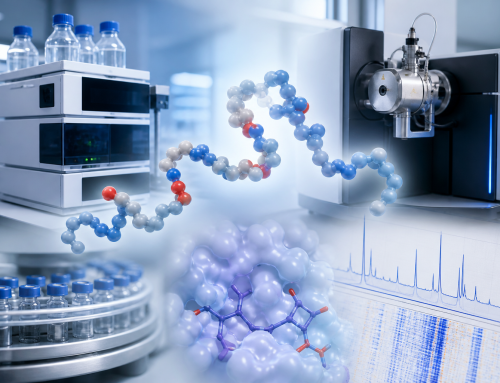

Research peptides are short chains of amino acids used as controlled tools in laboratory studies. They are central to many areas of modern bioscience, including cell signaling, receptor biology, enzymology, immunology, drug discovery, structural biology, and biomaterials research. Because peptides can be designed to mimic, block, stabilize, or probe biological processes, they offer researchers a precise way to investigate molecular mechanisms under defined experimental conditions.
The term research peptide is broad. It may refer to a naturally occurring peptide sequence, a synthetic analog of a biological peptide, a labeled peptide used in an assay, a substrate for enzyme studies, or a modified peptide engineered for stability or selectivity. In laboratory contexts, these materials are typically supplied for in vitro research or other approved research applications, not for human consumption, clinical treatment, food use, cosmetic use, or unsupervised administration.
What Are Research Peptides?
Basic definition
A peptide is a molecule made of amino acids joined by peptide bonds. Amino acids are the same building blocks that form proteins, but peptides are generally shorter than proteins. Although terminology varies by field, peptides often contain approximately 2 to 50 amino acids, while larger chains may be referred to as polypeptides or proteins.
Research peptides are peptides manufactured, purified, and documented for use in scientific studies. They may be linear or cyclic, natural or synthetic, unmodified or chemically modified. Their value lies in their ability to interact with biological targets in a relatively specific and interpretable way. For example, a peptide may bind a receptor, inhibit a protein-protein interaction, act as an enzyme substrate, or serve as an antigenic epitope in immunological assays.
How peptides differ from proteins and small molecules
Peptides occupy an intermediate space between small molecules and proteins. Compared with small molecules, peptides usually have larger molecular weights, more hydrogen bonding capacity, and greater structural complexity. Compared with proteins, they are smaller, easier to synthesize chemically, and often more amenable to sequence-level modification.
This intermediate nature can be advantageous in research. Peptides can reproduce a short functional region of a protein without requiring expression and purification of the full protein. They can also be designed with specific substitutions, labels, or terminal modifications to test structure-activity relationships and binding mechanisms.
Why Peptides Are Important in Research
Tools for studying biological pathways
Many biological processes depend on short amino acid motifs. Signaling domains, receptor-binding regions, cleavage sites, phosphorylation motifs, and immune epitopes may all be represented by relatively short peptide sequences. By synthesizing these sequences, researchers can isolate and study specific molecular interactions in controlled systems.
For example, a peptide substrate can be used to measure kinase or protease activity. A receptor-binding peptide can help evaluate ligand recognition. An epitope peptide can support antibody screening or T-cell assays. In each case, the peptide serves as a defined reagent that helps simplify a complex biological question.
Relevance to drug discovery and translational research
Peptides are also important in early-stage drug discovery and translational research. They can be used to identify target engagement, map binding sites, validate mechanisms, and generate lead structures. Some therapeutic classes are peptide-based, but research peptides should not be equated with approved medicines. A peptide used in a laboratory study may have no established safety, efficacy, pharmacokinetic profile, or regulatory authorization for clinical use.
For scientific purchasers and laboratory teams, this distinction is essential. Research-grade peptides are evaluated for analytical identity and suitability for experimental use, whereas clinical-grade materials require additional manufacturing controls, regulatory documentation, sterility assurance, toxicology data, and formal approval processes.
Common Types of Research Peptides
Natural and synthetic peptides
Natural peptides correspond to sequences found in organisms. Synthetic peptides are produced chemically or recombinantly to match or alter a desired sequence. Synthetic production allows researchers to specify sequence length, purity target, isotope composition, terminal groups, and other features that may be difficult to obtain from biological sources.
Many research peptides are synthetic analogs of natural sequences. These analogs may contain substitutions that improve stability, increase solubility, reduce aggregation, or help identify which residues are important for activity. Such modifications must be documented clearly, because even a single amino acid change can alter biological behavior.
Linear, cyclic, and modified peptides
Linear peptides have an open chain with an amino terminus and a carboxyl terminus. Cyclic peptides contain a ring structure, commonly formed through disulfide bonds, head-to-tail cyclization, side-chain linkages, or other chemical bridges. Cyclization can constrain conformation and may increase resistance to enzymatic degradation in certain experimental systems.
Modified peptides include sequences with non-natural amino acids, acetylation, amidation, phosphorylation, methylation, glycosylation, lipidation, biotinylation, fluorophore labeling, or stable isotope labeling. These modifications are used to model biological post-translational modifications, improve detection, enable immobilization, or support quantitative mass spectrometry.
Peptide libraries
Peptide libraries contain many related sequences designed for screening. Libraries may be positional, overlapping, alanine-scanning, scrambled, random, or focused around a motif. They are widely used to identify binding preferences, map epitopes, optimize enzyme substrates, or explore structure-activity relationships.
Library design requires careful planning. Researchers must consider peptide length, diversity, purity requirements, plate format, solvent compatibility, concentration normalization, and downstream assay conditions. For some studies, crude libraries are sufficient for screening; for others, individually purified and quantified peptides are required.
How Research Peptides Are Made
Solid-phase peptide synthesis
The most common method for producing research peptides is solid-phase peptide synthesis. In this approach, the growing peptide is assembled stepwise on an insoluble resin. Protected amino acids are added one at a time, with coupling and deprotection cycles repeated until the target sequence is complete. The peptide is then cleaved from the resin and deprotected.
Solid-phase synthesis is versatile and supports many sequence modifications. However, synthesis difficulty increases with length, hydrophobicity, aggregation tendency, steric hindrance, and certain sequence motifs. Long or highly hydrophobic peptides may require specialized strategies, altered coupling conditions, or alternative purification methods.
Purification and lyophilization
After synthesis, peptides are usually purified by high-performance liquid chromatography. Reverse-phase HPLC is commonly used because it separates peptides based on hydrophobicity and can remove deletion sequences, incomplete products, and many side products. The purified peptide is often lyophilized to produce a dry powder for storage and shipping.
Purity requirements depend on the intended experiment. A screening assay may tolerate lower purity if the goal is preliminary ranking, while quantitative binding studies, cell-based assays, structural experiments, and reference standard work often require higher purity and more extensive characterization.
Quality Attributes and Analytical Characterization
Identity, purity, and mass confirmation
Reliable peptide research depends on knowing what material is being used. The most basic quality attributes include sequence identity, molecular weight confirmation, chromatographic purity, and physical appearance. Mass spectrometry is commonly used to confirm molecular mass, while analytical HPLC is used to estimate purity.
A certificate of analysis should typically include peptide name or sequence, lot number, molecular formula or molecular weight when applicable, purity by HPLC, mass spectrometry data, counterion information if available, net peptide content when measured, storage recommendations, and date of analysis. The level of documentation should match the risk and complexity of the study.
Purity versus peptide content
Purity and peptide content are related but not identical. HPLC purity describes the proportion of the main chromatographic peak relative to impurities detectable under the method used. Peptide content refers to the amount of actual peptide in the lyophilized material, excluding water, salts, counterions, and residual solvents. A vial may contain highly pure peptide by HPLC while still having less than 100 percent peptide content by mass because of associated water or salts.
This distinction matters when preparing stock solutions and comparing dose-response data. For quantitative work, laboratories may need amino acid analysis, elemental analysis, quantitative NMR, or other methods to determine net peptide content accurately.
Counterions and salts
Peptides are often isolated as salts, commonly with trifluoroacetate, acetate, chloride, or other counterions depending on synthesis and purification conditions. Counterions can influence solubility, assay compatibility, and biological readouts. Trifluoroacetate, for example, may interfere with some cell-based or sensitive biochemical assays. When counterion effects are a concern, researchers may request salt exchange or select a compatible form during procurement.
Storage, Handling, and Reconstitution
General storage considerations
Most lyophilized research peptides are stored frozen, dry, and protected from light when appropriate. Moisture, repeated temperature cycling, oxidation, and microbial contamination can reduce stability. Before opening a cold vial, it is often advisable to allow it to equilibrate to room temperature while sealed, reducing condensation inside the container.
Once reconstituted, peptide solutions are generally less stable than dry powders. Aliquoting stock solutions into single-use portions can reduce freeze-thaw cycles. The optimal storage conditions vary by sequence and modification, so laboratories should follow supplier documentation and internal stability data where available.
Solubility and solvent selection
Peptide solubility depends on amino acid composition, length, charge, hydrophobicity, secondary structure, and terminal modifications. Hydrophilic peptides may dissolve readily in sterile water or aqueous buffer. Hydrophobic or aggregation-prone peptides may require dilute acid, dilute base, dimethyl sulfoxide, organic co-solvents, or stepwise dissolution before dilution into assay buffer.
Solvent choice should be compatible with the experiment. For example, dimethyl sulfoxide may affect cell viability or enzyme activity at higher concentrations, while acidic or basic conditions may alter assay pH. Researchers should document reconstitution conditions, final solvent concentration, stock concentration, and storage history for reproducibility.
Responsible Use in Laboratory Settings
Research-use limitations
Research peptides are laboratory reagents. Unless specifically manufactured, regulated, and approved for another purpose, they are not intended for human or veterinary administration, diagnostic procedures, food production, cosmetic use, or personal experimentation. This limitation protects both scientific integrity and safety, because research-grade materials do not necessarily meet clinical manufacturing standards.
Institutions should ensure that peptide studies are reviewed under applicable biosafety, chemical safety, animal care, human subject, and regulatory frameworks. Requirements differ by jurisdiction, institution, peptide type, and experimental model. Researchers should consult internal compliance offices and relevant regulations before beginning studies.
Safety and risk assessment
Although many peptides are handled routinely, they should not be assumed to be harmless. Some may be bioactive at low concentrations, immunogenic, cytotoxic, antimicrobial, endocrine-active, or otherwise biologically potent. Powder handling can also create inhalation or exposure risks. Appropriate personal protective equipment, engineering controls, labeling, and waste disposal practices should be selected through a risk assessment.
Safety data sheets can provide general handling information, but peptide-specific hazard data may be limited. Laboratories should consider the known biology of the sequence, concentration, route of potential exposure, formulation, solvent hazards, and downstream experimental system.
How to Evaluate Research Peptide Suppliers
Documentation and transparency
When purchasing research peptides, laboratories should evaluate whether the supplier provides adequate analytical documentation and clear product specifications. Important considerations include sequence verification, modification details, purity method, mass confirmation, lot traceability, storage recommendations, and availability of additional testing when needed.
For custom peptides, communication about sequence challenges is also important. Cysteine-rich, highly hydrophobic, long, aggregation-prone, or heavily modified peptides may require feasibility review. Clear documentation helps researchers interpret results and reproduce studies across lots and institutions.
Fit for purpose
No single purity grade or format is appropriate for every study. A peptide used in exploratory screening may have different requirements than one used in quantitative pharmacology, structural analysis, immunization, or assay validation. Laboratories should define acceptance criteria before ordering, including purity, quantity, salt form, labeling, solubility needs, endotoxin limits if relevant, sterility requirements if applicable to an approved protocol, and analytical documentation.
Fit-for-purpose selection helps avoid both under-specification and unnecessary cost. It also supports reproducibility by aligning the reagent quality with the scientific question being asked.
Common Applications of Research Peptides
Biochemical and cell-based assays
Peptides are widely used as enzyme substrates, inhibitors, standards, ligands, and pathway modulators. In cell-based assays, they may be used to examine receptor signaling, uptake, protein interactions, or pathway activation. Experimental design should include appropriate controls, such as scrambled sequences, inactive analogs, vehicle controls, and concentration-response testing.
Immunology and antibody development
Peptides can represent antigenic epitopes for antibody generation, antibody validation, epitope mapping, and immune monitoring. Overlapping peptide pools are often used to identify reactive regions of a protein. However, peptide epitopes may not fully reproduce conformational epitopes present in folded proteins, so results should be interpreted within the limits of the assay format.
Proteomics and analytical standards
Stable isotope-labeled peptides are important in targeted mass spectrometry workflows. They can serve as internal standards for quantifying proteins or post-translational modifications. In these applications, accurate concentration assignment, purity, isotope incorporation, and matrix compatibility are particularly important.
Key Considerations for Experimental Reproducibility
Peptide-based experiments are sensitive to details that may be overlooked in methods sections. Sequence, terminal modifications, stereochemistry, purity, counterion, solvent, stock concentration, storage time, freeze-thaw history, and lot number can all influence outcomes. Reproducible studies should report these details as fully as practical.
Controls are equally important. Scrambled peptides help distinguish sequence-specific effects from general charge or hydrophobicity effects. Truncated or substituted analogs can identify critical residues. Vehicle controls clarify solvent contributions. Orthogonal assays help confirm that an observed effect is not an artifact of aggregation, fluorescence interference, cytotoxicity, or assay format.
Conclusion
Research peptides are versatile molecular tools that allow scientists to study defined amino acid sequences, biological interactions, enzyme activities, immune epitopes, and signaling mechanisms. Their usefulness depends on appropriate design, analytical characterization, careful handling, and clear recognition of research-use limitations.
For laboratories and scientific purchasers, the most important practical considerations are sequence accuracy, purity, identity confirmation, documentation, storage conditions, solubility, and fit for the intended experiment. When selected and used responsibly, research peptides can support rigorous, reproducible studies across many areas of life science research.