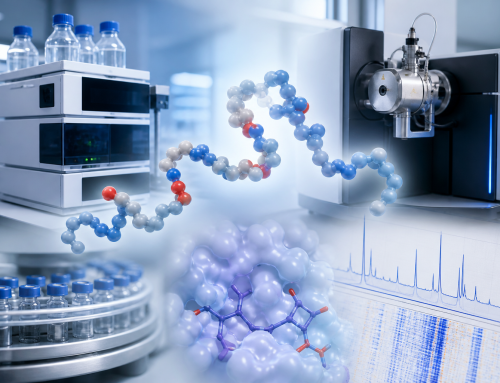
Research peptides are widely used in laboratory settings to study biological signaling, receptor interactions, enzymatic activity, metabolic pathways, and structure-function relationships. Because peptides can vary substantially in sequence length, chemical modification, purity, solubility, and stability, researchers and purchasing teams often have practical questions before selecting, handling, or documenting these materials.
This article addresses common questions about research peptides from a laboratory and procurement perspective. It is intended for informational purposes only and does not provide medical, veterinary, or clinical guidance. Peptides labeled for research use are intended for in vitro studies, analytical development, assay validation, or other non-clinical laboratory applications, as applicable to the institution and jurisdiction.
What Are Research Peptides?
Peptides are short chains of amino acids linked by peptide bonds. They are generally smaller than proteins and may range from a few amino acids to several dozen residues, although definitions vary by field. In research environments, peptides may be used as standards, substrates, ligands, inhibitors, antigens, biomarkers, or model compounds.
Research peptides may be naturally occurring sequences, fragments of larger proteins, analogs designed for experimental purposes, or chemically modified variants. Common modifications include acetylation, amidation, phosphorylation, biotinylation, fluorescent labeling, disulfide bond formation, cyclization, and incorporation of non-natural amino acids. Each modification can influence solubility, stability, binding affinity, and analytical behavior.
How Are Research Peptides Different From Therapeutic Peptides?
The distinction is primarily based on intended use, quality system, documentation, regulatory status, and manufacturing controls. Therapeutic peptides intended for administration to humans or animals must be produced under applicable regulatory frameworks and quality standards, such as current Good Manufacturing Practice requirements. Research peptides, by contrast, are typically supplied for laboratory research and are not intended for diagnostic, therapeutic, food, cosmetic, or human or veterinary use.
Even when a research peptide has the same amino acid sequence as a clinically studied compound, the research material should not be assumed to meet clinical-grade requirements. Researchers should review product labeling, certificates of analysis, institutional policies, and applicable regulations before use.
What Are Research Peptides Used For?
Research peptides have broad utility across biochemistry, molecular biology, pharmacology, immunology, neuroscience, endocrinology, microbiology, and analytical chemistry. Typical applications include receptor binding studies, cell signaling assays, enzyme substrate assays, peptide mapping, antibody generation, standard curve preparation, mass spectrometry method development, and structure-activity relationship investigations.
In immunology, peptides may be used to study antigen presentation or to generate antibodies against defined epitopes. In enzymology, synthetic peptides can serve as substrates or inhibitors for kinases, proteases, phosphatases, and other enzymes. In analytical laboratories, peptides may serve as calibration materials, internal standards, or system suitability references, depending on validation requirements.
Are Research Peptides Suitable for Cell-Based Studies?
Some research peptides are used in cell-based assays, but suitability depends on the peptide’s properties and the experimental design. Important considerations include solubility in cell-compatible media, endotoxin levels where relevant, sterility requirements, cytotoxicity of solvents, peptide degradation by proteases, and the presence of serum proteins that may bind or degrade the peptide.
Researchers should confirm that the peptide grade, documentation, and handling conditions align with the intended assay. For sensitive cell culture work, additional testing or processing may be required by the laboratory, such as sterile filtration, endotoxin evaluation, or use of low-binding consumables.
How Are Research Peptides Manufactured?
Most synthetic research peptides are produced using solid-phase peptide synthesis, a well-established method in which amino acids are added sequentially to a growing chain attached to a solid resin. After synthesis, the peptide is cleaved from the resin, side-chain protecting groups are removed, and the crude peptide is purified and analyzed.
Purification is commonly performed using high-performance liquid chromatography. Analytical confirmation may involve mass spectrometry, analytical HPLC, amino acid analysis, elemental analysis, or other techniques depending on the peptide and supplier. Peptides with complex structures, such as multiple disulfide bonds or long hydrophobic sequences, may require additional optimization.
Why Do Peptide Yield and Purity Vary?
Peptide synthesis efficiency depends on sequence length, amino acid composition, aggregation tendency, hydrophobicity, secondary structure formation, and modifications. Long peptides and sequences rich in difficult residues, such as cysteine, methionine, tryptophan, proline, or highly hydrophobic stretches, can be more challenging to synthesize and purify.
Purity also depends on the removal of truncated sequences, deletion products, protecting group remnants, and closely related impurities. A 95% pure peptide, for example, may contain 5% total detectable impurities by the analytical method used, but the identity and biological relevance of those impurities may differ by product. For critical experiments, laboratories should consider whether additional characterization is necessary.
What Does Peptide Purity Mean?
Peptide purity usually refers to the percentage of the main peptide peak relative to total peaks detected by an analytical method, often reverse-phase HPLC with UV detection. Common purity levels include crude, desalted, 70%, 80%, 90%, 95%, and 98% or higher. The appropriate level depends on the application.
For preliminary screening, lower purity may be acceptable in some contexts. For quantitative assays, receptor binding studies, structural investigations, immunological work, or studies where impurities could interfere with interpretation, higher purity and more complete documentation may be warranted.
Does Higher Purity Always Mean Better Data?
Higher purity can reduce confounding effects, but it is not the only determinant of experimental reliability. Identity confirmation, correct counterion form, accurate peptide content, solubility, stability, and lot-to-lot consistency can be equally important. In some assays, a low-abundance impurity may be biologically active, while in others it may be irrelevant.
Researchers should match peptide specifications to the scientific question. A well-documented peptide at an appropriate purity level is often more useful than a nominally high-purity material with limited characterization.
What Documentation Should Accompany a Research Peptide?
Documentation is central to traceability and reproducibility. A certificate of analysis, or COA, commonly includes product name, sequence, lot number, molecular weight, purity, analytical method, mass spectrometry confirmation, appearance, storage recommendation, and sometimes peptide content or counterion information. The depth of documentation may vary by supplier and product type.
Laboratories operating under formal quality systems may also require safety data sheets, country of origin information, residual solvent data, endotoxin results, sterility information, or method-specific analytical reports. Purchasing teams should identify documentation requirements before ordering, particularly for regulated or collaborative research environments.
Why Is Peptide Content Different From Purity?
Peptide content refers to the actual amount of peptide present in a weighed sample after accounting for water, salts, counterions, residual solvents, and other non-peptide components. Purity refers to the proportion of the desired peptide relative to peptide-related impurities detected by an analytical method.
This distinction matters when preparing quantitative solutions. A vial labeled 10 mg may not contain 10 mg of net peptide if the material includes water and counterions. For precise concentration work, researchers may need peptide content data, amino acid analysis, or other quantitative methods.
How Should Research Peptides Be Stored?
Storage conditions depend on the peptide sequence, formulation, modification, and supplier recommendation. Many lyophilized peptides are stored at low temperature, commonly at -20°C or below, protected from moisture and light. Some peptides are stable at refrigerated temperatures for short periods, while others require more stringent conditions.
Repeated freeze-thaw cycles can accelerate degradation, especially for peptides in solution. A common laboratory practice is to prepare single-use aliquots after reconstitution, store them under validated conditions, and avoid unnecessary warming. Light-sensitive peptides, such as fluorescently labeled materials or sequences containing certain residues, should be protected from light.
Are Peptides More Stable as Powders or Solutions?
Peptides are often more stable as dry lyophilized powders than in solution, because hydrolysis, oxidation, deamidation, and microbial contamination are more likely in aqueous environments. However, stability is sequence-dependent. Peptides containing methionine, cysteine, asparagine, glutamine, or tryptophan may be especially prone to specific degradation pathways.
Once dissolved, the choice of solvent, pH, buffer composition, ionic strength, temperature, concentration, and container material can affect stability. Researchers should document reconstitution date, solvent, concentration, storage conditions, and number of freeze-thaw events.
How Are Research Peptides Reconstituted?
Reconstitution should be based on the peptide’s solubility profile and the needs of the assay. No single solvent is appropriate for all peptides. Hydrophilic peptides may dissolve readily in sterile water or aqueous buffer, while hydrophobic peptides may require small amounts of dimethyl sulfoxide, acetic acid, ammonium hydroxide, or other solvents compatible with downstream applications.
It is advisable to review any supplier-provided solubility guidance and begin with small-scale solubility testing when working with a new sequence. Gentle mixing is usually preferred over vigorous vortexing for peptides that may aggregate or foam. Sonication may help some materials dissolve but can also introduce heat, which may be undesirable for sensitive sequences.
Why Might a Peptide Not Dissolve Easily?
Poor solubility may result from hydrophobic residues, net charge near the isoelectric point, aggregation, disulfide bonding, sequence length, or secondary structure formation. The counterion form and lyophilization conditions can also influence dissolution. Peptides with many nonpolar residues may dissolve poorly in purely aqueous media, while highly acidic or basic peptides may require pH adjustment.
If precipitation occurs after dilution into assay buffer, the final buffer composition may be incompatible even if the peptide initially dissolves in a stock solvent. Researchers should consider final solvent concentration, pH, salts, carrier proteins, surfactants, and compatibility with cells, enzymes, or detection systems.
What Safety Practices Apply to Research Peptides?
Research peptides should be handled according to institutional safety procedures, product labeling, and the safety data sheet. Because toxicological profiles may be incomplete, conservative laboratory practices are appropriate. These may include use of gloves, lab coat, eye protection, engineering controls for powders or aerosols, and procedures that minimize inhalation, ingestion, skin contact, and environmental release.
Risk assessment should account for quantity, route of exposure, biological activity, solvent hazards, and experimental context. Peptides with unknown activity, potent receptor interactions, or cell-permeable modifications should be treated with additional caution. Waste disposal should follow institutional and local requirements.
Can Research Peptides Be Used in Humans or Animals?
Research peptides labeled for research use should not be used in humans or animals unless they have been specifically manufactured, approved, and documented for that purpose under applicable laws and ethical approvals. Laboratory research materials may not meet requirements for sterility, endotoxin limits, excipient control, pharmacokinetics, toxicology, or clinical manufacturing.
Institutions should ensure that personnel understand the intended-use limitations of research materials. Misuse can create safety, legal, ethical, and data integrity concerns.
How Should Laboratories Select a Research Peptide Supplier?
Supplier selection should be based on scientific requirements, quality documentation, technical transparency, and procurement standards. Useful evaluation criteria include sequence confirmation, purity method, lot-specific COA, mass spectrometry data, synthesis capability, modification expertise, packaging options, stability guidance, and responsiveness to technical questions.
For institutions, supplier qualification may also involve review of quality management practices, change control policies, material traceability, data integrity, shipping procedures, and ability to provide consistent lots. For custom peptides, clear communication about sequence, terminal modifications, salt form, purity target, quantity, and analytical requirements is important before synthesis begins.
What Questions Should Purchasers Ask Before Ordering?
Before ordering, purchasers and researchers may want to clarify the following: What purity level is required for the experiment? Is mass spectrometry confirmation included? Is the stated weight gross material or net peptide content? What counterion or salt form is supplied? Are special storage or shipping conditions needed? Is endotoxin or sterility testing required? Are there known solubility concerns? What documentation is available for the specific lot?
Answering these questions in advance can reduce delays, prevent unsuitable material selection, and support reproducible experimental planning.
What Are Common Causes of Experimental Variability?
Variability in peptide-based experiments can arise from multiple sources. These include inaccurate weighing of hygroscopic materials, incomplete dissolution, adsorption to plastic or glass surfaces, degradation during storage, oxidation, concentration errors, lot-to-lot differences, impurities, pH shifts, and biological variability in the assay system.
Small peptides may adsorb to container surfaces, particularly at low concentrations. Use of low-binding tubes, carrier proteins, or validated handling procedures may help in some contexts, although additives must be compatible with the assay. Maintaining detailed records of lot number, reconstitution conditions, aliquoting, and storage history is essential for troubleshooting.
How Can Researchers Improve Reproducibility?
Reproducibility can be improved by standardizing reconstitution protocols, using appropriate controls, verifying concentration when necessary, minimizing freeze-thaw cycles, recording storage history, and using the same lot for a complete study when feasible. Analytical verification of peptide integrity may be appropriate for long-term projects or unexpected assay results.
When comparing data across laboratories, it is important to report the peptide sequence, modifications, supplier, lot number, purity, solvent, final concentration, incubation conditions, and relevant assay parameters. These details help other researchers interpret and replicate findings.
How Do Regulations and Intended Use Affect Research Peptides?
Regulatory expectations depend on jurisdiction, institution, peptide type, and intended use. Materials sold for research use generally have labeling and documentation that restrict them to laboratory applications. If a peptide is intended for clinical, diagnostic, veterinary, agricultural, or manufacturing use, additional regulatory requirements may apply.
Researchers should consult institutional compliance offices, biosafety committees, animal care and use committees, ethics boards, or regulatory specialists when projects move beyond standard in vitro research. Intended use should be established before procurement, not after experiments begin.
Conclusion
Research peptides are valuable laboratory tools, but their effective use requires attention to purity, identity, solubility, stability, documentation, safety, and intended-use limitations. Many common challenges can be addressed through careful supplier evaluation, appropriate storage and reconstitution practices, and thorough experimental recordkeeping.
For laboratory researchers and scientific purchasers, the most reliable approach is to define the application first, then select peptide specifications and documentation that support the study objective. This helps strengthen reproducibility, compliance, and confidence in peptide-based research data.