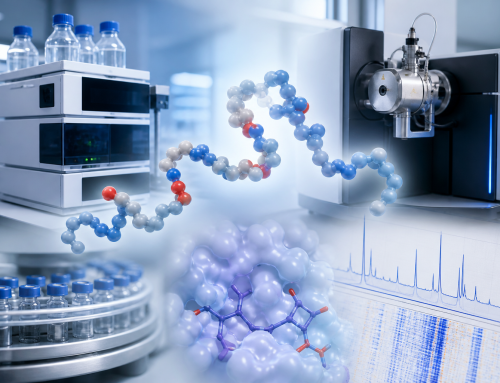
Purity specifications are among the most important pieces of information used to evaluate chemicals, reagents, reference materials, intermediates, and finished products. For laboratory researchers and scientific purchasers, they help determine whether a material is suitable for a specific method, experiment, or regulated workflow. However, purity is not a single universal measurement. It depends on how purity is defined, which analytical technique is used, which impurities are considered, and how the result is reported.
A product labeled as 99% pure may be appropriate for one application and unsuitable for another. A reagent with a lower assay value may still perform well if the impurities are benign for the intended use, while a higher-purity material may fail if it contains trace contaminants that interfere with a sensitive analytical method. Understanding purity specifications therefore requires looking beyond a single number and considering the full analytical and application context.
What Purity Specifications Mean
A purity specification describes the expected composition of a material and sets acceptance criteria for the amount of main component and, in many cases, the level of impurities. Specifications may be established by manufacturers, compendial standards, regulatory requirements, internal quality systems, or customer-defined criteria.
Purity versus assay
The terms purity and assay are sometimes used interchangeably, but they are not always equivalent. Purity generally refers to the proportion of the desired substance relative to other detectable components. Assay typically measures the amount of active or target component using a defined method. Depending on the technique, an assay may or may not detect all impurities.
For example, chromatographic purity may indicate that a compound is 99.5% by peak area in an HPLC method. This does not necessarily mean the sample contains 99.5% by mass of the target compound. Non-UV-absorbing impurities, residual solvents, inorganic salts, water, or counterions may not be represented in the chromatogram. A quantitative assay by titration, qNMR, elemental analysis, or mass balance may provide a different result.
Specification limits and acceptance criteria
Purity specifications usually include minimum or maximum limits. A common specification may state assay ≥98.0%, water ≤0.5%, single impurity ≤0.2%, total impurities ≤1.0%, and residual solvent within defined limits. These criteria establish whether a batch is acceptable under the stated quality standard. The important point is that each limit is meaningful only in relation to the test method used to generate it.
Common Ways Purity Is Reported
Purity values can be expressed in several formats. Interpreting them correctly is essential when comparing materials from different suppliers or selecting a product grade for a specific workflow.
Percent by weight or mass fraction
Percent by weight expresses the mass of the target component relative to the total mass of the sample. This format is common for quantitative assays and may be reported as % w/w. It is especially relevant when preparing solutions, standards, or reaction mixtures where stoichiometry and concentration accuracy matter.
Chromatographic area percent
Area percent is widely used in HPLC, GC, and related methods. It represents the area of the target peak as a percentage of the total integrated peak area under specific detection conditions. Area percent can be useful for comparing organic impurities that respond similarly to the detector. However, it should not automatically be interpreted as mass percent because detector response factors vary between compounds.
Trace-level units
Trace impurities are commonly reported as ppm, ppb, µg/g, mg/kg, or µg/mL. These units are frequently used for elemental impurities, residual solvents, metals, water, endotoxins, and specific contaminants. At trace levels, method sensitivity, calibration strategy, blank control, and detection limits become especially important.
Qualitative grades
Some materials are described by grade rather than a single purity number. Examples include analytical grade, reagent grade, ACS grade, HPLC grade, LC-MS grade, molecular biology grade, pharmaceutical grade, and electronic grade. These grade designations generally indicate that the material meets a defined set of tests relevant to certain applications. They should not be assumed to be interchangeable unless the specifications are reviewed in detail.
Analytical Methods Used to Establish Purity
The analytical method strongly influences the reported purity value. A robust specification should identify the method or method category used, and a certificate of analysis should provide batch-specific results where applicable.
Chromatography
High-performance liquid chromatography and gas chromatography are widely used to assess organic purity and related substances. HPLC is often suitable for nonvolatile or thermally sensitive compounds, while GC is used for volatile compounds and residual solvents. Detection may involve UV, fluorescence, evaporative light scattering, charged aerosol detection, flame ionization detection, or mass spectrometry.
Chromatographic methods are powerful because they can separate and quantify multiple components. Their limitations include response factor differences, co-eluting impurities, and compounds not detected under the chosen conditions. For this reason, chromatographic purity should be interpreted with method details in mind, including column type, mobile phase, detector, wavelength, calibration, and integration parameters.
Spectroscopy and qNMR
Nuclear magnetic resonance spectroscopy can provide structural confirmation and, when performed quantitatively, can measure purity relative to a certified internal standard. qNMR is useful because response is directly related to the number of nuclei observed, making it less dependent on compound-specific detector response than UV chromatography. Infrared spectroscopy and UV-visible spectroscopy may also be used for identity confirmation or assay, depending on the material and method.
Titration and wet chemistry
Titration remains important for many acids, bases, salts, oxidants, reductants, and functional group assays. Karl Fischer titration is commonly used to determine water content. Wet chemical methods can be highly accurate when the reaction is specific and the endpoint is well controlled, but they may be vulnerable to interference from chemically similar impurities.
Elemental and inorganic analysis
Elemental impurities may be measured by ICP-MS, ICP-OES, atomic absorption spectroscopy, ion chromatography, or related techniques. These methods are especially important for applications where metal ions, inorganic anions, or catalyst residues can affect performance, safety, or regulatory compliance. For high-purity inorganic salts, trace metal profiles may be more important than the nominal assay value alone.
Microbiological and biological testing
For materials used in cell culture, bioprocessing, diagnostics, or pharmaceutical research, purity may include biological quality attributes such as bioburden, endotoxin level, DNase/RNase activity, protease activity, mycoplasma status, or sterility. These are not chemical purity measurements, but they can be critical acceptance criteria for biological applications.
Types of Impurities to Consider
Impurities can arise from raw materials, synthesis, purification, packaging, storage, degradation, or handling. A useful purity specification considers which impurities are relevant to the intended application.
Process-related impurities
Process-related impurities include starting materials, intermediates, byproducts, catalysts, ligands, acids, bases, salts, and purification residues. Their significance depends on the process and the end use of the material. In synthetic chemistry, a trace catalyst may not affect a screening reaction, but it may be unacceptable in materials used for biological assays or electronic applications.
Degradation products
Some compounds degrade when exposed to moisture, oxygen, light, heat, or unsuitable pH. Degradation products may accumulate during storage or after a container is opened. Stability-indicating methods are designed to distinguish the intact material from its degradation products. For unstable materials, storage conditions and retest dates are closely related to purity specifications.
Water and residual solvents
Water and solvents can influence assay, reactivity, weight-based concentration, chromatographic performance, and biological compatibility. Hygroscopic materials may absorb moisture rapidly, causing apparent assay changes on an as-is basis. Residual solvent limits may be based on safety, regulatory guidance, or method performance requirements.
Inorganic and elemental contaminants
Trace metals and inorganic contaminants can be important even at very low concentrations. Metal ions may catalyze oxidation, inhibit enzymes, interfere with mass spectrometry, alter cell culture outcomes, or compromise semiconductor and battery research. For trace analysis, it is often necessary to review the full elemental impurity profile rather than relying on a general high-purity label.
Reading a Certificate of Analysis
A certificate of analysis, or CoA, is the primary document used to verify that a batch meets defined specifications. It should be reviewed carefully during procurement, method development, and quality assessment.
Key information to verify
A CoA typically includes product name, catalog number, lot or batch number, manufacturing or retest date, test parameters, specifications, results, methods, and quality approval information. For regulated or quality-sensitive work, it is important to confirm that the CoA corresponds to the exact lot received and that the reported results meet the laboratory’s requirements.
Specification result versus typical value
Some documents include both release specifications and typical values. A release specification is an acceptance criterion for the batch. A typical value may describe historical performance but is not necessarily guaranteed for every batch. Purchasers should distinguish between the two, especially when a method depends on a narrow impurity limit.
As-is, dried, and anhydrous basis
Assay results may be reported on an as-is basis, dried basis, or anhydrous basis. As-is includes water and volatile content present in the sample. Dried basis corrects for loss on drying, while anhydrous basis corrects for water content. These distinctions affect calculations for solution preparation and stoichiometric use. If a compound is supplied as a hydrate, salt, or solvate, molecular weight and assay basis should be considered together.
Matching Purity Specifications to Application
The most appropriate purity specification is the one that supports the intended use. Higher nominal purity is not always necessary, and in some cases it may not address the most relevant risk.
Routine synthesis and screening
For exploratory synthesis, reaction screening, or noncritical laboratory use, a reagent with moderate purity may be sufficient if the impurity profile is understood and does not interfere with the chemistry. In these cases, availability, stability, cost, and functional performance may be balanced against higher-purity alternatives.
Analytical standards and calibration
Materials used as analytical standards require well-characterized purity, identity, homogeneity, and sometimes traceability. Calibration standards should have an appropriate purity assignment and uncertainty where required. For quantitative work, purity correction may be needed when preparing stock solutions.
Biological and cell-based applications
For biological assays, contaminants such as endotoxins, nucleases, proteases, metals, residual solvents, or microbial contaminants may be more relevant than small differences in organic assay. Researchers should evaluate specifications that align with assay sensitivity, cell type, exposure duration, and downstream analytical readouts.
Instrumental and trace analysis
LC-MS, GC-MS, ICP-MS, and ultra-trace workflows require materials with low background contamination. Solvent grade, additive purity, container cleanliness, and trace metal content can influence detection limits and reproducibility. In these settings, method-specific purity and impurity limits are often more informative than broad grade descriptions.
Common Pitfalls in Interpreting Purity
Several recurring issues can lead to incorrect assumptions about material quality or suitability.
Comparing values from different methods
A purity value from HPLC area percent should not be directly compared with an assay by titration, qNMR, or elemental analysis without understanding the measurement basis. Different methods measure different attributes and may include or exclude different impurity classes.
Ignoring unspecified impurities
A specification may list only certain impurities. If a critical impurity is not part of the test panel, the material may still meet its stated specification while being unsuitable for a specialized application. Laboratories should identify application-critical impurities and confirm whether they are controlled.
Assuming grade names are universal
Grade terminology can vary by supplier and product category. An HPLC-grade solvent, an ACS-grade salt, and a molecular-biology-grade buffer component are controlled for different purposes. Grade names should be supported by specific tests and acceptance limits.
Overlooking storage and handling
Purity at release does not guarantee purity after extended storage, repeated opening, or exposure to incompatible conditions. Light-sensitive, air-sensitive, hygroscopic, volatile, and thermally labile materials require appropriate storage and handling to maintain quality throughout use.
Practical Checklist for Evaluating Purity Specifications
Before selecting or approving a material, laboratories can use a structured review process:
- Identify the intended application and critical quality attributes.
- Confirm whether the reported purity is assay, chromatographic area percent, or another measurement.
- Review the analytical method and determine whether it detects relevant impurities.
- Check water, residual solvent, inorganic, elemental, and biological impurity limits where applicable.
- Verify the CoA lot number, release results, retest date, and storage conditions.
- Determine whether purity correction is needed for quantitative solution preparation.
- Assess whether additional testing is required for regulated, validated, or high-sensitivity workflows.
- Document the rationale for material selection in procurement or quality records.
Conclusion
Purity specifications provide essential information, but they must be interpreted in context. A single purity percentage does not fully describe a material’s suitability for research, analytical, biological, or production-related use. By reviewing the measurement basis, analytical method, impurity profile, CoA data, and application requirements, laboratories can make more reliable purchasing and quality decisions. The most useful specification is not necessarily the highest number, but the one that controls the impurities and quality attributes that matter for the intended work.