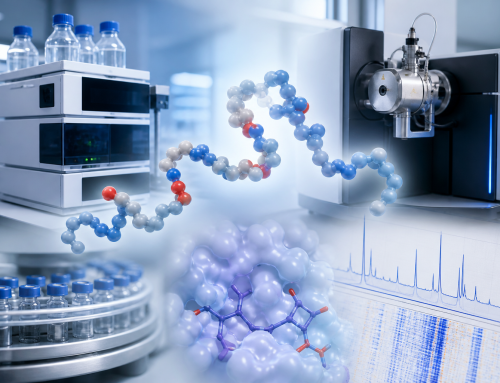
Peptides are central tools and study subjects across modern life science research. Defined broadly as short chains of amino acids linked by peptide bonds, they occupy a functional space between small molecules and larger proteins. Their size, sequence specificity, and chemical tunability make them useful for investigating biological pathways, developing assays, modeling protein interactions, and exploring therapeutic mechanisms in preclinical settings.
In scientific research, peptides are not limited to one discipline. They are used in biochemistry, immunology, cell biology, neuroscience, microbiology, pharmacology, diagnostics, materials science, and drug discovery. Some peptides occur naturally as hormones, neurotransmitters, antimicrobial molecules, or signaling mediators. Others are designed synthetically to mimic, block, stabilize, or report on biological processes. Understanding their role requires attention to both their biological functions and the technical considerations that determine their reliability in experiments.
What Are Peptides?
Peptides are polymers composed of amino acids, typically ranging from a few residues to about 50 amino acids in length, although definitions vary by field. Shorter peptides may include dipeptides, tripeptides, and oligopeptides, while longer sequences may overlap conceptually with small proteins. The order of amino acids determines charge, hydrophobicity, secondary structure, receptor binding, enzymatic susceptibility, and other experimental properties.
Peptides, Proteins, and Small Molecules
Peptides are often compared with proteins and small molecules because they share features with both. Like proteins, peptides can participate in highly specific molecular recognition, including binding to receptors, enzymes, antibodies, and other proteins. Like small molecules, many peptides can be synthesized chemically and modified with functional groups, labels, or non-natural amino acids. This hybrid character explains why peptides are frequently selected when researchers need a molecule with defined biological specificity and manageable synthetic accessibility.
Natural and Synthetic Peptides
Natural peptides are produced by organisms through ribosomal translation, enzymatic processing, or non-ribosomal biosynthetic pathways. Examples include peptide hormones, cytokine fragments, neuropeptides, and antimicrobial peptides. Synthetic peptides are generated in the laboratory, most commonly by solid-phase peptide synthesis, and may reproduce natural sequences or incorporate designed modifications. Synthetic approaches allow researchers to control sequence, purity, isotopic labeling, terminal modifications, and conjugation to fluorescent dyes, biotin, carriers, or other analytical groups.
Why Peptides Are Valuable Research Tools
Peptides are valuable because they provide sequence-level control over molecular interactions. A researcher can design a peptide to represent a defined epitope, receptor-binding domain, protease cleavage site, phosphorylation motif, or protein interaction interface. This precision supports mechanistic studies that would be more difficult with whole proteins or less specific small molecules.
Specificity and Modularity
Many biological processes depend on short linear motifs within proteins. Peptides representing these motifs can be used to test binding events, substrate recognition, immune responses, or enzyme specificity. Because peptide sequences are modular, researchers can systematically substitute residues, introduce post-translational modifications, or truncate regions to identify the amino acids required for activity. These structure-activity relationships are important in both basic research and early-stage therapeutic development.
Chemical Flexibility
Peptides can be modified in ways that improve their suitability for different experimental formats. Common modifications include N-terminal acetylation, C-terminal amidation, phosphorylation, cyclization, PEGylation, lipidation, fluorescent labeling, and biotinylation. Researchers may also incorporate D-amino acids, beta-amino acids, non-natural side chains, or isotopically labeled residues. These modifications can influence solubility, stability, cell permeability, receptor selectivity, protease resistance, and detectability.
Applications in Biochemistry and Molecular Biology
Mapping Protein-Protein Interactions
Protein-protein interactions often involve short regions within larger protein structures. Peptides corresponding to these regions can be used in binding assays, competition experiments, pulldown studies, and structural analyses. By changing individual residues, researchers can identify key contact points and determine whether a motif is necessary or sufficient for binding. Such studies are important for understanding signaling complexes, transcriptional regulation, scaffold proteins, and enzyme regulation.
Enzyme Substrate and Inhibitor Studies
Peptides are widely used as substrates for proteases, kinases, phosphatases, acetyltransferases, and other enzymes. A peptide substrate can be designed around a known recognition sequence and paired with analytical detection methods such as fluorescence, mass spectrometry, chromatography, or electrophoresis. Inhibitory peptides can also be used to probe enzyme mechanisms or interfere with substrate docking. These experiments help define catalytic specificity, kinetic parameters, and pathway regulation.
Epitope Mapping and Antibody Characterization
In immunology and antibody development, peptides are frequently used to map epitopes. Overlapping peptide libraries can identify the linear regions of an antigen recognized by antibodies or T cells. This approach supports vaccine research, diagnostic assay development, autoimmune disease studies, and validation of antibody specificity. Peptide arrays can test many sequences in parallel, allowing researchers to assess cross-reactivity and sequence-dependent binding patterns.
Peptides in Cell Biology and Signaling Research
Cells use peptide-mediated signals in numerous physiological processes, including growth, metabolism, immune regulation, neuronal communication, and tissue repair. Research peptides can mimic natural ligands, block receptor interactions, or provide controlled stimulation in cell-based assays. These applications require careful attention to concentration, exposure time, receptor expression, and peptide stability under culture conditions.
Receptor Activation and Inhibition
Many receptors recognize peptide ligands. Examples include G protein-coupled receptors, receptor tyrosine kinases activated by peptide growth factors, cytokine receptors, and immune receptors. Synthetic peptides can help determine receptor selectivity, downstream signaling pathways, desensitization dynamics, or ligand-receptor binding kinetics. Conversely, antagonist peptides or competitive fragments can be used to inhibit interactions and test pathway dependence.
Cell-Penetrating and Delivery Peptides
Cell-penetrating peptides are studied for their ability to facilitate transport of cargo molecules across cellular membranes. In research settings, they may be linked to nucleic acids, proteins, imaging agents, or small molecules to evaluate intracellular delivery strategies. The mechanisms of uptake can vary and may involve direct translocation, endocytosis, or mixed pathways. Because uptake behavior is influenced by cell type and experimental conditions, appropriate controls are essential.
Peptides in Neuroscience and Endocrinology
Peptides have long been important in studies of neuronal and endocrine communication. Neuropeptides can function as neurotransmitters or neuromodulators, influencing pain perception, appetite, stress response, sleep, learning, and autonomic regulation. Peptide hormones regulate metabolism, growth, reproduction, fluid balance, and other systemic processes.
Modeling Physiological Signaling
Research using peptide ligands allows investigators to model physiological signaling in controlled experimental systems. For example, receptor-specific peptide agonists and antagonists can help distinguish among related signaling pathways. In endocrine research, peptides are used to study hormone secretion, receptor sensitivity, feedback regulation, and cellular responses in target tissues. In neuroscience, peptide tools can support studies of synaptic modulation, neuroinflammation, and neuroendocrine integration.
Analytical Challenges
Peptides in biological samples may be present at low abundance and can be rapidly degraded by peptidases. This creates analytical challenges for detection and quantification. Mass spectrometry, immunoassays, stable isotope standards, and optimized sample preparation protocols are commonly used to address these issues. Rigorous validation is especially important when measuring endogenous peptide levels in plasma, cerebrospinal fluid, tissue extracts, or cell culture media.
Peptides in Immunology, Microbiology, and Host Defense
Antimicrobial Peptides
Antimicrobial peptides are part of innate immune defense in many organisms. They can interact with microbial membranes, influence immune signaling, or participate in barrier protection. Research on antimicrobial peptides helps clarify mechanisms of host defense and microbial susceptibility. It also provides model systems for studying membrane disruption, peptide-lipid interactions, resistance mechanisms, and inflammation.
Peptide Antigens and Immune Recognition
Peptides presented by major histocompatibility complex molecules are fundamental to T cell recognition. Synthetic peptide antigens allow researchers to investigate antigen processing, immune tolerance, T cell activation, and vaccine responses. Carefully designed peptide panels can reveal how sequence variation affects immune recognition, including in infectious disease, cancer immunology, and autoimmune research.
Peptides in Drug Discovery and Translational Research
Peptides are important in drug discovery because they can engage biological targets that may be difficult for traditional small molecules. Their high target affinity and ability to mimic natural ligands make them useful starting points for therapeutic research. However, translation from research tool to candidate molecule requires addressing pharmacokinetic and pharmacodynamic limitations.
Advantages in Early Discovery
Peptide libraries enable screening for binding motifs, enzyme substrates, receptor ligands, and inhibitory sequences. Phage display, mRNA display, combinatorial synthesis, and computational design can generate diverse peptide candidates. Once a lead sequence is identified, researchers can optimize activity and stability through residue substitution, cyclization, backbone modification, terminal protection, or conjugation strategies.
Limitations and Optimization Strategies
Peptides may be susceptible to enzymatic degradation, rapid renal clearance, poor oral bioavailability, and limited membrane permeability. These characteristics are not necessarily disadvantages in all research settings, but they are important for translational applications. Optimization strategies include incorporating non-natural amino acids, cyclizing the sequence, adding lipid groups, modifying termini, using depot formulations, or designing peptidomimetics. Each modification can alter potency, selectivity, toxicity, immunogenicity, and analytical behavior, so systematic evaluation is required.
Peptide Design Considerations for Research
Sequence Selection
Experimental success often begins with sequence design. Researchers should consider biological relevance, conservation across species, predicted secondary structure, charge distribution, hydrophobicity, and the presence of reactive residues such as cysteine, methionine, or tryptophan. When designing epitope peptides or protein fragments, it is important to determine whether the target epitope is linear or conformational, as short linear peptides may not reproduce structure-dependent binding sites.
Solubility and Aggregation
Peptide solubility can vary widely. Highly hydrophobic sequences may aggregate or adhere to plastic surfaces, while highly charged peptides may require specific buffers or pH conditions. Salt concentration, solvent composition, terminal modifications, and storage conditions can affect solubility. Researchers commonly prepare stock solutions in sterile water, dilute acid, dilute base, dimethyl sulfoxide, or buffer, depending on sequence properties and downstream assay compatibility.
Controls and Experimental Reproducibility
Appropriate controls improve interpretation. Scrambled peptides, inactive mutants, vehicle controls, dose-response series, time-course experiments, and orthogonal assays can help distinguish specific biological effects from nonspecific charge, hydrophobicity, solvent, or aggregation effects. Lot-to-lot documentation, certificate of analysis review, and consistent handling are also important for reproducibility.
Synthesis, Purification, and Quality Assessment
Solid-Phase Peptide Synthesis
Most research peptides are produced by solid-phase peptide synthesis, in which amino acids are sequentially added to a growing chain anchored to a resin. Protecting groups prevent unwanted side reactions during assembly. After synthesis, the peptide is cleaved from the resin, deprotected, purified, and characterized. Longer or more complex peptides may require specialized synthesis strategies, fragment ligation, or additional optimization.
Purity and Analytical Methods
Peptide purity is commonly assessed by high-performance liquid chromatography, while identity is confirmed by mass spectrometry. Additional methods, such as amino acid analysis, nuclear magnetic resonance, circular dichroism, or endotoxin testing, may be relevant depending on the application. The required purity depends on experimental use. For some screening assays, moderate purity may be adequate, whereas cell-based assays, immunological studies, and quantitative biochemical experiments may require higher purity and more extensive characterization.
Storage, Handling, and Stability
Peptides can be sensitive to moisture, oxidation, repeated freeze-thaw cycles, light, and enzymatic degradation. Lyophilized peptides are often stored desiccated at low temperature, while reconstituted solutions may require aliquoting and storage under conditions that minimize degradation. Cysteine-containing peptides may form disulfides, methionine-containing peptides may oxidize, and sequences with aspartic acid or glutamine may undergo side reactions under certain conditions.
Good laboratory practice includes recording reconstitution solvent, concentration, aliquot date, freeze-thaw history, and storage temperature. When a peptide is used in quantitative work, concentration should be determined carefully because peptide weight may include counterions, salts, residual water, or other components from synthesis and purification.
Ethical, Regulatory, and Safety Considerations
Research peptides should be used in accordance with institutional policies, biosafety rules, chemical hygiene practices, and applicable regulations. Peptides intended for research use are not equivalent to clinical-grade materials and should not be used for human or veterinary administration unless specifically manufactured, tested, and approved for that purpose. For studies involving animals, human samples, infectious agents, or genetically modified systems, researchers should obtain appropriate approvals and follow relevant ethical guidelines.
Safety assessments should consider peptide sequence, biological activity, route of exposure, solvent, concentration, and potential immunological or toxicological effects. Although many peptides are handled routinely in laboratories, biologically active sequences can produce potent effects in experimental systems and should be treated with appropriate caution.
Emerging Directions in Peptide Research
Peptide science continues to expand through advances in synthesis, computational modeling, screening technologies, and analytical instrumentation. Machine learning and structure prediction tools are increasingly used to design peptides that bind specific targets or adopt defined conformations. High-throughput peptide arrays allow rapid profiling of binding, phosphorylation, protease cleavage, and immune recognition. Improved mass spectrometry workflows are increasing the sensitivity of peptidomics, enabling broader detection of endogenous peptide networks.
Another active area is the development of constrained peptides and peptidomimetics that preserve biological recognition while improving stability or permeability. Peptide-based biomaterials are also being investigated for tissue engineering, drug delivery, biosensing, and self-assembling nanostructures. These directions demonstrate the versatility of peptides as both biological molecules and engineered research platforms.
Conclusion
Peptides play a significant role in scientific research because they offer precise, adaptable, and biologically relevant ways to study molecular interactions and cellular processes. They support experiments ranging from enzyme kinetics and epitope mapping to receptor signaling, immunology, neuroscience, microbiology, and early drug discovery. Their usefulness depends on careful sequence design, appropriate controls, verified purity and identity, and sound handling practices. As analytical and synthetic methods continue to improve, peptides are likely to remain essential tools for investigating biological mechanisms and developing new research strategies.