Introduction
Peptides and proteins are closely related biomolecules built from amino acids, and the terms are sometimes used interchangeably in general discussions. In laboratory and biomedical contexts, however, the distinction matters. Peptides and proteins differ in typical chain length, structural complexity, biosynthesis, stability, analytical handling, and biological roles. These differences influence experimental design, reagent selection, formulation, quality control, and interpretation of results.
Both peptides and proteins are polymers composed of amino acids linked by peptide bonds. A peptide bond forms when the carboxyl group of one amino acid reacts with the amino group of another, releasing water. The resulting chain has directionality, with an N-terminus and a C-terminus. The key distinction is not the chemistry of the bond, but how many amino acids are present and how the chain behaves as a molecular system.
Definitions: What Are Peptides and Proteins?
What is a peptide?
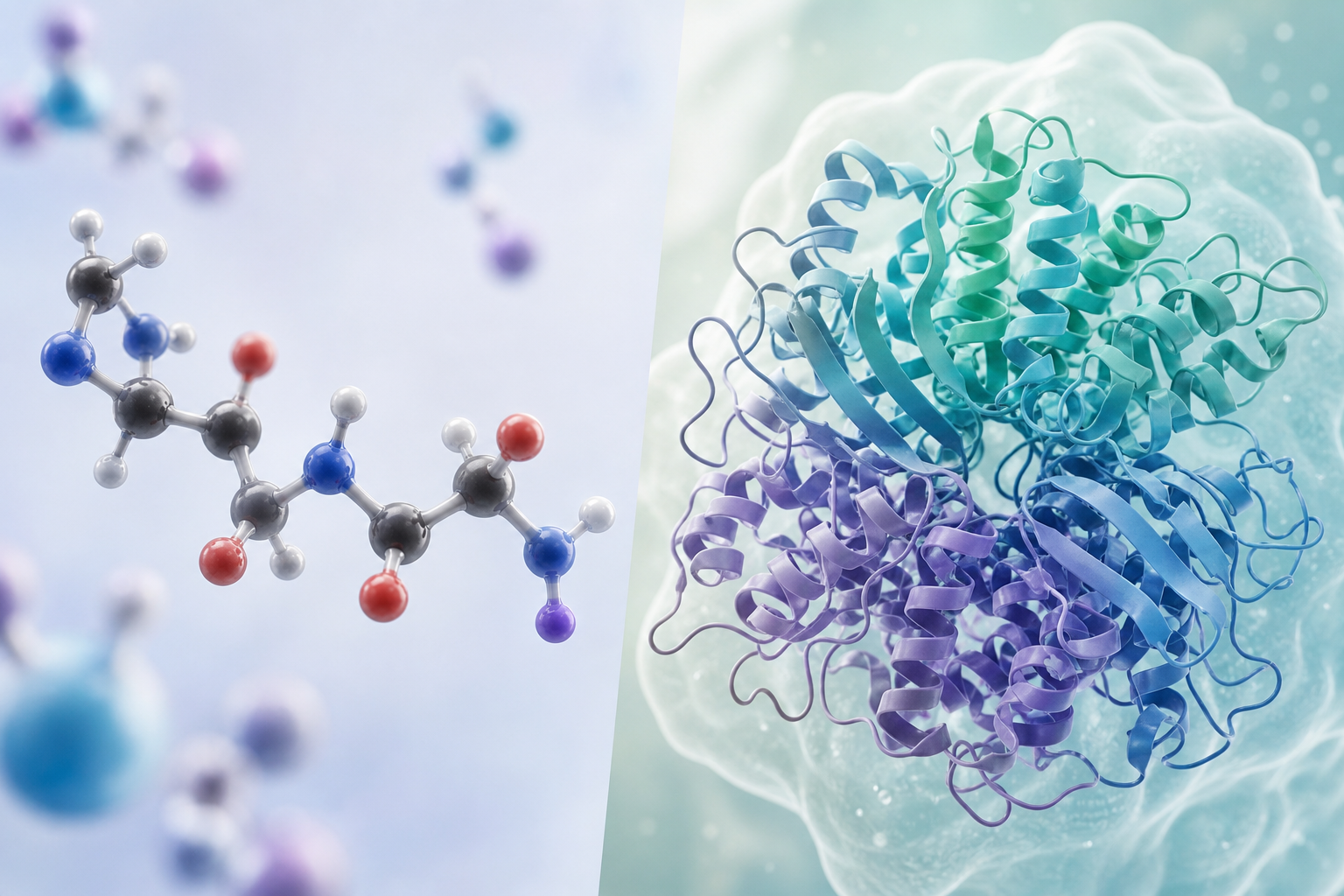
A peptide is generally defined as a short chain of amino acids joined by peptide bonds. Common categories include dipeptides, tripeptides, oligopeptides, and polypeptides. In many laboratory settings, molecules containing fewer than about 50 amino acids are often referred to as peptides, although this threshold is not absolute. Some organizations and disciplines use different cutoffs, and the term may also depend on function or context.
Peptides may be linear or cyclic, naturally occurring or synthetic, modified or unmodified. They can act as hormones, signaling molecules, antimicrobial agents, enzyme substrates, receptor ligands, epitopes, or research standards. Because they are relatively small, many peptides can be produced by chemical synthesis with precise sequence control.
What is a protein?
A protein is typically a larger amino acid polymer that folds into a defined three-dimensional structure and performs a biological function. Proteins may consist of one polypeptide chain or multiple chains assembled into a functional complex. Many proteins contain hundreds of amino acids, though some small proteins overlap in size with larger peptides.
Proteins frequently exhibit hierarchical structure: primary, secondary, tertiary, and sometimes quaternary. Their functions are diverse and include catalysis, transport, structural support, immune recognition, signal transduction, molecular regulation, and cellular movement. Examples include enzymes, antibodies, receptors, transcription factors, collagen, albumin, and hemoglobin.
Key Difference 1: Molecular Size and Chain Length
The most common practical distinction between peptides and proteins is size. Peptides are shorter chains, often below 50 amino acids, while proteins are generally longer and may contain from dozens to several thousand amino acids. Molecular weight follows the same trend: peptides often fall below approximately 5 to 10 kDa, whereas proteins are commonly above this range.
This size distinction is useful but not universal. Insulin, for example, contains 51 amino acids across two chains and is often described as a peptide hormone, although it also has protein-like features, including disulfide bonds and a defined structure. Conversely, some small proteins may contain fewer than 100 amino acids but fold into stable domains and perform protein-like functions. Therefore, size is a guide rather than a strict rule.
Key Difference 2: Structural Complexity
Primary structure
Both peptides and proteins have a primary structure, meaning the linear amino acid sequence. Sequence determines many molecular properties, including charge, hydrophobicity, solubility, protease susceptibility, and binding potential. For short peptides, primary structure often accounts for much of the molecule’s behavior.
Secondary and tertiary structure
Proteins more commonly adopt stable secondary structures such as alpha helices, beta sheets, and turns. These elements pack into tertiary structures stabilized by hydrophobic interactions, hydrogen bonds, salt bridges, van der Waals forces, and disulfide bonds. The folded architecture is often essential for biological activity.
Peptides can also form secondary structures, especially when they contain structure-promoting sequences or are constrained by cyclization, stapling, or disulfide bonds. However, many short peptides are flexible in aqueous solution and may not maintain a single stable conformation until they bind a target, insert into a membrane, or interact with another molecule.
Quaternary structure
Quaternary structure refers to the assembly of multiple polypeptide chains into a functional unit. This is common among proteins, such as hemoglobin, antibodies, and many enzymes. Peptides are less often described in terms of quaternary structure, although peptide oligomerization and aggregation can occur and may be experimentally important.
Key Difference 3: Biological Roles
Peptides often function as short-range or systemic signaling molecules. Examples include neuropeptides, endocrine peptides, cytokine fragments, and peptide hormones such as glucagon and vasopressin. Peptides may also serve as epitopes recognized by antibodies or T-cell receptors, antimicrobial molecules, enzyme substrates, and modulators of receptor activity.
Proteins usually perform more structurally complex tasks. Enzymes catalyze biochemical reactions with high specificity, antibodies recognize antigens through folded binding domains, transport proteins move molecules across membranes or through blood, and structural proteins maintain tissue architecture. Many protein functions depend on a precisely folded active site, binding pocket, or interaction surface.
In practice, peptides are often studied as functional fragments, mimics, probes, or ligands, while proteins are frequently investigated as complete biological machines. This distinction affects assay design. A peptide may model a phosphorylation site or epitope, whereas a full protein may be necessary to study conformational regulation, allosteric behavior, or multi-domain interactions.
Key Difference 4: Synthesis and Production
Chemical peptide synthesis
Peptides are commonly produced by solid-phase peptide synthesis. In this method, amino acids are added sequentially to a growing chain anchored to a resin. Protecting groups control reactivity, and the final peptide is cleaved from the resin and purified. This approach enables incorporation of non-natural amino acids, isotopic labels, fluorescent tags, biotin, phosphorylation, acetylation, amidation, and other modifications.
Chemical synthesis is most efficient for shorter peptides. As chain length increases, incomplete coupling, side reactions, aggregation on resin, and purification challenges become more significant. Long peptides can still be produced, but yield and purity may decrease, and specialized strategies may be required.
Recombinant protein expression
Proteins are frequently produced using recombinant expression systems such as bacteria, yeast, insect cells, or mammalian cells. A DNA sequence encoding the protein is introduced into a host, which uses its cellular machinery to transcribe and translate the protein. The protein is then purified, often using affinity, ion exchange, size exclusion, or other chromatographic methods.
Recombinant systems are especially useful for larger proteins, folded domains, enzymes, antibodies, and glycoproteins. They can support complex folding and, depending on the host, certain post-translational modifications. However, expression systems vary in codon usage, folding environment, secretion capacity, proteolysis, glycosylation patterns, and endotoxin considerations.
Key Difference 5: Post-Translational Modifications
Proteins in cells often undergo post-translational modifications, including phosphorylation, glycosylation, acetylation, methylation, ubiquitination, lipidation, and disulfide bond formation. These modifications can regulate activity, stability, localization, and molecular interactions. In many cases, a protein’s biological function cannot be fully understood without considering its modification state.
Peptides can also be modified, either naturally or synthetically. Laboratory peptides are often designed with specific modifications to mimic biological states, improve stability, enable detection, or immobilize the molecule on a surface. For example, a phosphorylated peptide can be used to study kinase recognition, phosphatase activity, or antibody specificity. Because peptides are shorter, defined modifications can often be incorporated with high positional precision.
Key Difference 6: Stability and Degradation
Peptides and proteins differ in physical and biochemical stability. Short peptides may be more tolerant of certain denaturing conditions because they lack extensive tertiary structure. However, they can be susceptible to proteolytic degradation, oxidation, deamidation, and adsorption to laboratory plastics, particularly at low concentrations. Some hydrophobic peptides also have limited aqueous solubility or can aggregate.
Proteins are often sensitive to temperature, pH, agitation, freeze-thaw cycles, surface adsorption, and chemical denaturants because their activity depends on folded structure. Loss of tertiary or quaternary structure can reduce activity even if the primary sequence remains intact. Proteins may also aggregate, precipitate, or undergo fragmentation.
Storage conditions should be selected based on the specific molecule. Peptides are often stored lyophilized at low temperature and reconstituted in an appropriate solvent before use. Proteins are commonly stored in buffered solutions containing stabilizers such as salts, glycerol, reducing agents, carrier proteins, or detergents when compatible with downstream assays.
Key Difference 7: Analytical Characterization
Peptide analysis
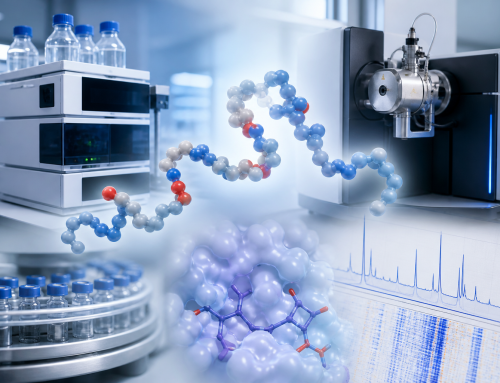
Peptides are commonly characterized by analytical high-performance liquid chromatography and mass spectrometry. These methods confirm purity, molecular mass, and sometimes sequence identity. Amino acid analysis, capillary electrophoresis, and nuclear magnetic resonance may also be used depending on the application. For synthetic peptides, purity is typically reported as a percentage based on chromatographic analysis, but purity alone does not confirm correct identity or biological activity.
Protein analysis
Protein characterization may require a broader analytical strategy. SDS-PAGE, Western blotting, size exclusion chromatography, dynamic light scattering, mass spectrometry, peptide mapping, circular dichroism, differential scanning calorimetry, enzyme assays, binding assays, and glycan analysis can all be relevant. Because proteins can have multiple folded, oligomeric, and modified states, characterization often evaluates both composition and functional integrity.
For laboratory purchasers, the appropriate documentation differs. A peptide certificate of analysis may emphasize sequence, mass, purity, counterion, and solubility guidance. A protein certificate may include concentration, purity, endotoxin level, activity, buffer composition, reducing conditions, formulation, storage stability, and lot-specific assay results.
Key Difference 8: Solubility and Formulation
Peptide solubility depends strongly on amino acid composition. Basic peptides often dissolve in dilute acid, acidic peptides may dissolve better in dilute base or neutral buffer, and hydrophobic peptides may require organic cosolvents such as DMSO or acetonitrile before dilution. Salt form and counterions can also influence solubility and downstream compatibility.
Protein solubility is influenced by surface charge, hydrophobic patches, pH relative to isoelectric point, ionic strength, cofactors, and folding state. Proteins may require specific buffers to maintain activity. Some proteins need reducing agents to prevent non-native disulfide formation, while others require oxidizing conditions to preserve correct disulfides. Detergents may be needed for membrane proteins, but they can interfere with certain assays.
Key Difference 9: Laboratory Applications
Peptides are widely used as antigens for antibody production, enzyme substrates, receptor ligands, standards for mass spectrometry, cell signaling probes, and competitive inhibitors. In immunology, defined peptide epitopes are essential for studying antigen presentation and T-cell responses. In proteomics, synthetic peptides can serve as reference standards for targeted quantification.
Proteins are used in enzyme kinetics, structural biology, cell culture, immunoassays, diagnostics research, binding studies, and therapeutic development. Full-length proteins or folded domains are often required when conformational epitopes, catalytic activity, allosteric regulation, or protein-protein interactions are under investigation.
Selecting between a peptide and a protein depends on the scientific question. If the goal is to study a linear epitope, a short modification site, or a receptor-binding motif, a peptide may be appropriate. If the goal involves folding, catalytic function, conformational antibody binding, or multi-domain regulation, a protein is more likely to be necessary.
Common Misconceptions
Misconception: all small amino acid chains are simple
Short length does not always imply simple behavior. Peptides can form helices, beta structures, cyclic conformations, fibrils, or membrane-associated assemblies. Their activity may depend on conformation, charge distribution, or environmental conditions.
Misconception: proteins are just longer peptides
Proteins are indeed composed of peptide-linked amino acids, but their folded structures create properties that are not predictable from length alone. Catalytic mechanisms, cooperative binding, allostery, and structural scaffolding often require higher-order organization.
Misconception: peptide purity and protein purity mean the same thing
Purity metrics are method-dependent. A peptide reported as 95 percent pure by HPLC may still require mass confirmation, while a protein appearing as a single band by SDS-PAGE may contain inactive conformers, aggregates, host cell proteins, or heterogeneous glycoforms. Quality assessment should match the intended use.
Practical Considerations for Researchers
When designing experiments, researchers should define whether the study requires a short sequence motif or a folded biological entity. Important considerations include chain length, expected conformation, modification state, solubility, assay compatibility, required purity, and stability under experimental conditions. Controls are also important: scrambled peptides, inactive mutants, carrier-only controls, heat-inactivated proteins, or unrelated proteins may help distinguish specific from nonspecific effects.
Documentation should be reviewed carefully. For peptides, sequence confirmation, mass, purity, net peptide content, counterion, and recommended reconstitution conditions are often relevant. For proteins, lot-specific activity, endotoxin, formulation, storage buffer, concentration method, oligomeric state, and freeze-thaw guidance may be critical. These details can affect reproducibility across laboratories and lots.
Conclusion
Peptides and proteins share the same fundamental amino acid chemistry, but they differ in typical size, folding, function, production methods, stability, and analytical requirements. Peptides are often shorter, more flexible, and suited to studying defined sequence motifs or modifications. Proteins are generally larger, structurally organized, and capable of complex biological functions. Understanding these distinctions helps researchers choose appropriate reagents, design stronger experiments, and interpret biochemical data more accurately.