Introduction to Freeze-Dried Peptides
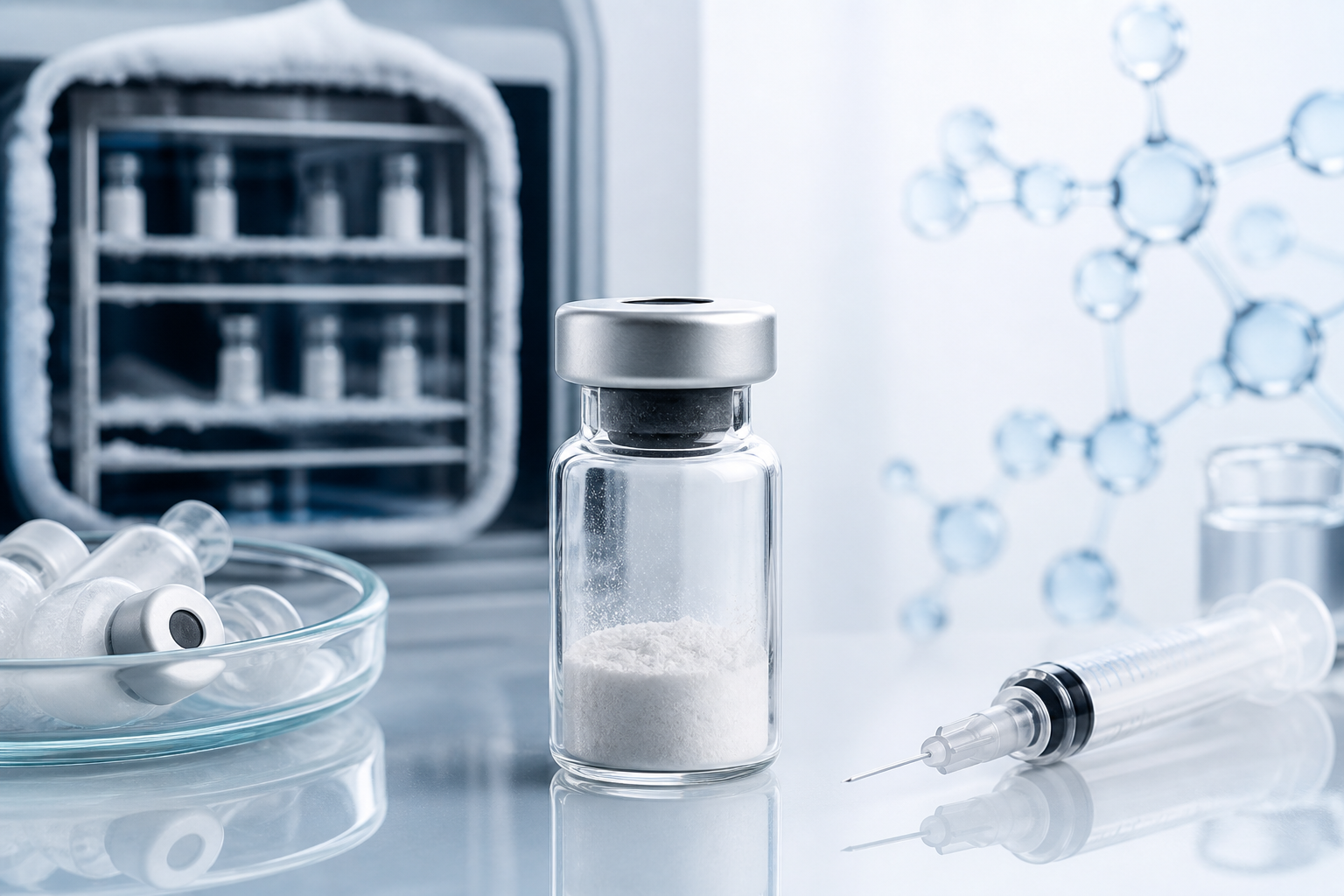
Freeze-dried peptides, also called lyophilized peptides, are peptides that have been dehydrated through a controlled low-temperature process to improve stability during storage and transport. In research laboratories, peptide products are commonly supplied as dry powders rather than ready-to-use solutions because many peptide sequences are sensitive to hydrolysis, oxidation, aggregation, or microbial contamination in aqueous environments.
Lyophilization is widely used in peptide manufacturing because it removes water while minimizing thermal stress. The resulting material is typically a porous solid, powder, or cake that can be reconstituted with an appropriate solvent before use. Understanding how freeze-dried peptides are produced, stored, and handled helps researchers maintain sample integrity and improve experimental reproducibility.
What Are Peptides?
Basic Definition
Peptides are short chains of amino acids linked by peptide bonds. They are generally smaller than proteins, although the distinction between a large peptide and a small protein can vary by context. Synthetic peptides may range from a few amino acids to several dozen residues, and they are used in a wide variety of research applications, including receptor studies, immunology, enzymology, cell signaling, proteomics, and assay development.
Why Peptide Properties Vary
The physical and chemical behavior of a peptide depends strongly on its sequence. Amino acid composition influences solubility, net charge, hydrophobicity, secondary structure, and susceptibility to degradation. For example, peptides rich in hydrophobic residues may dissolve poorly in aqueous buffers, while peptides containing cysteine, methionine, or tryptophan may be more sensitive to oxidation. These sequence-dependent properties are important when selecting storage conditions and reconstitution methods.
What Does Freeze-Dried Mean?
Lyophilization in Brief
Freeze-drying is a dehydration process performed under low temperature and reduced pressure. A peptide solution is first frozen, converting water into ice. The pressure is then lowered so that ice can sublimate, meaning it transitions directly from solid to vapor. A final drying stage removes additional unfrozen or bound water from the material.
Unlike conventional evaporation, lyophilization avoids prolonged exposure to high heat. This is important for peptides because elevated temperatures can accelerate chemical degradation, conformational changes, or aggregation. The dried product has a much lower moisture content than the starting solution, which generally slows many water-mediated degradation pathways.
Typical Stages of Freeze-Drying
Although parameters vary by formulation and equipment, peptide lyophilization usually includes three main stages:
- Freezing: The peptide solution is cooled until the solvent forms a solid matrix. Ice crystal formation and cooling rate can influence the structure of the final dried cake.
- Primary drying: Under vacuum, ice is removed by sublimation. This stage removes most of the water and requires careful control of shelf temperature and chamber pressure.
- Secondary drying: Residual moisture is reduced further by increasing temperature within controlled limits. This step helps improve long-term stability.
Why Peptides Are Supplied as Freeze-Dried Powders
Improved Stability Compared with Solutions
Many peptides are less stable in solution than in a dry state. Water can participate in hydrolysis reactions, support microbial growth, and facilitate molecular mobility that may contribute to aggregation or degradation. Removing water does not make a peptide indefinitely stable, but it can substantially slow common degradation pathways when combined with appropriate storage conditions.
Compatibility with Shipping and Inventory Management
Freeze-dried peptides are often easier to ship and store than liquid formulations. Dry materials are generally less susceptible to damage from short-term temperature fluctuations, although sensitive sequences may still require cold-chain transport. For laboratories that maintain peptide inventories, lyophilized aliquots can also simplify long-term storage and reduce the frequency of freeze-thaw cycles after reconstitution.
Flexible Reconstitution
Supplying peptides in a dry format allows researchers to choose a solvent, concentration, and buffer system appropriate for their specific assay. A peptide used in a cell-based assay may require different reconstitution conditions from one used in mass spectrometry or biochemical screening. This flexibility is one of the practical advantages of freeze-dried peptide materials.
Appearance and Physical Characteristics
Powder, Film, or Cake
Freeze-dried peptides may appear as fluffy white powders, compact cakes, thin films, or translucent residues on the wall of a vial. Appearance is influenced by peptide quantity, formulation, vial geometry, freezing behavior, and the presence of salts or excipients. A small amount of peptide may be difficult to see, particularly when supplied in microgram quantities or distributed as a thin film.
Color and Texture Considerations
Many lyophilized peptides are white to off-white, but color can vary depending on sequence, counterions, impurities, and formulation components. Slight differences in texture or volume are not necessarily indicators of poor quality. However, visible moisture, collapsed cake structure, unexpected discoloration, or evidence of vial damage should be documented and evaluated according to laboratory quality procedures.
Formulation Factors That Affect Freeze-Dried Peptides
Counterions and Salts
Synthetic peptides are often supplied with counterions such as acetate or trifluoroacetate, depending on purification and final processing. Counterions can influence solubility, pH behavior, and compatibility with downstream assays. For sensitive biological assays, researchers may need to consider whether residual salts or counterions could affect results.
Excipients and Stabilizers
Some peptide formulations include excipients such as sugars, buffers, bulking agents, or antioxidants. These components may protect the peptide during freeze-drying, improve cake structure, or enhance stability. However, excipients can also interfere with analytical methods or bioassays if not accounted for. Product documentation, certificates of analysis, and technical data sheets should be reviewed before use.
Residual Moisture
Residual moisture is the small amount of water remaining after lyophilization. Very high residual moisture may reduce stability, while excessively aggressive drying may affect some formulations. Manufacturers typically optimize freeze-drying cycles to balance dryness, stability, and product quality. For critical applications, residual moisture may be measured using methods such as Karl Fischer titration.
Storage of Freeze-Dried Peptides
Temperature
Storage recommendations depend on peptide sequence and formulation, but lyophilized peptides are commonly stored at low temperature, such as -20 degrees Celsius or below, for long-term preservation. Some stable peptides may tolerate short-term storage at refrigerated or ambient conditions, but this should not be assumed without supporting documentation. Laboratories should follow supplier recommendations and internal stability requirements.
Moisture Protection
Moisture uptake is a major concern for freeze-dried materials. Peptide vials should be kept tightly sealed and protected from humid environments. When removing a vial from cold storage, it is advisable to allow it to equilibrate to room temperature before opening. Opening a cold vial can cause atmospheric moisture to condense inside, potentially compromising the sample.
Light and Oxygen Exposure
Some peptides are sensitive to light or oxidation. Sequences containing methionine, cysteine, tryptophan, or tyrosine may require additional care. Amber vials, foil wrapping, inert gas headspace, or antioxidant-containing formulations may be used in certain cases. Minimizing repeated exposure to air and light is generally good laboratory practice.
Reconstitution of Freeze-Dried Peptides
Selecting an Appropriate Solvent
Reconstitution should be based on peptide solubility, intended application, and compatibility with the assay system. Common solvents include sterile water, phosphate-buffered saline, dilute acetic acid, dilute ammonium hydroxide, dimethyl sulfoxide, or mixtures of organic solvent and aqueous buffer. Hydrophobic peptides may require an initial dissolution step in a small volume of dimethyl sulfoxide or acetonitrile before dilution into buffer.
For acidic peptides, a small amount of basic solvent may improve dissolution. For basic peptides, dilute acid may be useful. Because peptide behavior is sequence-specific, solvent selection should be guided by the peptide data sheet, prior validation, or small-scale solubility testing.
Calculating Concentration
Accurate concentration preparation requires attention to peptide purity, salt form, water content, and net peptide content. The gross mass in a vial may not equal the mass of active peptide if counterions, residual water, or excipients are present. For quantitative assays, researchers should review the certificate of analysis and calculate stock concentrations based on the relevant purity and content values.
Practical Reconstitution Steps
- Allow the sealed vial to reach room temperature before opening.
- Centrifuge briefly if needed to collect material at the bottom of the vial.
- Add a measured volume of the chosen solvent slowly along the vial wall.
- Mix gently by pipetting or swirling. Avoid vigorous vortexing unless the peptide is known to tolerate it.
- Allow time for dissolution. Some peptides require several minutes to fully hydrate.
- If necessary, clarify by low-speed centrifugation or filtration, provided this is compatible with the application.
Handling After Reconstitution
Aliquoting
Once reconstituted, peptides are often more vulnerable to degradation. Preparing single-use aliquots helps reduce repeated freeze-thaw cycles and limits exposure to moisture, oxygen, and contaminants. Aliquots should be labeled with peptide name, concentration, solvent, date, and storage condition.
Freeze-Thaw Cycles
Repeated freezing and thawing can promote aggregation, precipitation, or degradation in some peptide solutions. The impact varies by sequence and formulation, but minimizing freeze-thaw cycles is a prudent approach. If repeated use is required, small aliquots are preferable to repeatedly thawing a primary stock.
Working Solution Stability
Working solutions, particularly dilute aqueous solutions, may have limited stability. They should be prepared fresh when possible or stored under validated conditions. Buffer pH, ionic strength, container material, and temperature can all influence peptide stability. Adsorption to plastic surfaces may also be relevant for low-concentration peptide solutions.
Quality Control and Documentation
Common Analytical Methods
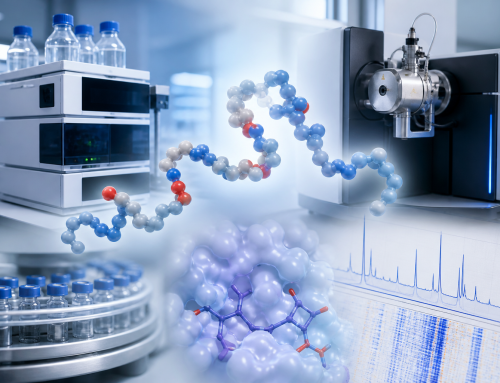
Peptide quality is typically assessed using analytical techniques such as high-performance liquid chromatography and mass spectrometry. HPLC provides information on purity and related impurities, while mass spectrometry confirms molecular mass. Additional tests may include amino acid analysis, residual solvent testing, endotoxin testing, water content measurement, or sterility assessment, depending on intended use.
Importance of the Certificate of Analysis
The certificate of analysis is a key document for research traceability. It may include lot number, sequence, molecular weight, purity, counterion, quantity, appearance, analytical methods, and recommended storage conditions. For regulated or highly controlled research environments, retaining this documentation supports reproducibility, inventory control, and audit readiness.
Common Problems and Troubleshooting
Poor Solubility
If a peptide does not dissolve readily, solvent mismatch is a common cause. Adjusting pH, using a compatible organic co-solvent, increasing ionic strength, or warming gently may help, depending on the peptide. Harsh conditions should be avoided unless validated, as they can alter peptide structure or cause degradation. When uncertainty exists, test a small amount before reconstituting the full vial.
Precipitation After Dilution
A peptide may dissolve in a primary solvent but precipitate after dilution into buffer. This can occur when the final solvent composition, pH, or salt concentration reduces solubility. Slower dilution, maintaining a small percentage of co-solvent, or selecting a different buffer may reduce precipitation. Compatibility with the downstream assay must always be considered.
Unexpected Loss of Activity
Loss of biological or biochemical activity may result from degradation, oxidation, adsorption, incorrect concentration, or unsuitable assay conditions. Reviewing storage history, reconstitution records, freeze-thaw exposure, and analytical documentation can help identify possible causes. For critical assays, orthogonal confirmation methods may be needed.
Best Practices for Laboratory Use
Before Opening the Vial
Confirm the peptide identity, lot number, storage condition, and documentation before use. Allow the vial to equilibrate to room temperature while sealed. Check whether the material is supplied as a free peptide, salt form, modified sequence, or formulation with excipients.
During Preparation
Use clean, calibrated pipettes and appropriate containers. Record solvent type, final concentration, pH if relevant, and any observations about dissolution. For sterile applications, use aseptic technique and sterile solvents. For analytical applications, ensure that solvent components are compatible with the detection method.
During Storage
Store lyophilized and reconstituted peptides according to validated or supplier-recommended conditions. Keep a record of freeze-thaw cycles and expiration or retest dates. Avoid unnecessary exposure to humidity, light, and elevated temperature.
Conclusion
Freeze-dried peptides are widely used in research because lyophilization can improve stability, simplify transport, and allow flexible reconstitution. Their successful use depends on understanding the peptide sequence, formulation, storage requirements, and solvent compatibility. Careful handling, accurate documentation, and attention to moisture, temperature, and freeze-thaw exposure help preserve peptide quality and support reliable experimental outcomes.