
Research Library
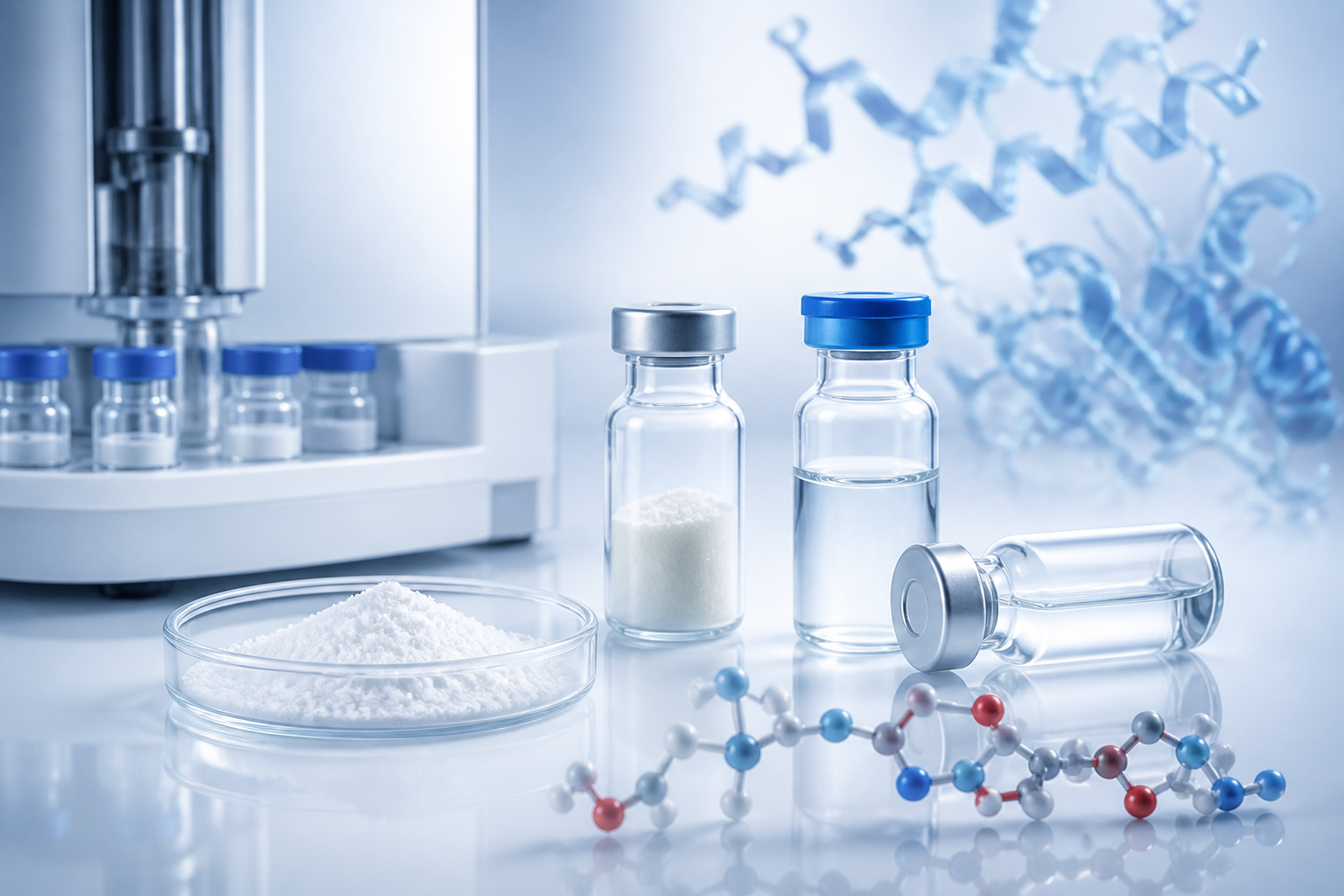
Peptide Quality Control Standards: Methods, Specifications, and Documentation
Peptide quality control standards define how identity, purity, content, impurities, and documentation are assessed. Understanding these standards helps laboratories select peptides that are appropriate for research, analytical, or regulated applications.

Research Compound Documentation Standards
Research compound documentation supports traceability, safety, and reproducibility across laboratory workflows. This article outlines practical standards for identity, purity, storage, and chain-of-custody records.

Understanding Lyophilized Peptides
Lyophilized peptides are commonly supplied as dry powders to improve stability and handling flexibility. This guide explains how they are made, stored, reconstituted, and documented for reliable laboratory use.

How HPLC Testing Works
HPLC testing separates compounds in a liquid sample using a pressurized mobile phase, a chemically selective column, and a detector. This article explains the workflow, instrumentation, data interpretation, and quality controls behind reliable HPLC analysis.

Selecting a Research Peptide Supplier: Key Criteria for Laboratories and Institutions
Selecting a research peptide supplier requires evaluating synthesis capability, analytical documentation, quality systems, and logistical reliability. This guide outlines practical criteria for laboratories and procurement teams.

Mass Spectrometry Explained: Principles, Instrumentation, and Applications
Mass spectrometry identifies and quantifies molecules by measuring ion mass-to-charge ratios. This guide explains core principles, instrumentation, workflows, and applications.