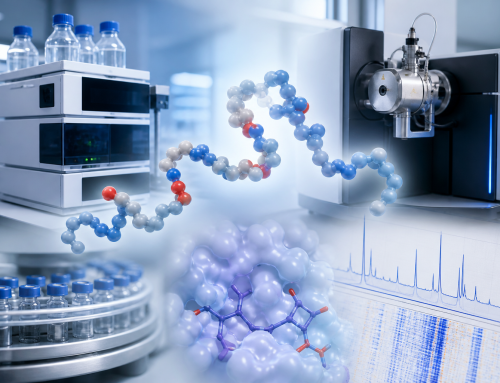

Common Types of Research Peptides
Research peptides are widely used in biochemical, pharmacological, cell biology, microbiology, and materials science laboratories. They provide a flexible way to study biological signaling, protein interactions, enzymatic activity, membrane transport, immune responses, and structure-function relationships. Because peptides can be synthesized with defined sequences and chemical modifications, they are valuable tools for controlled experimental design.
This overview summarizes common types of research peptides, how they are typically categorized, and the key considerations researchers evaluate when selecting peptides for in vitro, ex vivo, or preclinical research. The discussion is intended for laboratory and institutional audiences and does not address clinical use. Research peptides should be handled according to institutional safety procedures, applicable regulations, and supplier documentation.
What Are Research Peptides?
Peptides are short chains of amino acids linked by peptide bonds. They are generally smaller than proteins, although the boundary between a peptide and a small protein is not always strict. Many research peptides contain fewer than 50 amino acids, but longer synthetic peptides are also used, especially in immunology, structural biology, and vaccine-related research.
In the laboratory, peptides may be used as endogenous signaling molecule analogs, enzyme substrates, receptor ligands, affinity probes, standards for analytical assays, antimicrobial test compounds, or building blocks for biomaterials. Some peptides are identical to naturally occurring sequences, while others are modified to improve stability, alter solubility, add a label, restrict conformation, or support immobilization on a surface.
Common modifications include N-terminal acetylation, C-terminal amidation, phosphorylation, biotinylation, fluorescent labeling, disulfide cyclization, incorporation of D-amino acids, PEGylation, lipidation, and addition of non-natural residues. These changes can substantially influence peptide behavior, so researchers typically confirm that a selected peptide form matches the experimental question.
Major Categories of Research Peptides
1. Signaling and Receptor-Binding Peptides
Many peptides function as ligands for cell-surface receptors. In research settings, receptor-binding peptides are used to investigate signal transduction, ligand-receptor affinity, receptor internalization, downstream pathway activation, and cellular responses. This category includes peptide hormones, cytokine-like peptide fragments, growth factor-derived sequences, and synthetic agonists or antagonists.
Examples include angiotensin peptides used in cardiovascular and renal pathway research, bradykinin and related kinins used in inflammation and vascular studies, and peptide fragments derived from growth factors or extracellular matrix proteins. These peptides may help researchers map binding domains, compare receptor subtype activity, or evaluate how sequence modifications affect biological responses.
Because receptor-mediated systems can be highly context dependent, experimental interpretation often requires attention to cell type, receptor expression, peptide purity, degradation rate, and assay conditions. A peptide that produces a clear response in one model may not behave similarly in another due to differences in receptor density, protease activity, or intracellular signaling machinery.
2. Endocrine and Metabolic Research Peptides
Endocrine and metabolic peptides are used to study pathways involved in glucose regulation, appetite signaling, lipid metabolism, energy balance, pituitary function, and gastrointestinal physiology. These compounds may be endogenous hormones, hormone fragments, receptor ligands, or analogs designed to support mechanistic research.
Common examples in research include insulin-related peptides, glucagon-like peptide sequences, ghrelin-related peptides, melanocortin peptides, somatostatin-related sequences, and corticotropin-releasing hormone-related peptides. Laboratories may use these peptides to examine receptor activation, second messenger production, transcriptional changes, or interactions between endocrine organs and metabolic tissues.
Metabolic peptide studies often require careful analytical validation because peptide degradation can occur rapidly in biological matrices. Protease inhibitors, controlled sample processing, and validated quantification methods such as LC-MS/MS or immunoassays may be necessary depending on the study design. Researchers also consider whether the peptide is being used as a native sequence, stabilized analog, radiolabeled tracer, or assay standard.
3. Neuropeptides
Neuropeptides are peptide signaling molecules found throughout the central and peripheral nervous systems. They participate in processes such as pain signaling, stress responses, feeding behavior, sleep regulation, mood-related pathways, autonomic function, and neuroendocrine communication. In research, neuropeptides are valuable for investigating receptor pharmacology, neuronal excitability, synaptic modulation, and neuroimmune interactions.
Examples include substance P, neuropeptide Y, vasoactive intestinal peptide, oxytocin, vasopressin, orexin peptides, galanin, and enkephalins. These peptides may be studied in neuronal cultures, tissue preparations, receptor-binding assays, electrophysiology experiments, or analytical workflows measuring endogenous peptide levels.
Neuropeptide research can be technically demanding because many neuropeptides are present at low concentrations, may undergo post-translational processing, and can act through multiple receptor subtypes. Peptide sequence variants and terminal modifications can determine receptor selectivity and functional outcomes. For this reason, documentation of exact sequence, salt form, purity, and storage conditions is especially important.
4. Antimicrobial Peptides
Antimicrobial peptides, often abbreviated AMPs, are short peptides that can interact with bacterial, fungal, viral, or parasitic membranes and other microbial targets. They are found in many organisms as part of innate defense systems. In the laboratory, AMPs are commonly used to study host-pathogen interactions, membrane disruption, biofilm biology, microbial resistance mechanisms, and peptide structure-activity relationships.
Representative antimicrobial peptide families include defensins, cathelicidins, magainins, cecropins, and synthetic amphipathic peptides. Many AMPs contain cationic and hydrophobic regions that support interaction with microbial membranes. However, not all antimicrobial activity results from membrane lysis; some peptides affect intracellular targets, immune signaling, or microbial metabolism.
Researchers working with AMPs often evaluate minimum inhibitory concentration, membrane permeability, hemolysis, cytotoxicity, biofilm disruption, and activity under different salt or pH conditions. Assay standardization is important because media composition, inoculum density, peptide adsorption to plastic, and serum components can influence measured activity.
5. Cell-Penetrating Peptides
Cell-penetrating peptides, or CPPs, are sequences that facilitate transport across cellular membranes. They are used in research to deliver molecular cargo such as oligonucleotides, proteins, imaging agents, nanoparticles, or small molecules into cells. CPPs may be covalently attached to a cargo or used as part of a noncovalent complex.
Common examples include TAT-derived peptides, penetratin, polyarginine sequences, and amphipathic transport peptides. Research applications include intracellular delivery studies, endocytosis mechanism analysis, imaging experiments, and evaluation of cargo localization.
CPP experiments require careful controls because internalization can vary by cell type, concentration, cargo size, incubation time, and detection method. Fluorescent signal associated with a cell does not always indicate cytosolic delivery; it may represent membrane binding or endosomal localization. Confocal microscopy, flow cytometry with quenching controls, subcellular fractionation, or functional readouts may be used to distinguish uptake from effective intracellular delivery.
6. Enzyme Substrate and Inhibitor Peptides
Peptides are frequently designed as substrates or inhibitors for enzymes such as proteases, kinases, phosphatases, histone-modifying enzymes, and transferases. Substrate peptides help measure enzyme kinetics, screen inhibitors, identify sequence preferences, or validate assay conditions. Inhibitory peptides may mimic natural binding motifs or compete with protein-protein interactions.
Protease substrate peptides may contain a cleavage sequence and a detectable label, such as a fluorophore and quencher pair. Kinase substrate peptides may include a phosphorylation site that is detected by radiometric, antibody-based, fluorescence, or mass spectrometry methods. Histone tail peptides, including modified lysine or arginine residues, are widely used in epigenetics research to study reader domains and modifying enzymes.
When selecting enzyme-related peptides, researchers consider substrate specificity, solubility, detection chemistry, background signal, and compatibility with buffers and cofactors. Kinetic studies also require attention to peptide concentration, purity, and possible aggregation at higher concentrations.
7. Immunological and Epitope Peptides
Epitope peptides are short sequences used to study immune recognition. They may represent linear B-cell epitopes, T-cell epitopes presented by major histocompatibility complex molecules, or synthetic peptide pools spanning a larger protein. These peptides are common in immunology, infectious disease research, vaccine development studies, allergy research, and autoimmunity investigations.
Applications include ELISpot assays, intracellular cytokine staining, T-cell activation assays, antibody mapping, MHC binding analysis, and peptide library screening. Overlapping peptide pools allow researchers to identify immunodominant regions within viral, bacterial, tumor-associated, or self-proteins.
Peptide purity and sequence accuracy are important in immunological assays because minor contaminants or sequence errors can affect specificity. Researchers also consider peptide length, HLA restriction, solubility, endotoxin testing where relevant, and appropriate negative and positive controls.
8. Structural and Self-Assembling Peptides
Some peptides are designed primarily for their structural properties rather than receptor activity. Self-assembling peptides can form nanofibers, hydrogels, beta-sheet structures, coiled coils, or other ordered architectures. These materials are studied in tissue engineering, drug delivery research, biosensors, nanotechnology, and protein design.
Examples include peptide amphiphiles, short aromatic dipeptides, collagen-mimetic peptides, elastin-like peptides, and coiled-coil systems. Their behavior depends on sequence, charge distribution, hydrophobicity, chirality, concentration, temperature, pH, ionic strength, and terminal modifications.
Characterization methods may include circular dichroism, transmission electron microscopy, atomic force microscopy, rheology, dynamic light scattering, and mass spectrometry. Because self-assembly can be sensitive to small changes in conditions, reproducible preparation and documentation are essential.
9. Extracellular Matrix and Adhesion Peptides
Extracellular matrix-derived peptides are widely used to investigate cell adhesion, migration, differentiation, and mechanobiology. Short motifs derived from proteins such as fibronectin, laminin, collagen, and vitronectin can interact with integrins or other cell-surface receptors. A well-known example is the RGD motif, which is used in studies of integrin-mediated adhesion.
These peptides are often incorporated into hydrogels, coated onto surfaces, or conjugated to polymers to create defined cell culture microenvironments. Researchers may compare adhesive motifs, spacer lengths, ligand density, and matrix stiffness to understand how cells respond to their surroundings.
For biomaterials applications, peptide immobilization chemistry is a key variable. The orientation, accessibility, and stability of an adhesion peptide can influence cell behavior. Analytical confirmation of conjugation and surface presentation helps improve reproducibility.
10. Labeled, Tagged, and Modified Peptides
Many research peptides are synthesized with labels or tags to support detection, purification, imaging, or immobilization. Fluorescent peptides may be used in microscopy, flow cytometry, binding studies, or enzyme assays. Biotinylated peptides can be captured with streptavidin-coated surfaces or beads. Isotope-labeled peptides are used as analytical standards in quantitative mass spectrometry.
Other modifications include phosphorylation, methylation, acetylation, glycosylation, lipidation, and cyclization. Modified peptides are especially important when studying post-translational modifications, membrane association, protein domains, and enzyme specificity. However, labels and tags can alter solubility, charge, binding affinity, and steric accessibility, so modified peptides should be validated for the intended assay.
Key Selection Criteria for Research Peptides
Sequence, Purity, and Identity
Peptide selection begins with defining the exact amino acid sequence and any terminal or side-chain modifications. Researchers typically review analytical documentation such as HPLC chromatograms and mass spectrometry data to confirm purity and molecular identity. The required purity depends on the application. Crude or lower-purity peptides may be acceptable for preliminary screening, while quantitative assays, immunological studies, and structural work often require higher purity.
Solubility and Formulation Considerations
Peptide solubility is influenced by amino acid composition, length, charge, hydrophobicity, counterions, and modifications. Hydrophobic peptides, cyclic peptides, and peptides with extensive aromatic content may require optimization of solvent systems. Common approaches include testing sterile water, dilute acid, dilute base, buffered solutions, or small amounts of organic solvent, depending on peptide properties and assay compatibility.
Stability, Storage, and Handling
Many peptides are supplied as lyophilized powders and stored under low-temperature, dry conditions. Reconstituted peptides may be less stable due to hydrolysis, oxidation, deamidation, aggregation, or microbial contamination. Aliquoting can reduce repeated freeze-thaw cycles. Light-sensitive or oxidation-prone peptides may require additional precautions. Researchers should follow the certificate of analysis, safety data sheet, and validated laboratory protocols.
Experimental Controls and Documentation
Appropriate controls strengthen peptide-based experiments. These may include scrambled sequence controls, inactive analogs, vehicle controls, positive reference compounds, unlabeled competitors, or peptides with specific residue substitutions. Documentation should include lot number, sequence, molecular weight, purity, salt form, storage conditions, preparation method, and final working concentration used in assays.
Analytical Methods Commonly Used with Research Peptides
Peptide characterization and quantification often rely on a combination of analytical techniques. Reverse-phase HPLC is commonly used to assess purity and separate related species. Mass spectrometry confirms molecular weight and can identify modifications or degradation products. Amino acid analysis may support concentration determination, while UV absorbance can be useful when peptides contain aromatic residues or attached chromophores.
For functional studies, researchers may use receptor-binding assays, reporter gene assays, ELISA, LC-MS/MS, flow cytometry, microscopy, electrophysiology, antimicrobial susceptibility testing, or enzyme kinetics platforms. The appropriate method depends on the peptide class and the experimental question.
Conclusion
Research peptides include a broad range of molecules, from receptor ligands and neuropeptides to antimicrobial peptides, enzyme substrates, cell-penetrating sequences, epitope peptides, and self-assembling materials. Their value lies in their sequence specificity, chemical flexibility, and compatibility with many experimental systems. Careful attention to peptide identity, purity, solubility, stability, controls, and analytical validation helps researchers generate more reliable and interpretable data.
As peptide-based methods continue to support biological and materials research, clear documentation and fit-for-purpose selection remain central to reproducible laboratory work.