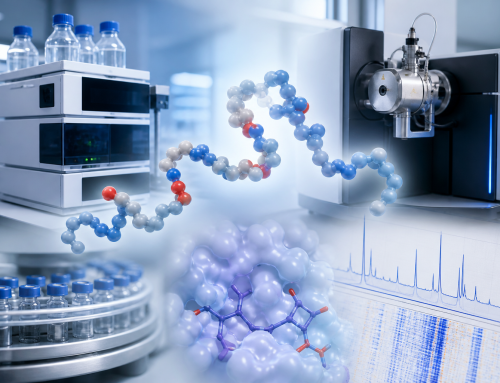

Research materials must be characterized with methods that are appropriate to their composition, intended application, and risk profile. Whether a laboratory is evaluating polymers, metals, ceramics, biomaterials, nanomaterials, reagents, or reference standards, scientific testing provides evidence about identity, purity, structure, stability, and performance. These data support experimental reproducibility, procurement decisions, quality control, regulatory submissions, and safe handling.
No single analytical method can fully define most research materials. A robust testing strategy typically combines complementary techniques, validated procedures, appropriate controls, and documented acceptance criteria. The sections below summarize common scientific testing methods for research materials and explain how laboratories select, apply, and interpret them.
Defining Testing Objectives for Research Materials
Before selecting an analytical method, researchers should define the question the test is intended to answer. A method used to confirm material identity may differ from one used to quantify trace impurities, evaluate shelf life, or compare supplier lots. Clear objectives help determine sampling requirements, instrument settings, statistical design, and data reporting format.
Identity, Purity, and Composition
Identity testing confirms that a material is what it is claimed to be. Purity and composition testing determine the presence and concentration of major components, additives, contaminants, residual solvents, or degradation products. These evaluations are especially important for chemicals, biological reagents, catalysts, pharmaceutical intermediates, and engineered materials where minor constituents can affect experimental outcomes.
Performance and Suitability for Use
Performance testing evaluates whether a material behaves as expected under defined conditions. Examples include tensile strength of a polymer film, conductivity of an electrode material, adsorption capacity of a porous solid, or biocompatibility of a scaffold. Suitability for use is context-dependent; a material that is acceptable for exploratory screening may not be sufficient for regulated testing or clinical translation.
Stability and Comparability
Stability testing assesses whether material properties change during storage, transport, sterilization, processing, or repeated use. Comparability studies evaluate whether different lots, suppliers, synthesis routes, or processing conditions produce equivalent materials. These studies are central to reproducibility and risk management in multi-site research programs.
Chemical and Compositional Analysis
Chemical analysis is used to identify elements, molecules, functional groups, and impurities. Selection depends on the chemical nature of the material, expected concentration range, sample matrix, and required sensitivity.
Spectroscopy Methods
Spectroscopic techniques measure the interaction of matter with electromagnetic radiation and are widely used for identity and structural characterization. Fourier transform infrared spectroscopy, or FTIR, identifies functional groups and can distinguish many polymers, organic compounds, and surface treatments. Raman spectroscopy provides complementary molecular information and can be useful for aqueous samples, carbon materials, and microscopic mapping.
Ultraviolet-visible spectroscopy is commonly used for concentration measurements, optical properties, and reaction monitoring. Nuclear magnetic resonance spectroscopy provides detailed information about molecular structure, purity, and composition for many organic and organometallic materials. X-ray photoelectron spectroscopy is used to evaluate surface chemistry, oxidation states, and elemental composition within the upper nanometers of a material surface.
Chromatography Methods
Chromatographic methods separate components in a mixture before detection. High-performance liquid chromatography is commonly used for organic compounds, additives, degradation products, and biomolecules. Gas chromatography is suitable for volatile and semi-volatile compounds, including residual solvents and monomers. Ion chromatography can quantify inorganic anions and cations in water-soluble materials and extracts.
Coupling chromatography with mass spectrometry improves selectivity and sensitivity. LC-MS and GC-MS are valuable for impurity profiling, unknown identification, extractables and leachables studies, and metabolite-related research materials. Method development should address sample preparation, calibration range, matrix effects, carryover, and system suitability.
Elemental and Trace Metal Analysis
Elemental composition can be measured using techniques such as inductively coupled plasma mass spectrometry, inductively coupled plasma optical emission spectroscopy, atomic absorption spectroscopy, and X-ray fluorescence. ICP-MS is highly sensitive for trace metals and is commonly used for contamination studies, catalyst residue analysis, environmental matrices, and biological samples. XRF is often useful for non-destructive screening of bulk solids, alloys, ceramics, and geological materials.
Trace analysis requires careful control of contamination from containers, reagents, digestion vessels, and laboratory environments. Use of blanks, certified reference materials, matrix-matched calibration standards, and spike recovery experiments improves confidence in quantitative results.
Physical and Structural Characterization
Physical and structural testing determines the form, morphology, phase, size distribution, and internal organization of research materials. These properties often influence reactivity, mechanical behavior, dissolution, optical response, and biological interaction.
Microscopy and Imaging
Optical microscopy provides rapid evaluation of morphology, inclusions, defects, and particle distribution. Scanning electron microscopy offers higher-resolution surface imaging and is widely used for powders, coatings, fibers, fractures, and microfabricated structures. Transmission electron microscopy can reveal nanoscale structures, crystallinity, interfaces, and defects in thin samples or nanoparticles.
Energy-dispersive X-ray spectroscopy, commonly integrated with electron microscopy, provides localized elemental information. Atomic force microscopy measures surface topography and can also evaluate roughness, adhesion, stiffness, or electrical properties depending on the instrument mode.
Particle Size, Surface Area, and Porosity
Particle size distribution influences flow, dissolution, bioavailability, sintering behavior, and suspension stability. Laser diffraction is widely used for powders and dispersions across broad size ranges. Dynamic light scattering is commonly applied to nanoparticles and colloids, although it is sensitive to aggregation and requires careful interpretation of intensity-weighted data.
Specific surface area is often measured by gas adsorption using the Brunauer-Emmett-Teller method. Porosity and pore size distribution may be evaluated by gas adsorption, mercury intrusion porosimetry, capillary flow porometry, or computed tomography, depending on pore scale and material compatibility. These tests are relevant for catalysts, adsorbents, membranes, scaffolds, and battery materials.
Crystallinity and Phase Identification
X-ray diffraction is a primary method for identifying crystalline phases, estimating crystallite size, assessing polymorphism, and monitoring phase transitions. It is extensively used for metals, ceramics, minerals, pharmaceuticals, catalysts, and battery materials. Amorphous content may require complementary approaches, such as differential scanning calorimetry, solid-state NMR, or pair distribution function analysis.
Phase identification should consider sample preparation, preferred orientation, detection limits, and reference database quality. For materials where polymorphic form affects performance or safety, test conditions and acceptance criteria should be documented rigorously.
Thermal, Mechanical, and Rheological Testing
Thermal and mechanical properties determine how materials respond to heat, force, deformation, and processing conditions. These data are important for polymers, composites, metals, ceramics, gels, adhesives, coatings, and biological matrices.
Thermal Analysis
Differential scanning calorimetry measures heat flow associated with transitions such as melting, crystallization, glass transition, curing, and denaturation. Thermogravimetric analysis measures mass changes as a function of temperature or time and is used to evaluate moisture, solvent content, decomposition, oxidation, and filler content. Dynamic mechanical analysis measures viscoelastic properties and can detect transitions that are not readily resolved by other techniques.
Thermal methods should be performed with controlled heating rates, atmospheres, sample masses, and pan types. Because results can be method-dependent, comparisons should use consistent conditions or validated protocols.
Mechanical Testing
Mechanical testing includes tensile, compression, flexural, hardness, impact, fatigue, and fracture toughness measurements. These methods help determine strength, stiffness, ductility, toughness, and failure behavior. Standardized test geometries and environmental conditions are essential because material dimensions, strain rate, humidity, temperature, and sample history can strongly affect results.
For small-scale or heterogeneous materials, nanoindentation, microtensile testing, and instrumented indentation may be appropriate. In composite and additively manufactured materials, testing should account for anisotropy, porosity, interfacial bonding, and build direction.
Rheology and Flow Behavior
Rheological testing evaluates viscosity, yield stress, viscoelasticity, thixotropy, and gelation behavior. It is important for inks, hydrogels, coatings, suspensions, adhesives, food-related research materials, and formulation systems. Rotational rheometers, capillary rheometers, and oscillatory methods can simulate different shear conditions and processing environments.
Rheology is sensitive to temperature, sample loading, evaporation, shear history, and particle settling. Reporting should include geometry, gap, shear rate or frequency range, temperature control, equilibration time, and any preconditioning steps.
Biological and Safety-Related Testing
Materials intended for contact with cells, tissues, microorganisms, or biological fluids often require biological testing. The objective may be to evaluate compatibility, antimicrobial activity, sterility, endotoxin levels, or toxicological concerns.
Cytotoxicity and Biocompatibility Screening
Cytotoxicity assays evaluate the effect of a material or its extract on cell viability, metabolism, membrane integrity, or proliferation. Common assay formats include colorimetric, fluorometric, and luminescent endpoints. Results depend on cell type, extraction conditions, exposure time, material surface area, and assay interference.
Biocompatibility assessment may extend beyond cytotoxicity to include hemocompatibility, sensitization, irritation, genotoxicity, implantation response, or degradation product analysis. The appropriate test panel depends on the material application, exposure route, and duration of contact.
Microbiological and Endotoxin Testing
Sterility testing, bioburden testing, microbial identification, and antimicrobial efficacy studies are used for materials handled in biological or clinical research contexts. Endotoxin testing is particularly important for materials that contact cells, blood, or animal models, since endotoxins can alter immune and inflammatory responses.
Microbiological testing requires aseptic technique, validated recovery methods, and controls that confirm the material does not inhibit or interfere with detection. For porous, antimicrobial, or absorbent materials, method suitability studies are especially important.
Extractables, Leachables, and Degradation Products
Extractables studies identify substances that may be released under aggressive laboratory conditions, while leachables studies evaluate substances released under intended use conditions. These assessments are relevant for polymers, tubing, containers, membranes, adhesives, coatings, and implantable or cell-contacting materials.
Analytical workflows often combine GC-MS, LC-MS, ICP-MS, ion chromatography, and non-volatile residue analysis. Toxicological evaluation may be needed when materials are used in regulated biomedical, pharmaceutical, or food-contact research settings.
Method Validation and Quality Control
Reliable testing depends not only on instrument capability but also on method validation, quality assurance, and transparent documentation. Laboratories should match the level of validation to the purpose of the data and the consequences of an incorrect result.
Validation Parameters
Common validation parameters include accuracy, precision, specificity, linearity, range, detection limit, quantitation limit, robustness, and measurement uncertainty. For qualitative methods, validation may focus on specificity, detection capability, repeatability, and decision thresholds. For physical tests, repeatability, reproducibility, sample preparation, and environmental control are often critical.
Reference Materials and Controls
Certified reference materials, calibration standards, positive and negative controls, blanks, duplicates, and spiked samples provide evidence that methods are functioning as intended. Control charts can identify drift, bias, or unexpected variation over time. When certified reference materials are not available, well-characterized in-house standards may be used with appropriate documentation.
Sampling, Replication, and Data Integrity
Sampling is a frequent source of uncertainty, particularly for heterogeneous powders, layered materials, composites, and biological matrices. A representative sampling plan should define lot size, sampling locations, sample mass, storage conditions, and chain of custody. Replication should distinguish between technical repeats, independent sample preparations, and independent batches.
Data integrity practices include traceable instrument records, version-controlled methods, documented deviations, audit trails, and clear data review. Results should be reported with units, uncertainty where applicable, sample identification, preparation details, and method references.
Selecting an Appropriate Testing Strategy
An effective testing strategy balances scientific relevance, technical feasibility, cost, turnaround time, and risk. Early-stage research may use broader screening methods to identify key material attributes, while later-stage studies may require validated quantitative methods and predefined acceptance criteria.
Use Complementary Methods
Complementary techniques reduce the risk of misinterpretation. For example, nanoparticle size may be evaluated by both dynamic light scattering and electron microscopy; polymer identity may be confirmed by FTIR and thermal analysis; trace metal contamination may be screened by XRF and quantified by ICP-MS. Agreement between independent methods increases confidence, while discrepancies can reveal sample heterogeneity or method limitations.
Align Methods with Standards
Where possible, testing should align with recognized standards from organizations such as ASTM International, ISO, USP, ICH, OECD, or relevant sector-specific bodies. Standard methods improve comparability and may be required for regulatory or contractual purposes. However, laboratories should still confirm that a standard method is suitable for the specific material and research question.
Document Limitations
Every method has limitations related to detection limits, matrix effects, resolution, sample preparation, and interpretation. Scientific reports should clearly state these limitations rather than presenting results as absolute descriptions of the material. Transparent documentation supports reproducibility and helps downstream users make informed decisions.
Conclusion
Scientific testing methods for research materials provide the evidence needed to understand composition, structure, performance, stability, and safety-related properties. A well-designed testing program uses clearly defined objectives, appropriate analytical techniques, validated methods, representative sampling, and documented quality controls. By combining complementary data and recognizing method limitations, researchers and institutions can improve reproducibility, support responsible material selection, and generate results that are suitable for their intended scientific use.