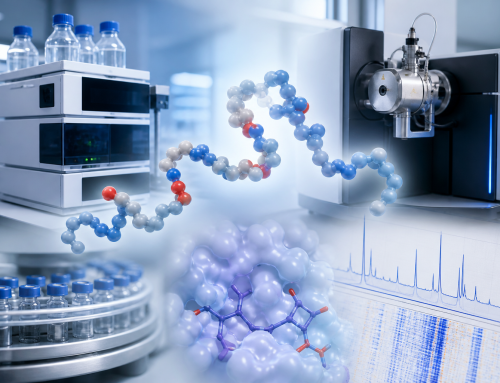
Introduction
High purity peptides are essential reagents in many areas of biomedical, pharmaceutical, biochemical, and materials research. They are used as antigens, enzyme substrates, receptor ligands, standards, inhibitors, probes, and building blocks for more complex molecular systems. Because peptides can vary in sequence length, hydrophobicity, charge, modification pattern, and stability, their quality can have a direct effect on experimental reproducibility and interpretation.
Peptide purity is not a single universal measure of quality. It usually refers to the proportion of the target peptide relative to detectable peptide-related impurities under a specified analytical method, most commonly reversed-phase high-performance liquid chromatography (RP-HPLC). For laboratory researchers and procurement teams, understanding what purity means, how it is measured, and which purity level is appropriate for a specific application helps reduce unnecessary cost while supporting reliable results.
What Are High Purity Peptides?
Definition of peptide purity
Peptide purity describes the percentage of the desired peptide in a preparation compared with other detectable components. In a typical HPLC chromatogram, the main peak corresponds to the target peptide, while smaller peaks may represent truncated sequences, deletion products, side-chain protecting group remnants, oxidation products, hydrolysis products, or other synthesis-related impurities.
A peptide reported as 95% pure generally means that the main peptide peak accounts for approximately 95% of the total integrated peak area under the test conditions used. This does not necessarily mean the material is 95% peptide by weight. Peptide products may also contain water, counterions, residual salts, and trace solvents. For this reason, net peptide content and purity should be considered separately when accurate dosing or molar calculations are required.
Common purity grades
Peptide suppliers typically offer several purity ranges. Exact terminology may vary, but common categories include:
- Crude peptide: Unpurified product after synthesis and cleavage. Usually suitable only for preliminary screening or method development when impurities are acceptable.
- Desalted peptide: Crude peptide processed to remove small molecules and salts, but not extensively purified from peptide-related impurities.
- 70% to 80% purity: Often used for polyclonal antibody production, some screening assays, or applications where minor impurities are unlikely to interfere.
- 85% to 90% purity: Suitable for many biochemical assays, epitope mapping, and non-critical functional studies.
- 95% purity: A common standard for quantitative assays, cell-based studies, enzyme assays, receptor studies, and many analytical applications.
- 98% or higher purity: Often selected for sensitive biological assays, structural studies, pharmacology, reference standards, or applications requiring minimal impurity contribution.
The appropriate purity level depends on the experimental purpose, not simply the highest available specification.
How High Purity Peptides Are Produced
Solid-phase peptide synthesis
Most custom research peptides are produced by solid-phase peptide synthesis (SPPS). In SPPS, amino acids are sequentially coupled to a growing peptide chain anchored to an insoluble resin. Protecting groups are used to prevent unwanted side reactions. After chain assembly, the peptide is cleaved from the resin and side-chain protecting groups are removed.
Although SPPS is highly versatile, each coupling and deprotection step can generate minor by-products. Longer sequences, difficult amino acid motifs, aggregation-prone regions, and complex modifications increase the likelihood of incomplete reactions or side products. As a result, purification and analytical verification are critical parts of producing high purity peptides.
Purification methods
The most widely used purification method for peptides is preparative RP-HPLC. This technique separates peptide species based on hydrophobicity using a stationary phase and a gradient of aqueous and organic solvents, often with an acidic modifier such as trifluoroacetic acid or formic acid. Fractions containing the desired peptide are collected, analyzed, pooled, and lyophilized.
Other purification techniques may be used depending on peptide properties. Ion-exchange chromatography can separate peptides according to charge, while size-exclusion chromatography may be useful in specific cases involving aggregation or large peptide species. For some hydrophilic or highly basic peptides, method optimization is needed to achieve sufficient resolution between the target peptide and related impurities.
Analytical Methods Used to Confirm Purity
RP-HPLC analysis
Analytical RP-HPLC is the most common method for reporting peptide purity. A small sample is injected onto an analytical column, separated by a gradient, and monitored by UV absorbance, commonly at 214 nm or 220 nm because peptide bonds absorb in this range. If the peptide contains aromatic residues, 280 nm may also be informative.
HPLC purity is typically calculated by peak area normalization. However, interpretation requires context. Different impurities may have different UV responses, and a single HPLC method may not resolve all closely related species. For critical applications, orthogonal methods or multiple HPLC conditions may be used to provide greater confidence.
Mass spectrometry
Mass spectrometry confirms whether the detected molecular mass matches the expected mass of the target peptide. Common techniques include electrospray ionization mass spectrometry and matrix-assisted laser desorption/ionization time-of-flight mass spectrometry. Mass analysis is especially important for modified peptides, isotope-labeled peptides, cyclic peptides, phosphorylated peptides, and peptides containing non-natural amino acids.
Mass spectrometry does not replace chromatographic purity analysis. A peptide preparation may contain impurities with related masses, and ionization efficiency can vary among components. When used together, HPLC and mass spectrometry provide complementary evidence of identity and purity.
Amino acid analysis and peptide content
For applications requiring accurate concentration, amino acid analysis can determine peptide content by hydrolyzing the peptide and quantifying released amino acids. This is useful because lyophilized peptide mass includes non-peptide components such as water and counterions. Quantitative amino acid analysis is often used when preparing reference standards or when precise molar dosing is required.
Alternative approaches, such as UV absorbance-based quantification, may be appropriate when a peptide contains tryptophan or tyrosine and the extinction coefficient is well established. However, not all peptides have suitable chromophores, and absorbance-based methods can be affected by impurities or solvent composition.
Selecting the Right Purity Level
Match purity to the application
Higher purity is not always scientifically necessary. For antibody generation, for example, peptides in the 70% to 85% range may be acceptable because the immune response is usually directed toward the intended epitope, especially when the peptide is conjugated to a carrier protein. In contrast, a peptide used as an enzyme substrate in kinetic measurements may require 95% or higher purity to reduce the risk that impurities affect reaction rates or background signal.
For cell-based assays, receptor binding studies, and pharmacological screening, impurities may influence biological responses, particularly if they are structurally similar to the target peptide or present at biologically active concentrations. In such cases, 95% or 98% purity is commonly selected.
Consider peptide length and complexity
Short peptides are often easier to synthesize and purify, but very short sequences may be difficult to separate from closely related deletion products. Long peptides, especially those above 30 to 40 amino acids, can present challenges due to incomplete coupling, aggregation, oxidation, or poor chromatographic resolution. Peptides with multiple hydrophobic residues, cysteines, methionine, tryptophan, phosphorylation, glycosylation, lipidation, or cyclization may require additional analytical attention.
When selecting purity, it is helpful to consider whether known or likely impurities could mimic, compete with, or inhibit the intended activity. If an impurity is expected to be inactive and the assay is qualitative, moderate purity may be sufficient. If the assay is quantitative or safety-relevant, higher purity and more complete documentation may be appropriate.
Balance cost, yield, and feasibility
Purification to very high levels can reduce final yield, especially for difficult sequences. A request for 98% purity may be feasible for many peptides but challenging for others. In some cases, reformulating the sequence, changing termini, adjusting solubility, or using an alternative purification strategy can improve outcomes. Researchers should weigh the scientific need for high purity against project budget, timeline, and material requirements.
Key Documentation for High Purity Peptides
Certificate of analysis
A certificate of analysis should provide essential quality information, including peptide name or sequence, lot number, molecular formula or mass, measured mass, stated purity, analytical method, amount supplied, and storage recommendation. The certificate may also include chromatograms, mass spectra, counterion information, and appearance.
For regulated or highly controlled research environments, documentation requirements may be more extensive. Institutions may require traceability, batch records, residual solvent data, endotoxin testing, bioburden testing, or additional identity testing depending on the intended use.
HPLC chromatogram and mass spectrum
The HPLC chromatogram allows researchers to evaluate the peak profile and confirm whether the reported purity is based on a single major peak. Important details include column type, gradient, detection wavelength, and retention time. The mass spectrum confirms the expected molecular mass and helps identify major mass-related impurities if present.
These documents should be retained with laboratory records. If unexpected results occur, analytical data can help distinguish between peptide quality issues, solubility problems, assay interference, or degradation during storage and handling.
Handling and Storage of High Purity Peptides
General storage principles
Most lyophilized peptides should be stored dry, protected from light, and at low temperature, commonly at -20°C or below. Moisture accelerates degradation, particularly for peptides susceptible to hydrolysis, deamidation, or oxidation. Containers should be allowed to equilibrate to room temperature before opening to reduce condensation.
Repeated freeze-thaw cycles should be minimized after reconstitution. Preparing small aliquots can reduce degradation risk and improve reproducibility. The appropriate storage buffer depends on peptide stability, solubility, and downstream assay compatibility.
Solubilization considerations
Peptide solubility varies widely. Acidic peptides may dissolve better in basic solutions, while basic peptides often dissolve better in acidic aqueous solutions. Hydrophobic peptides may require small amounts of dimethyl sulfoxide, acetonitrile, isopropanol, or other compatible solvents before dilution into aqueous buffer. The final solvent concentration should be compatible with the assay system.
Avoid vigorous vortexing or repeated heating unless the peptide is known to tolerate those conditions. For cysteine-containing peptides, reducing agents may be required if free thiols must remain reduced. For methionine- or tryptophan-containing peptides, minimizing exposure to oxidizing conditions and light can be beneficial.
Common Impurities and Degradation Pathways
Synthesis-related impurities
Synthesis-related impurities include deletion sequences, truncated peptides, incompletely deprotected products, and side-reaction products. Some impurities differ from the target peptide by only one residue or chemical group, making separation difficult. These species may be more problematic when they retain partial biological activity.
Storage-related degradation
Peptides can degrade during storage or handling. Common pathways include oxidation of methionine or cysteine, deamidation of asparagine or glutamine, hydrolysis, disulfide scrambling, aggregation, and cyclization involving susceptible residues. The rate of degradation depends on sequence, pH, temperature, concentration, oxygen exposure, and buffer composition.
If a peptide is used over an extended period, periodic re-analysis may be appropriate, especially for quantitative assays or long-term studies. Changes in HPLC profile, reduced activity, precipitation, or altered mass spectra can indicate degradation.
Best Practices for Purchasing High Purity Peptides
Define technical requirements before ordering
Before ordering, researchers should define the sequence, termini, modifications, desired purity, quantity, counterion preference, solubility needs, and analytical requirements. If the peptide will be used in biological systems, it may be important to consider endotoxin level, sterility, salt form, and compatibility with buffers or solvents.
For quantitative work, specify whether net peptide content, amino acid analysis, or another concentration-determining method is required. For modified peptides, confirm the exact modification site and stereochemistry, where relevant.
Review feasibility and risk factors
Sequences rich in hydrophobic residues, multiple cysteines, repeated motifs, or long stretches of difficult amino acids may require feasibility review. Peptides that are prone to aggregation or poor solubility may need special handling recommendations. Discussing these factors early can help align purity expectations with realistic synthesis and purification outcomes.
Conclusion
High purity peptides support reliable research when their purity level, identity, content, and handling conditions are appropriate for the intended application. HPLC and mass spectrometry are central tools for evaluating peptide quality, while additional methods such as amino acid analysis may be needed for accurate quantification. By matching purity specifications to experimental requirements and following careful storage and reconstitution practices, laboratories can improve reproducibility and make informed purchasing decisions.