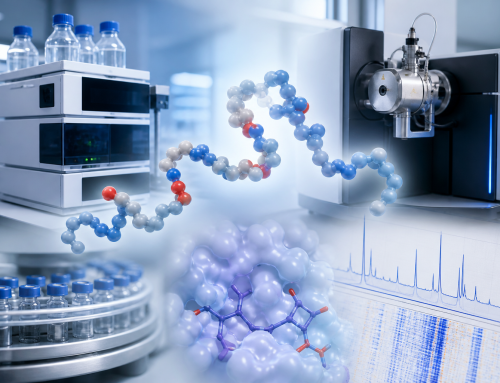
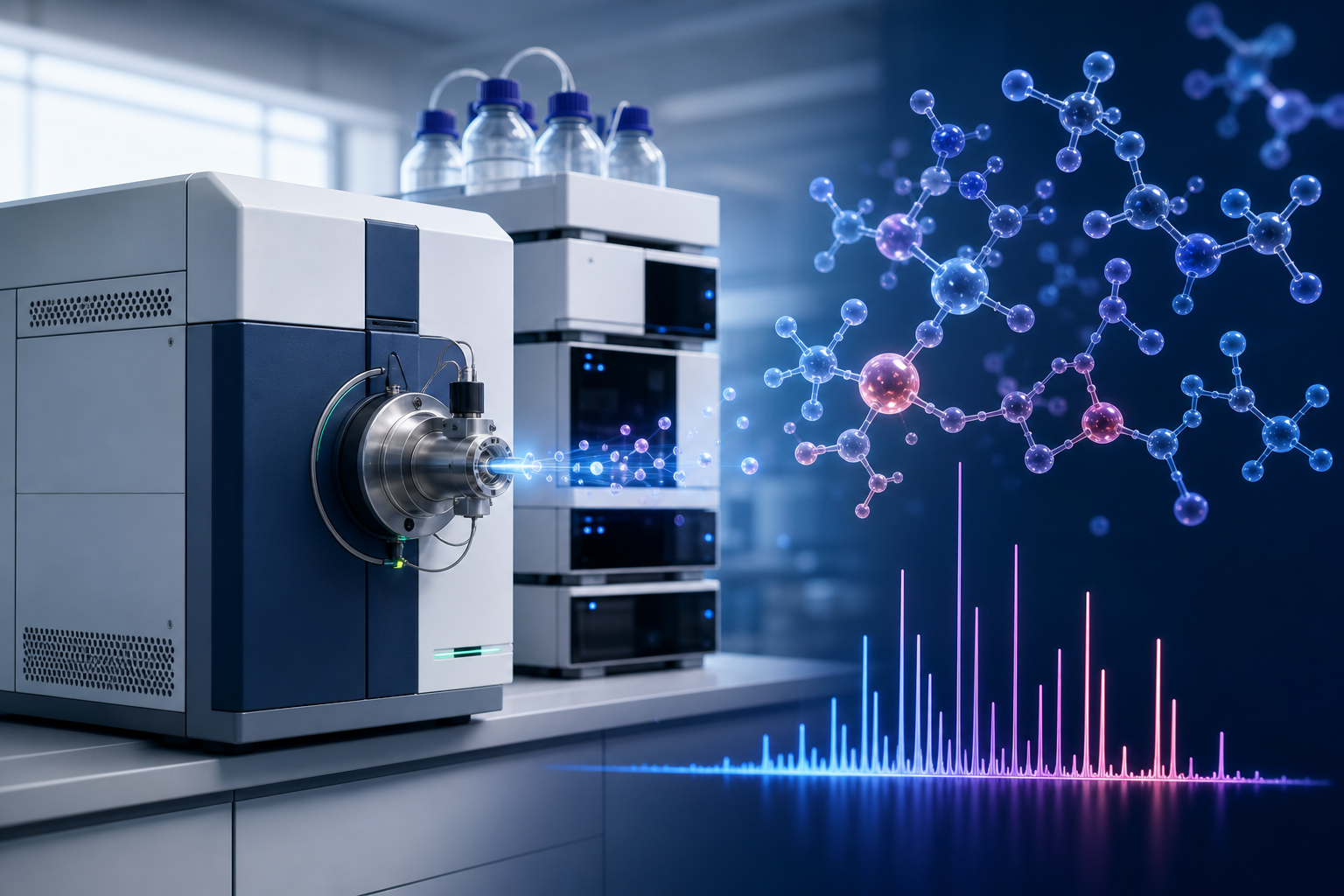
Mass spectrometry is an analytical technique used to measure the mass-to-charge ratio of ions. In practical laboratory work, it helps researchers identify compounds, determine molecular masses, quantify analytes, characterize molecular structures, and investigate complex chemical or biological mixtures. Its applications span chemistry, biochemistry, pharmaceutical development, environmental testing, forensic science, food analysis, clinical research, materials science, and proteomics.
Although mass spectrometry is often discussed as a single method, it is more accurately a family of techniques. Different ionization sources, mass analyzers, detectors, and data acquisition strategies are selected depending on the analyte, sample matrix, required sensitivity, and scientific question. Understanding the basic principles helps researchers choose suitable workflows and interpret results appropriately.
What Is Mass Spectrometry?
Mass spectrometry, commonly abbreviated as MS, measures ions according to their mass-to-charge ratio, written as m/z. The mass component reflects the molecular or fragment mass, while the charge component reflects how many electrical charges the ion carries. For singly charged ions, m/z is often numerically close to the molecular mass. For multiply charged ions, which are common in biomolecular analysis, the observed m/z is lower than the actual molecular mass.
A mass spectrometer converts molecules into gas-phase ions, separates those ions based on m/z, and records their abundance. The resulting output is a mass spectrum, a plot of ion intensity versus m/z. Peaks in a spectrum provide information about molecular weight, elemental composition, isotopic pattern, fragmentation behavior, and relative or absolute concentration.
Core Components of a Mass Spectrometer
Most mass spectrometers contain four essential elements: a sample introduction system, an ion source, a mass analyzer, and a detector. These components operate under controlled vacuum conditions in most instrument designs to reduce ion collisions with air molecules and improve ion transmission.
Sample Introduction
The sample introduction system delivers analytes to the ion source in a suitable physical and chemical form. Introduction may be direct, as in infusion experiments, or coupled to a separation technique such as liquid chromatography, gas chromatography, capillary electrophoresis, or ion mobility. The choice depends on analyte volatility, polarity, matrix complexity, and analytical objectives.
Chromatographic coupling is particularly important for complex samples because it separates compounds before they enter the mass spectrometer. This reduces ion suppression, improves peak assignment, and supports quantitative analysis.
Ion Source
The ion source converts neutral molecules into ions. This is a critical step because only charged species can be manipulated and measured by a mass analyzer. Ionization methods vary in energy, compatibility with sample types, and tendency to produce intact molecular ions or fragments.
Soft ionization methods, such as electrospray ionization and matrix-assisted laser desorption ionization, tend to preserve intact molecular ions and are widely used for biomolecules, peptides, proteins, metabolites, and polymers. Harder ionization methods, such as electron ionization, produce reproducible fragmentation patterns that are highly useful for compound identification, especially in gas chromatography-mass spectrometry.
Mass Analyzer
The mass analyzer separates ions according to m/z. Different analyzer designs provide different combinations of resolution, mass accuracy, scan speed, dynamic range, and cost. Common examples include quadrupoles, time-of-flight analyzers, ion traps, Orbitrap analyzers, and Fourier transform ion cyclotron resonance instruments.
For many laboratories, analyzer selection is driven by application requirements. Targeted quantification often uses triple quadrupole systems because of their sensitivity and selectivity in selected reaction monitoring. High-resolution accurate-mass analysis often uses time-of-flight or Orbitrap systems when elemental composition, unknown identification, or complex mixture characterization is required.
Detector
The detector converts ion arrival events into an electrical signal. The signal intensity is related to ion abundance, although the relationship may be influenced by ionization efficiency, transmission, detector response, and matrix effects. Common detector technologies include electron multipliers, microchannel plates, and image current detection in some high-resolution systems.
How Mass Spectrometry Works
A typical mass spectrometry workflow includes sample preparation, ionization, ion separation, detection, and data interpretation. Each step can strongly influence analytical performance.
Step 1: Preparing the Sample
Sample preparation depends on the matrix and analyte class. Biological fluids, tissues, environmental extracts, food matrices, and industrial materials often contain salts, proteins, lipids, polymers, or other components that can interfere with ionization or contaminate the instrument. Preparation may include dilution, extraction, filtration, centrifugation, protein precipitation, solid-phase extraction, derivatization, or enzymatic digestion.
The goal is not only to isolate the analyte but also to produce a reproducible matrix that supports reliable ionization and quantification. In regulated or high-throughput laboratories, sample preparation must also be robust, traceable, and compatible with quality control requirements.
Step 2: Creating Ions
Once introduced, molecules are ionized. In electrospray ionization, a liquid sample exits a charged capillary and forms droplets. As solvent evaporates, charge density increases until ions are released into the gas phase. This method is compatible with liquid chromatography and is widely used for polar and thermally labile compounds.
In matrix-assisted laser desorption ionization, analytes are co-crystallized with a matrix compound on a target plate. A laser pulse causes desorption and ionization. MALDI is commonly used for peptides, proteins, polymers, microbial identification, and imaging mass spectrometry.
In electron ionization, gas-phase molecules are bombarded with high-energy electrons, producing molecular ions and fragments. EI is highly reproducible and forms the basis of many searchable spectral libraries used in GC-MS analysis.
Step 3: Separating Ions by m/z
After ionization, ions enter the mass analyzer. A quadrupole analyzer uses oscillating electric fields to allow only ions of selected m/z values to pass at a given time. A time-of-flight analyzer accelerates ions and measures how long they take to reach the detector; lighter ions generally arrive earlier than heavier ions with the same charge. Orbitrap and Fourier transform instruments measure ion motion in electrostatic or magnetic fields and use mathematical transforms to determine m/z with high mass accuracy.
Mass resolution is a key performance parameter. Higher resolution allows the instrument to distinguish ions with very similar m/z values. This is particularly important when analyzing complex mixtures where overlapping signals can lead to ambiguous identification.
Step 4: Detecting and Recording Signals
Detected ion signals are converted into mass spectra. The x-axis of a spectrum represents m/z, and the y-axis represents ion abundance or intensity. In chromatographic workflows, the instrument collects spectra continuously over time, producing chromatograms for selected ions or total ion current.
Data processing may include peak detection, calibration, deconvolution, isotope pattern analysis, library searching, database matching, and quantification. For high-resolution datasets, accurate mass and isotope distribution can support formula prediction, but structural confirmation usually requires additional evidence such as fragmentation spectra, retention time, reference standards, or orthogonal methods.
Understanding Mass Spectra
A mass spectrum contains several types of information. The molecular ion or protonated molecule may indicate molecular mass. Fragment ions provide clues about structure. Isotopic peaks reveal contributions from naturally occurring isotopes such as carbon-13, chlorine-37, bromine-81, and sulfur-34. Adduct ions, such as sodium or ammonium adducts, can appear depending on solvent and matrix conditions.
Interpreting spectra requires awareness of ion chemistry. A peak does not always represent the intact neutral molecule. It may represent a fragment, an adduct, a multiply charged ion, an isotope peak, an in-source fragment, or a background contaminant. This is one reason method development, controls, blanks, and reference materials are essential for confident interpretation.
Tandem Mass Spectrometry and MS/MS
Tandem mass spectrometry, or MS/MS, adds another level of selectivity by isolating a precursor ion, fragmenting it, and measuring the resulting product ions. This approach is widely used for structural elucidation and targeted quantification.
In a triple quadrupole instrument, the first quadrupole selects the precursor ion, the second quadrupole serves as a collision cell, and the third quadrupole selects product ions. This enables selected reaction monitoring, where specific precursor-to-product ion transitions are monitored. Such workflows are common in bioanalysis, toxicology, environmental testing, and pharmaceutical studies.
In high-resolution instruments, data-dependent acquisition and data-independent acquisition are frequently used. Data-dependent methods select ions for fragmentation based on intensity or priority lists. Data-independent methods fragment broad m/z windows to capture more comprehensive information, often used in proteomics and metabolomics.
Common Types of Mass Spectrometry Workflows
GC-MS
Gas chromatography-mass spectrometry combines gas-phase separation with mass spectrometric detection. It is well suited to volatile and semi-volatile compounds, including solvents, environmental contaminants, residual chemicals, flavors, fragrances, and many forensic analytes. Electron ionization GC-MS benefits from extensive spectral libraries, which support compound identification when retention behavior and spectra are consistent.
LC-MS
Liquid chromatography-mass spectrometry is used for nonvolatile, polar, thermally unstable, or high-molecular-weight compounds. It is common in pharmaceutical analysis, metabolomics, lipidomics, proteomics, clinical research, pesticide analysis, and biomarker studies. LC-MS methods often require careful optimization of mobile phase composition, ion source parameters, and chromatographic conditions.
MALDI-MS
MALDI-MS is frequently used for larger biomolecules and polymers. It is also central to MALDI imaging, where molecular distributions are mapped across tissue sections. In microbiology, MALDI-based profiling can support rapid organism identification by comparing spectral fingerprints against reference databases.
ICP-MS
Inductively coupled plasma mass spectrometry measures elements and isotopes rather than molecular ions. Samples are introduced into a high-temperature plasma that atomizes and ionizes elements. ICP-MS is widely used for trace metal analysis, environmental monitoring, geochemistry, semiconductor testing, and elemental impurity assessment.
Key Applications of Mass Spectrometry
Mass spectrometry is used whenever sensitive, selective chemical measurement is required. In pharmaceutical research, it supports drug discovery, pharmacokinetics, impurity profiling, metabolite identification, and quality control. In proteomics, it identifies proteins, maps post-translational modifications, and compares protein abundance across biological states. In metabolomics and lipidomics, it helps characterize biochemical pathways and molecular phenotypes.
Environmental laboratories use MS to detect pesticides, persistent organic pollutants, hydrocarbons, emerging contaminants, and trace metals. Food and beverage laboratories use it for authenticity testing, contaminant screening, residue analysis, and flavor chemistry. Forensic laboratories apply MS to toxicology, controlled substance analysis, explosives detection, and trace evidence. Clinical research laboratories use MS in biomarker discovery and specialized assays, although clinical implementation requires validated methods and appropriate regulatory compliance.
Strengths and Limitations
Mass spectrometry offers high sensitivity, broad molecular coverage, structural information, isotopic analysis, and compatibility with separation techniques. It can detect low-abundance analytes in complex mixtures and can be configured for either targeted or untargeted analysis.
However, MS is not free from limitations. Ionization efficiency varies widely among compounds, making response factors analyte-specific. Matrix effects can suppress or enhance signals. Isobaric compounds may require chromatographic separation, high-resolution analysis, or MS/MS to distinguish. Instruments require regular calibration, maintenance, contamination control, and trained operators. Data interpretation can be complex, particularly in untargeted workflows where false annotations are possible without confirmatory evidence.
Important Performance Terms
- Mass accuracy: The closeness of a measured m/z value to the true value, often reported in parts per million.
- Resolution: The ability to distinguish two ions with similar m/z values.
- Sensitivity: The ability to detect low amounts of analyte.
- Dynamic range: The concentration range over which reliable measurement is possible.
- Limit of detection: The lowest analyte amount that can be distinguished from background noise under defined conditions.
- Mass calibration: Adjustment of the instrument response using compounds of known m/z.
- Ion suppression: Reduced analyte signal caused by co-eluting matrix components or competing ions.
Considerations for Method Development
Developing a reliable MS method requires aligning the instrument configuration with the analytical question. Targeted quantification typically requires reference standards, internal standards, calibration curves, quality control samples, and evaluation of accuracy, precision, recovery, matrix effects, carryover, and stability. Untargeted analysis requires reproducible acquisition, rigorous quality control, careful feature alignment, and transparent annotation criteria.
For LC-MS, mobile phase additives can strongly affect ionization. Formic acid, ammonium formate, ammonium acetate, and other volatile additives are often used, while nonvolatile salts should generally be avoided. For GC-MS, analyte volatility and thermal stability are central concerns, and derivatization may be needed for polar compounds. For MALDI-MS, matrix selection, sample deposition, and crystallization uniformity can influence spectral quality.
Quality Control and Data Confidence
Reliable mass spectrometry depends on quality control at every stage. Procedural blanks help identify contamination. Replicate injections assess instrument reproducibility. Internal standards correct for variation in extraction, injection, and ionization. System suitability checks confirm that sensitivity, mass accuracy, retention time, and peak shape remain within acceptable limits.
For compound identification, confidence increases when multiple lines of evidence agree. These may include accurate mass, isotope pattern, retention time, MS/MS spectrum, library match score, and comparison with an authentic standard. Reporting should clearly distinguish confirmed identifications from tentative annotations.
Conclusion
Mass spectrometry is a versatile and information-rich analytical technique that measures ions by mass-to-charge ratio. By combining suitable ionization methods, mass analyzers, detectors, separation techniques, and data analysis strategies, laboratories can address a wide range of qualitative and quantitative questions. A sound understanding of the underlying principles, performance terms, limitations, and quality control practices is essential for producing reliable and interpretable results.