Temperature Controlled Shipping Explained

2026-06-23T06:17:25+00:00

Temperature controlled shipping protects sensitive products by maintaining defined thermal conditions during transport. This guide explains packaging, monitoring, validation, and quality considerations for scientific and healthcare shipments.

Temperature Controlled Shipping Explained2026-06-23T06:17:25+00:00

Certificate of Analysis Verification Guide for Laboratory Materials

2026-06-22T05:14:40+00:00

A practical guide to verifying Certificates of Analysis for laboratory materials, from lot matching and analytical results to traceability and record retention. Use this framework to support consistent, risk-based CoA review.

Certificate of Analysis Verification Guide for Laboratory Materials2026-06-22T05:14:40+00:00

Peptide Synthesis Overview

2026-06-21T16:15:14+00:00

Peptide synthesis enables controlled production of defined amino acid sequences for research, diagnostics, and drug discovery. This overview covers synthesis methods, workflow steps, purification, characterization, and planning considerations.

Peptide Synthesis Overview2026-06-21T16:15:14+00:00

Third-Party Peptide Testing: Methods, Documentation, and Procurement Considerations

2026-06-21T04:10:13+00:00

Third-party peptide testing helps laboratories independently verify peptide identity, purity, content, and documentation. This guide explains key methods, report review, and procurement considerations.

Third-Party Peptide Testing: Methods, Documentation, and Procurement Considerations2026-06-21T04:10:13+00:00

Peptide Quality Control Standards: Key Tests, Documentation, and Acceptance Criteria

2026-06-20T15:26:17+00:00

Peptide quality control standards help verify identity, purity, content, impurity profile, and suitability for research or regulated use. This article reviews key analytical tests, documentation expectations, and acceptance criteria for peptide QC.

Peptide Quality Control Standards: Key Tests, Documentation, and Acceptance Criteria2026-06-20T15:26:17+00:00

Understanding Lyophilized Peptides

2026-06-19T14:31:17+00:00

Lyophilized peptides are freeze-dried materials used to improve stability and support controlled reconstitution in laboratory workflows. This article explains how they are produced, stored, documented, and handled for reproducible research use.

Understanding Lyophilized Peptides2026-06-19T14:31:17+00:00

Quality Assurance for Research Peptides

2026-06-19T02:10:42+00:00

Quality assurance for research peptides depends on verified identity, appropriate purity testing, content determination, documentation, and controlled handling. This guide outlines practical considerations for laboratories evaluating and using peptide reagents.

Quality Assurance for Research Peptides2026-06-19T02:10:42+00:00

How HPLC Testing Works: Principles, Workflow, and Data Interpretation

2026-06-18T13:26:07+00:00

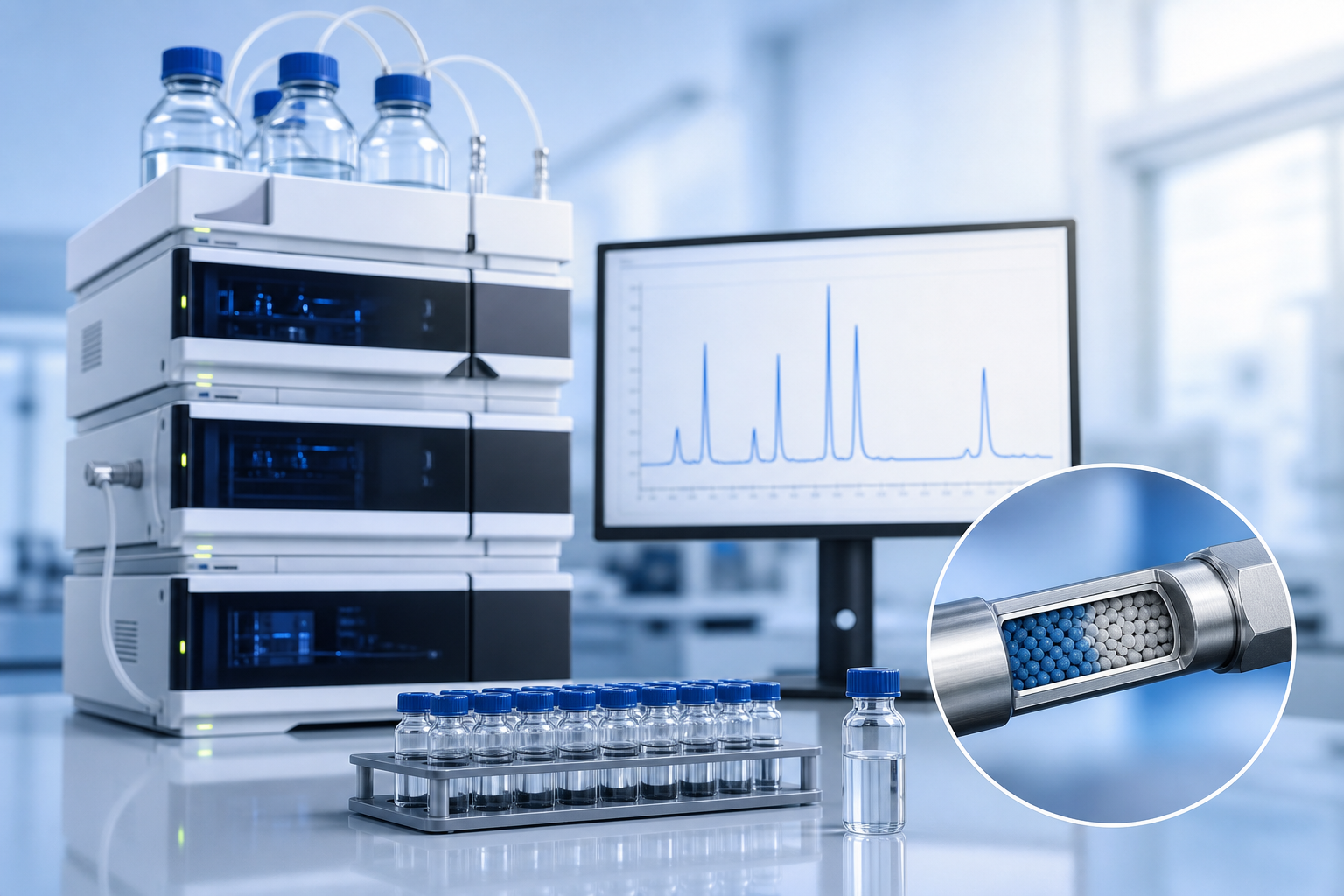
HPLC testing separates, identifies, and quantifies compounds in liquid samples using a pressurized mobile phase, analytical column, and detector. This article explains the core principles, system components, workflow, and data interpretation behind HPLC analysis.

How HPLC Testing Works: Principles, Workflow, and Data Interpretation2026-06-18T13:26:07+00:00

Peptide Stability Factors: Key Considerations for Research and Storage

2026-06-18T01:34:01+00:00

Peptide stability is influenced by sequence, chemical reactivity, formulation, storage conditions, and laboratory handling. Understanding these factors helps researchers maintain peptide quality and reduce experimental variability.

Peptide Stability Factors: Key Considerations for Research and Storage2026-06-18T01:34:01+00:00
Go to Top