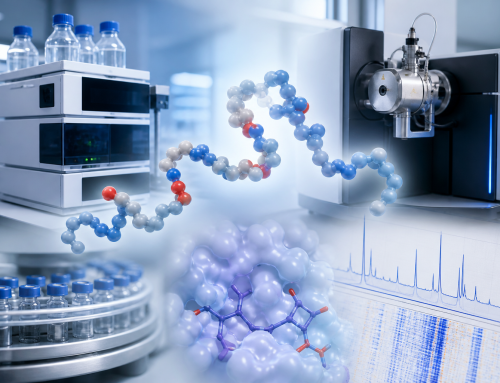

Research peptides are short chains of amino acids used in laboratory and scientific settings to study biological processes. They have become important tools in fields such as biochemistry, molecular biology, pharmacology, endocrinology, and materials science because peptides can interact with cells, proteins, receptors, and enzymes in highly specific ways.
While peptides are naturally present throughout the body and in many living organisms, research peptides are generally produced, purified, and supplied for controlled laboratory investigation. They are not the same as consumer wellness products, dietary supplements, or approved medicines. In most contexts, the phrase research peptides refers to compounds intended strictly for in vitro studies, animal research where legally and ethically permitted, analytical testing, or other non-human research applications.
What Are Peptides?
Peptides are molecules made from amino acids, the same building blocks that form proteins. Amino acids link together through peptide bonds, creating chains that can vary in length, shape, and function.
A simple way to think about the difference between peptides and proteins is size. Peptides are usually shorter amino acid chains, while proteins are larger, more complex structures that often fold into specific three-dimensional shapes. However, the line between the two can be flexible depending on the scientific context.
How Peptides Work in Biological Systems
Many naturally occurring peptides act as signaling molecules. They can help cells communicate, influence enzyme activity, bind to receptors, or participate in immune responses. Some peptides participate in cellular communication, receptor interactions, enzyme activity, immune processes, and other biological mechanisms that researchers investigate in laboratory settings.
Because peptides can be highly selective in how they interact with biological targets, researchers use them to explore pathways that may be difficult to study with broader chemical tools. This specificity is one reason peptides are valuable in modern research.
What Makes a Peptide a Research Peptide?
A research peptide is typically a peptide that has been synthesized or isolated for use in controlled scientific experiments. The key distinction is its intended use. Research peptides are supplied for laboratory investigation, not for personal use, diagnosis, treatment, or consumption.
Research peptides may be custom-made to match a naturally occurring sequence, modified to improve stability in an experimental setting, tagged for detection, or designed to test how changes in structure affect biological activity.
Common Characteristics of Research Peptides
- Defined amino acid sequence: Researchers know the exact order of amino acids being studied.
- Controlled purity level: Peptides are often supplied with a stated purity percentage depending on the application.
- Analytical documentation: Reputable suppliers may provide certificates of analysis, mass spectrometry data, or HPLC results.
- Research-only labeling: These materials are generally marked for laboratory research use and not for human or veterinary use.
- Specific storage requirements: Some peptides require refrigeration, freezing, protection from light, or careful handling to preserve integrity.
How Are Research Peptides Made?
Most research peptides are produced through chemical synthesis rather than extraction from biological sources. The most widely used method is solid-phase peptide synthesis, often abbreviated as SPPS. This technique allows scientists to build a peptide one amino acid at a time in a controlled sequence.
After synthesis, the crude peptide mixture is purified to remove incomplete sequences, byproducts, and impurities. High-performance liquid chromatography, or HPLC, is commonly used for purification and analysis. Mass spectrometry may then confirm the molecular weight and identity of the peptide.
Why Purity Matters
Purity is important because contaminants or truncated peptide chains can affect research results. For example, a low-purity peptide could produce confusing data if impurities interact with the same biological system being studied. The purity needed depends on the purpose of the research. Analytical assays, cell culture work, and structural studies may each require different purity specifications.
Researchers also consider solubility, stability, and formulation. Some peptides dissolve easily in water-based solutions, while others require special solvents or buffers in a lab setting. These details can significantly influence experimental reproducibility.
Types of Research Peptides
Research peptides can be grouped in several ways based on their structure, purpose, or biological target. The categories below are broad examples rather than recommendations for use.
Signaling Peptides
Signaling peptides are studied for their ability to communicate information between cells or influence receptor activity. They may help researchers understand pathways related to hormones, metabolism, inflammation, or cellular stress responses.
Enzyme Substrate Peptides
Some peptides are designed as substrates for enzymes. Researchers use them to measure enzyme activity, screen inhibitors, or explore how specific amino acid sequences are recognized and processed.
Antimicrobial Peptides
Antimicrobial peptides are investigated for their interactions with microbial membranes and immune defense mechanisms. They are of interest in microbiology, infectious disease research, and materials science.
Labeled or Tagged Peptides
Peptides can be labeled with fluorescent markers, biotin, or other tags to make them easier to detect in experiments. These tools are often used in imaging, binding studies, purification workflows, and assay development.
Modified Peptides
Researchers may study peptides with chemical modifications such as acetylation, amidation, phosphorylation, or cyclization. These modifications can change stability, binding behavior, or biological activity, making them useful for structure-function studies.
What Are Research Peptides Used For?
Research peptides are used to answer scientific questions. Their applications vary widely depending on the discipline, the peptide sequence, and the experimental model.
Cell Signaling Studies
Peptides can help scientists investigate how cells respond to specific signals. By observing changes in gene expression, receptor activation, protein phosphorylation, or cellular behavior, researchers can map pathways and better understand biological regulation.
Biological Target Identification Research
Peptides play a significant role in early-stage drug discovery. Scientists may use them to identify promising biological targets, compare analogs, validate mechanisms, or develop screening assays. Some approved therapeutics are peptide-based, but research peptides themselves should not be confused with approved medications.
Immunology and Vaccine Research
Short peptide sequences can represent specific regions of larger proteins. In immunology, researchers may use peptide fragments to study antibody binding, T-cell responses, antigen presentation, and immune recognition.
Protein-Protein Interaction Studies
Many biological processes depend on proteins interacting with one another. Peptides can mimic small regions of larger proteins, helping researchers study binding sites, interaction strength, and molecular mechanisms.
Biomaterials and Nanotechnology
Some peptides self-assemble into fibers, gels, or nanostructures. This makes them useful in materials research, tissue engineering studies, biosensor development, and surface modification experiments.
Research Peptides vs. Therapeutic Peptides
It is important to distinguish research peptides from therapeutic peptides. Therapeutic peptides are medicines that have gone through extensive testing, regulatory review, manufacturing controls, and approval for specific medical uses. Research peptides do not automatically meet those standards.
A compound being studied in a laboratory may have scientific interest, but that does not mean it is safe, effective, approved, or appropriate for human use. Research-grade materials may differ from pharmaceutical-grade products in the manufacturing environment, sterility assurance, impurity limits, documentation, and regulatory oversight.
Why This Distinction Matters
Misunderstanding the difference can create serious safety and compliance concerns. Laboratory peptides may not be sterile, may not be formulated for administration, and may not have been evaluated for toxicology or clinical safety. Responsible suppliers, researchers, and institutions treat these materials as scientific tools rather than consumer products.
Quality and Documentation to Look For
In legitimate research settings, quality control is essential. Poorly characterized peptides can undermine data quality and make experiments difficult to reproduce. Researchers typically evaluate a supplier or material based on documentation and analytical evidence.
Key Quality Indicators
- Certificate of analysis: A document summarizing identity, purity, batch information, and testing methods.
- HPLC chromatogram: A report showing purity and separation profile.
- Mass spectrometry data: Evidence that the peptide has the expected molecular weight.
- Lot or batch traceability: Information that connects a product to a specific manufacturing batch.
- Clear handling information: Storage, stability, and reconstitution guidance for laboratory use.
Depending on the research application, additional documentation may be needed, such as endotoxin testing, sterile filtration records, or custom synthesis reports. Institutional guidelines and regulatory requirements should always guide procurement and handling.
Safety and Handling Considerations
Even when a peptide is intended only for research, safe laboratory practices are still necessary. Peptides should be handled according to institutional safety protocols, relevant regulations, and the information provided in the safety data sheet.
General Laboratory Safety Practices
- Use appropriate personal protective equipment such as gloves, lab coats, and eye protection.
- Avoid inhalation, ingestion, skin contact, and accidental exposure.
- Label all containers clearly with identity, concentration, date, and hazard information where applicable.
- Store peptides under recommended conditions to preserve stability and reduce degradation.
- Dispose of waste according to laboratory, institutional, and local requirements.
Because peptides vary greatly in biological activity, researchers should avoid assuming that all peptides are low risk. Risk assessment should be specific to the compound, concentration, solvent, experimental model, and route of potential exposure.
Common Misconceptions About Research Peptides
Misconception 1: Research Peptides Are the Same as Supplements
Research peptides are not dietary supplements. They are laboratory materials intended for scientific investigation. Supplement products are regulated differently and are marketed for consumer use, while research peptides should not be marketed or used that way.
Misconception 2: Purity Means Approved for Human Use
A high purity percentage does not make a peptide a pharmaceutical grade. Approval for human use requires far more than purity testing, including clinical evidence, validated manufacturing, sterility controls when applicable, labeling review, and regulatory authorization.
Misconception 3: All Peptides Are Similar
Peptides can differ dramatically in sequence, size, structure, solubility, stability, and biological activity. Two peptides with only small sequence differences may behave very differently in an experiment.
The Future of Research Peptides
Peptide research continues to expand as synthesis technologies improve and analytical methods become more precise. Scientists are exploring new peptide designs, delivery systems, biomaterials, diagnostic tools, and peptide-based models of biological activity.
Advances in computational biology and machine learning are also helping researchers predict peptide structure and function more efficiently. Combined with high-throughput screening and improved manufacturing techniques, these tools may accelerate discoveries across biotechnology, agriculture, materials science, and other scientific fields.
Conclusion
Research peptides are powerful scientific tools used to study biological systems, molecular interactions, and molecular pathways. They are defined not only by their amino acid sequences, but also by their intended purpose: controlled laboratory research.
Understanding what research peptides are, how they are made, and why quality documentation matters helps support safer practices and more reliable results. Most importantly, research peptides should be treated as research materials, not consumer products or approved treatments.
Research Use Only Notice
Information provided on this website is intended for educational and scientific discussion purposes only. Products referenced are intended for laboratory research use only and are not intended for human consumption, diagnosis, treatment, cure, or prevention of any disease.