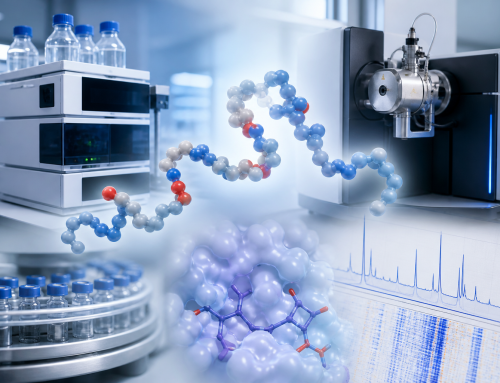
Lyophilized peptides are widely used in biochemical research, assay development, analytical method validation, cell culture studies, and other laboratory applications where defined peptide sequences are required. The term lyophilized refers to a freeze-dried solid produced by removing water, and sometimes other volatile solvents, from a peptide solution under low temperature and reduced pressure. This dry format is commonly selected because many peptides are more stable as solids than as aqueous solutions.
For researchers and scientific purchasers, understanding what lyophilization does, what it does not do, and how lyophilized peptides should be handled is important for experimental reproducibility. A vial of dry peptide may appear simple, but its performance depends on peptide chemistry, residual moisture, counterions, purity, storage conditions, and reconstitution practices. The following sections provide a practical overview of lyophilized peptides from production through use in the laboratory.
What Are Lyophilized Peptides?
Lyophilized peptides are peptides that have been converted from solution into a dry cake, powder, film, or pellet by freeze-drying. Peptides are short chains of amino acids linked by peptide bonds. Depending on the sequence and modifications, they may be hydrophilic, hydrophobic, acidic, basic, prone to oxidation, or susceptible to aggregation. These physicochemical differences strongly influence how a peptide behaves during drying, storage, and reconstitution.
In many laboratories, synthetic peptides are delivered as lyophilized material after purification and analytical characterization. The dry form reduces water-mediated degradation pathways such as hydrolysis and can slow other reactions that occur more readily in solution. Lyophilization also facilitates shipment and enables researchers to prepare solutions at defined concentrations shortly before use.
Appearance and Physical Form
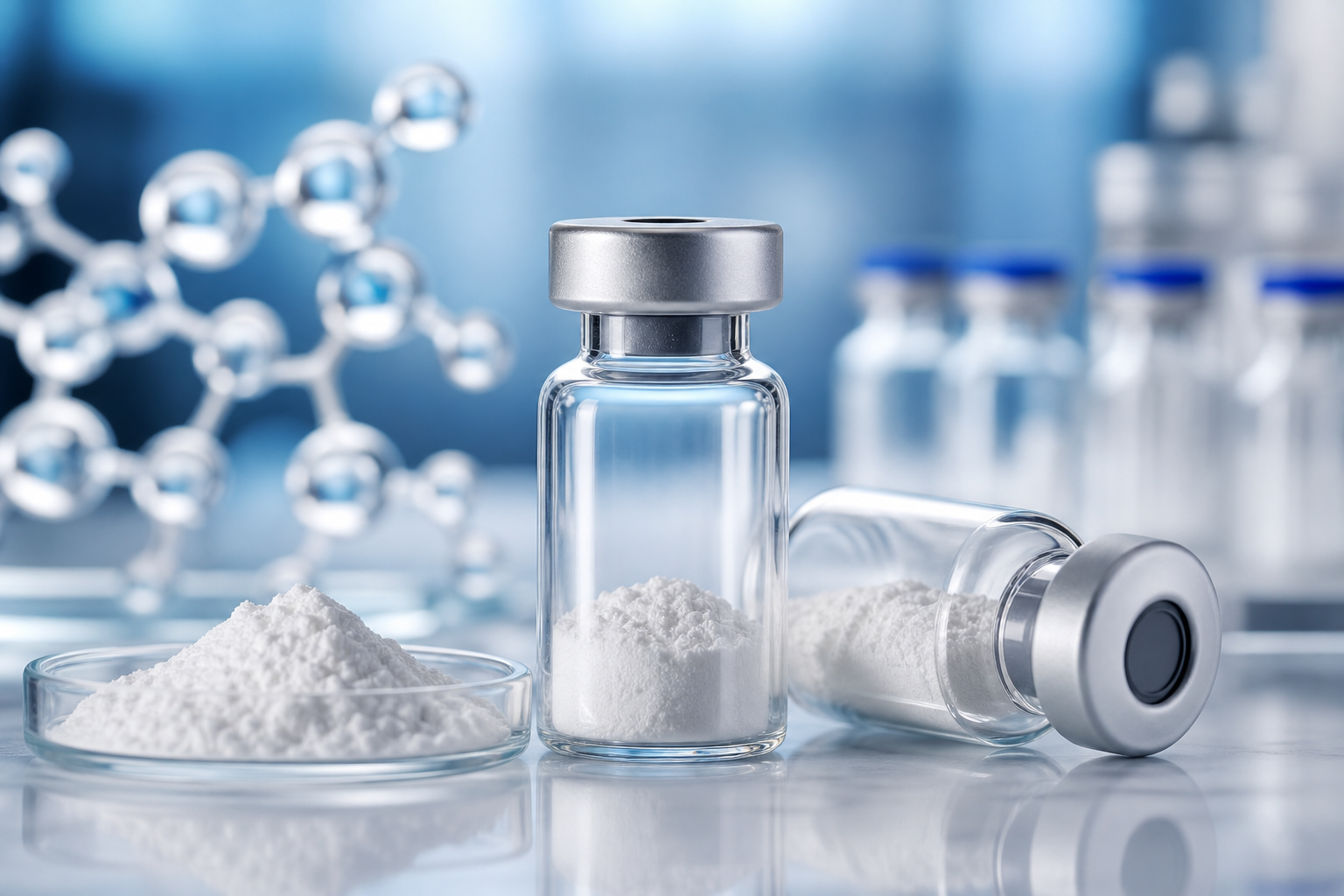
Lyophilized peptides do not always look the same. Some appear as a fluffy white cake, while others form a thin film, compact pellet, translucent residue, or slightly off-white powder. Appearance alone is not a reliable indicator of purity, quantity, or performance. A peptide present at a small mass may be difficult to see, especially if it spreads across the vial wall during drying. Highly hygroscopic peptides may also become glassy or sticky after exposure to humid air.
How Lyophilization Works
Lyophilization is a controlled drying process that usually includes three stages: freezing, primary drying, and secondary drying. The goal is to remove solvent while limiting chemical and structural changes to the peptide.
Freezing
During freezing, the peptide solution is cooled until water and other solvent components solidify. Ice crystal formation concentrates the peptide and dissolved salts or counterions into the unfrozen fraction before complete solidification. Freezing rate, peptide concentration, and formulation components can influence the final dry structure. Although peptides are not folded proteins in the same sense as enzymes or antibodies, some sequences may still associate, aggregate, or adopt conformations affected by the freezing step.
Primary Drying
In primary drying, pressure is reduced and heat is carefully supplied so frozen water sublimates directly from ice to vapor. This stage removes most of the water. If the product temperature rises too high, the dry matrix can collapse, potentially changing appearance and reconstitution behavior. A collapsed cake does not necessarily mean the peptide is unusable, but it may indicate that the lyophilization cycle or formulation was not optimal for that material.
Secondary Drying
Secondary drying removes water that remains bound or adsorbed to the peptide matrix. Residual moisture is not inherently problematic at very low levels, but excess moisture can accelerate degradation during storage. The ideal residual water content depends on the peptide, counterion, and intended use. Overdrying may also be undesirable for some materials, as extremely low moisture can influence electrostatic behavior or make the solid harder to handle.
Why Peptides Are Supplied in Lyophilized Form
The main reason peptides are supplied lyophilized is stability. In aqueous solution, peptides can undergo hydrolysis, deamidation, oxidation, disulfide scrambling, cyclization, or adsorption to container surfaces. These changes may alter assay results or reduce the effective concentration of intact peptide. Dry storage at appropriate temperatures generally slows these processes.
Lyophilization also supports logistical and analytical needs. It enables accurate aliquoting by mass during manufacturing, reduces shipping weight, and allows the end user to select a solvent compatible with the experiment. For example, the same peptide may need to be dissolved in sterile water for a biochemical assay, dilute acid for a basic peptide, ammonium bicarbonate for mass spectrometry workflows, or dimethyl sulfoxide for a hydrophobic sequence before dilution into aqueous buffer.
Key Quality Attributes to Review
Before using a lyophilized peptide, researchers should review the certificate of analysis or accompanying documentation. The most relevant quality attributes depend on the application, but several items are commonly important.
Purity and Analytical Method
Peptide purity is often reported by analytical high-performance liquid chromatography, usually as a percentage based on peak area. This value indicates the relative chromatographic purity under the method conditions used. It is not always equivalent to mass fraction of active peptide because counterions, salts, residual water, and solvents may not be represented in the same way. For quantitative applications, confirm whether the supplier provides net peptide content, amino acid analysis, quantitative NMR, or another concentration-relevant measurement.
Molecular Weight and Identity
Mass spectrometry is commonly used to confirm peptide identity by comparing observed mass with theoretical mass. Researchers should check whether the reported molecular weight corresponds to the free peptide, a salt form, a modified peptide, or a specific oxidation state. This is particularly important for peptides containing cysteine, methionine, phosphorylation, acetylation, amidation, biotin, fluorescent labels, or other modifications.
Counterions and Salt Form
Synthetic peptides are often isolated as trifluoroacetate, acetate, hydrochloride, or other salt forms. Counterions can affect solubility, pH, biological assays, ion exchange behavior, and mass spectrometry. Trifluoroacetate is common after reversed-phase purification, but it may interfere with some cell-based or biophysical applications. In such cases, counterion exchange to acetate or chloride may be considered during procurement or preparation.
Reconstitution of Lyophilized Peptides
Reconstitution is one of the most important steps in obtaining reliable results. The appropriate solvent depends on peptide sequence, hydrophobicity, charge, modifications, and downstream compatibility. A universal solvent does not exist for all peptides.
General Reconstitution Workflow
- Allow the vial to equilibrate to room temperature before opening, especially if stored frozen. This reduces condensation on the peptide.
- Briefly centrifuge the vial before opening to collect material at the bottom.
- Select a solvent based on peptide properties and experimental requirements.
- Add solvent gently to the vial wall or bottom, then allow time for wetting.
- Mix by gentle pipetting or inversion. Avoid vigorous vortexing for aggregation-prone or oxidation-sensitive peptides unless validated.
- Prepare aliquots to minimize repeated freeze-thaw cycles.
Solvent Selection
Hydrophilic peptides often dissolve in water or aqueous buffer. Basic peptides may dissolve more readily with a small amount of dilute acetic acid or hydrochloric acid, followed by dilution into the final buffer. Acidic peptides may benefit from dilute ammonium hydroxide or another mild basic solution if compatible with the application. Hydrophobic peptides may require an initial dissolution step in dimethyl sulfoxide, dimethylformamide, acetonitrile, or a mixture of organic solvent and water, followed by controlled dilution.
Buffers containing high salt should not always be used as the first solvent because salts can reduce solubility for some sequences. If a peptide is difficult to dissolve, it is often preferable to dissolve it first at a higher concentration in a minimal compatible solvent, then dilute into the working medium. Filtration can remove particulates, but it may also cause peptide loss through membrane binding, so recovery should be evaluated when concentration accuracy is critical.
Calculating Concentration
When preparing stock solutions, distinguish between gross peptide weight and net peptide content. The mass in the vial may include peptide, water, counterions, and residual salts. If the documentation provides net peptide content, use that value for molar calculations. If only gross weight is available, calculated concentration may overestimate the amount of active peptide. This distinction is especially important in dose-response assays, calibration standards, and quantitative binding studies.
Storage and Stability Considerations
Storage recommendations vary by peptide, but lyophilized peptides are commonly stored desiccated at low temperature, often at -20 °C or below. Some stable peptides may tolerate short-term storage at 2-8 °C or room temperature, but this should be based on documentation or stability data rather than assumption. Light-sensitive peptides, including many dye-labeled sequences, should be protected from light.
Moisture Control
Moisture is a major factor in peptide stability. Vials should be tightly sealed, and desiccant should be used when appropriate. When removing frozen vials from storage, allow them to reach room temperature before opening to prevent atmospheric moisture from condensing on the cold peptide. Repeated exposure to humid air can lead to clumping, increased residual water, and accelerated degradation.
Freeze-Thaw Cycles
Once reconstituted, peptides are usually less stable than in lyophilized form. Aliquoting stock solutions into single-use or limited-use volumes reduces freeze-thaw stress and contamination risk. The acceptable number of freeze-thaw cycles depends on the peptide and assay sensitivity. For critical studies, stability should be assessed under actual storage and handling conditions.
Container and Surface Effects
Some peptides adsorb to glass, polypropylene, or filter membranes, particularly at low concentrations. Adsorption can lower the apparent concentration and contribute to variability. Low-bind tubes, carrier proteins, surfactants, or higher stock concentrations may help in some workflows, but these additives must be compatible with the assay. Container selection should be considered part of method development rather than an afterthought.
Common Handling Challenges
Several issues can occur when working with lyophilized peptides. Most are manageable when approached systematically.
Poor Solubility
Poor solubility is often sequence-related. Hydrophobic residues, long sequences, aromatic amino acids, and certain modifications can increase aggregation or reduce aqueous solubility. Review the peptide’s net charge at the intended pH, hydrophobicity, and predicted isoelectric point. Adjusting pH, using a small amount of organic solvent, reducing salt concentration, or warming gently may improve dissolution. However, heating should be used cautiously for labile modifications or oxidation-prone residues.
Unexpected Precipitation After Dilution
A peptide may dissolve in a stock solvent but precipitate when diluted into buffer or medium. This can occur when the final solvent composition, pH, salt concentration, or peptide concentration crosses a solubility limit. To reduce this risk, add stock solution slowly with mixing, validate the final solvent percentage, and inspect solutions before use. Analytical confirmation may be necessary if precipitation is subtle or if the peptide is used at low concentrations.
Oxidation and Chemical Degradation
Peptides containing methionine, cysteine, tryptophan, or certain unnatural residues may be sensitive to oxidation. Oxygen, light, metal ions, and repeated handling can contribute. For susceptible peptides, consider degassed solvents, antioxidant-compatible conditions, metal-free reagents, amber containers, and minimized headspace where appropriate. Deamidation of asparagine or glutamine and hydrolysis at sensitive sequences may also occur during prolonged storage in solution.
Documentation and Procurement Considerations
For institutional purchasing and regulated or semi-regulated research environments, documentation is as important as the physical peptide. Specifications should align with the intended use. A discovery-stage screening assay may require different documentation than a reference standard, immunoassay calibrator, or material used in a validated method.
Useful documentation may include sequence, terminal modifications, purity method, mass spectrometry result, counterion, lot number, storage recommendation, amount supplied, net peptide content, residual solvent information, endotoxin data, bioburden or sterility status if relevant, and handling notes. For cell-based assays, additional consideration may be given to salt form, endotoxin level, solvent compatibility, and lot-to-lot consistency.
Best Practices for Reproducible Use
- Record the lot number, purity, salt form, and net peptide content when available.
- Store lyophilized material desiccated and protected from unnecessary temperature cycling.
- Equilibrate frozen vials before opening to reduce condensation.
- Use a reconstitution strategy matched to peptide chemistry, not a default solvent for all sequences.
- Prepare concentrated stocks when practical, then aliquot into volumes suitable for single experiments.
- Validate solution stability, adsorption, and freeze-thaw tolerance for critical assays.
- Document solvent composition and final solvent percentage in experimental records.
Conclusion
Lyophilized peptides provide a practical and generally stable format for storing and distributing synthetic peptides, but their successful use depends on informed handling. Researchers should consider peptide sequence, salt form, purity, net content, solubility, moisture exposure, and storage conditions when designing experiments. By reviewing documentation, selecting appropriate reconstitution conditions, and controlling storage and aliquoting practices, laboratories can improve consistency and reduce avoidable variability in peptide-based workflows.