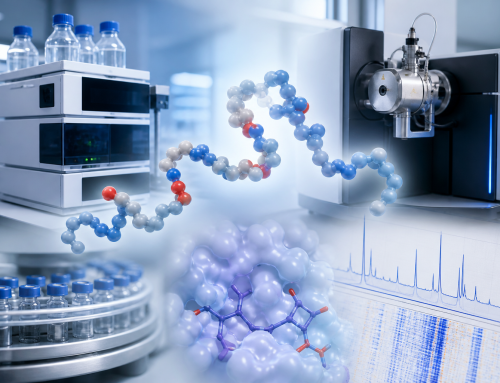
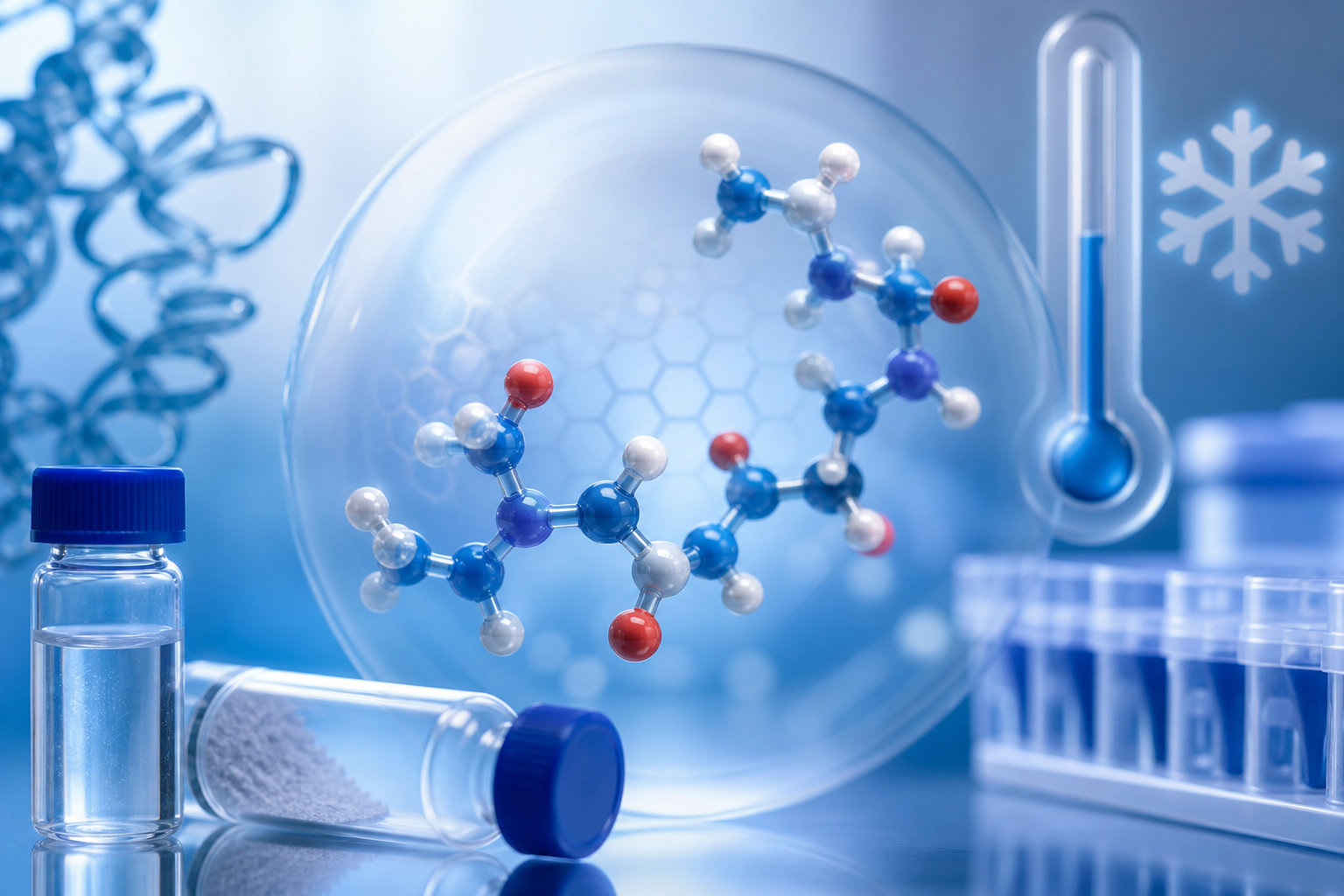
Peptide stability is a critical consideration in research, diagnostics, and pharmaceutical development. Whether a peptide is used as a reference standard, assay reagent, immunogen, biochemical tool, or therapeutic candidate, its performance depends on maintaining chemical identity, purity, and biological activity over time. Peptides can be more sensitive than many small molecules because they contain multiple reactive functional groups, diverse side chains, and conformational features that may change under routine handling conditions.
Stability is not determined by a single variable. It reflects the combined effects of sequence, chemical modifications, physical state, solvent system, pH, temperature, light exposure, oxygen, impurities, concentration, container surface, and handling practices. Understanding these factors helps laboratories design appropriate storage conditions, reduce variability, and interpret analytical data more reliably.
What Peptide Stability Means
Peptide stability generally refers to the ability of a peptide to retain its intended chemical and functional properties during storage, preparation, and use. This may include preservation of molecular mass, sequence integrity, secondary structure, solubility, binding activity, enzymatic activity, or immunological recognition, depending on the application.
Two broad categories are commonly considered: chemical stability and physical stability. Chemical instability involves covalent changes such as oxidation, hydrolysis, deamidation, racemization, or disulfide exchange. Physical instability involves non-covalent processes such as aggregation, precipitation, adsorption to surfaces, or conformational change. In practice, these categories can overlap. For example, aggregation may expose oxidation-sensitive residues, while chemical degradation may reduce solubility.
Sequence-Dependent Stability Factors
Amino Acid Composition
The primary sequence is one of the strongest predictors of peptide stability. Certain residues are more prone to degradation than others. Methionine, cysteine, tryptophan, tyrosine, and histidine can be susceptible to oxidation. Asparagine and glutamine may undergo deamidation, especially under unfavorable pH and temperature conditions. Aspartic acid can contribute to peptide bond hydrolysis or isomerization in specific sequence contexts.
Hydrophobic residues can increase the tendency for self-association or aggregation, particularly in aqueous buffers. Conversely, highly charged peptides may be more soluble but can be sensitive to ionic strength and counterion composition. The balance of hydrophobicity, charge, and molecular flexibility strongly influences solubility and physical stability.
Sequence Motifs Associated With Degradation
Some short motifs are known to be less stable. Asn-Gly sequences, for example, can be prone to deamidation because the small glycine residue allows formation of a succinimide intermediate. Asp-Pro bonds may hydrolyze more readily under acidic conditions than many other peptide bonds. Cys-containing peptides may form intermolecular disulfides or undergo disulfide scrambling if oxidation state and pH are not controlled.
Researchers evaluating peptide candidates often examine known liabilities during design. Substitutions, terminal modifications, cyclization, or formulation changes may improve stability, but such changes can also alter biological activity. For research reagents, any modification should be documented and matched to the intended experimental use.
Peptide Length and Conformation
Short peptides may be chemically simple but can still degrade through side-chain reactions. Longer peptides and mini-proteins may have additional conformational features that affect stability. Folding, secondary structure, and intramolecular interactions can protect some residues while exposing others. Peptides that form alpha-helices, beta-sheets, or amphipathic structures may aggregate depending on concentration, pH, and solvent composition.
Chemical Degradation Pathways
Oxidation
Oxidation is one of the most common stability concerns. Methionine can form methionine sulfoxide, cysteine can form disulfides or higher oxidation products, and tryptophan can generate multiple oxidized derivatives. Oxidation may be promoted by dissolved oxygen, light, trace metals, peroxides in solvents or excipients, and repeated exposure to air.
Mitigation strategies include minimizing headspace oxygen, using freshly prepared solvents, avoiding metal contamination, storing materials in tightly sealed containers, and protecting light-sensitive peptides from illumination. Antioxidants or chelating agents may be useful in selected formulations, but they should be evaluated for compatibility with the peptide and downstream assays.
Deamidation
Deamidation affects asparagine and glutamine residues and converts them to aspartic acid, isoaspartic acid, glutamic acid, or related products. The reaction can change charge, structure, receptor binding, and analytical behavior. It is influenced by pH, temperature, buffer type, neighboring residues, and water activity.
Asparagine deamidation is often fastest near neutral to basic pH, especially in flexible regions. Lower temperatures and appropriate pH selection can reduce the rate. Lyophilized storage generally lowers deamidation risk compared with long-term storage in aqueous solution, although residual moisture in the lyophilized cake still matters.
Hydrolysis
Peptide bond hydrolysis involves cleavage of the backbone. Although many peptide bonds are relatively stable under mild conditions, specific sequences and extreme pH can accelerate hydrolysis. Acid-labile motifs, such as Asp-Pro, require particular attention. Strong acid, strong base, elevated temperature, and prolonged aqueous exposure increase hydrolysis risk.
For peptides stored in solution, selecting a pH that balances solubility, activity, and chemical stability is important. In some cases, short-term storage in solution is acceptable, while long-term storage should be in lyophilized form.
Disulfide Exchange and Scrambling
Peptides containing cysteine residues may form intramolecular or intermolecular disulfide bonds. For peptides designed to contain a specific disulfide pattern, incorrect disulfide pairing can reduce activity or create heterogeneous mixtures. Disulfide exchange is influenced by pH, redox conditions, concentration, and the presence of free thiols.
Maintaining appropriate redox conditions and avoiding unnecessary exposure to basic pH can reduce disulfide scrambling. Analytical methods such as LC-MS peptide mapping, Ellman assays, and non-reducing chromatographic methods may be used to monitor thiol and disulfide status.
Racemization and Isomerization
Racemization and isomerization are less obvious than mass-changing reactions but can be significant. Formation of D-amino acids or isoaspartate can alter binding, enzymatic recognition, and biological activity. These changes may be difficult to detect by simple mass measurement because the molecular weight may remain unchanged. Specialized chromatographic or enzymatic methods may be needed when stereochemical integrity is critical.
Physical Stability Factors
Aggregation and Precipitation
Aggregation occurs when peptide molecules self-associate through hydrophobic, electrostatic, hydrogen bonding, or beta-sheet interactions. It may be reversible or irreversible. Aggregation can reduce effective concentration, alter activity, increase assay variability, and complicate filtration or injection.
Key contributors include high concentration, pH near the isoelectric point, high salt, temperature stress, agitation, freeze-thaw cycles, and hydrophobic sequence content. Formulation screening can help identify conditions that maintain solubility. In some cases, modest amounts of organic solvent, adjusted ionic strength, or pH optimization improve handling, but compatibility with the experiment must be confirmed.
Adsorption to Surfaces
Peptides, especially low-concentration or hydrophobic peptides, can adsorb to glass, polypropylene, filters, pipette tips, and tubing. Adsorption may cause apparent loss of material without chemical degradation. This is particularly important for quantitative assays, bioanalytical standards, and low-dose preparations.
Using low-bind containers, minimizing transfers, preparing solutions at appropriate concentrations, and validating recovery from storage vessels can reduce losses. The use of carrier proteins or surfactants may improve recovery in some applications, but these additives can interfere with analytical methods or biological assays.
Solubility Constraints
Peptide solubility depends on net charge, hydrophobicity, counterions, pH, salt concentration, and solvent composition. Acidic peptides often dissolve better under basic conditions, while basic peptides may dissolve better under acidic conditions. Hydrophobic peptides may require initial dissolution in dimethyl sulfoxide, acetonitrile, dilute acid, or other compatible solvents before dilution into aqueous buffer.
Solubility should not be assumed from purity or molecular weight alone. A peptide can be analytically pure yet difficult to dissolve. Laboratories should document dissolution procedures, final solvent percentages, and any observations such as cloudiness, gel formation, or visible particles.
Environmental and Storage Conditions
Temperature
Temperature strongly affects both chemical and physical stability. Reaction rates generally increase at higher temperatures, so refrigeration or freezing is commonly used to slow degradation. Lyophilized peptides are often stored at low temperature, typically below freezing for long-term preservation, although exact requirements depend on sequence and formulation.
Repeated warming and cooling can introduce moisture and promote condensation. Samples should be equilibrated to room temperature before opening when stored cold, especially if the vial contains lyophilized material. This practice reduces water uptake from ambient air.
Moisture
Water activity is a major determinant of stability in solid-state peptides. Even lyophilized peptides may contain residual moisture, and hygroscopic salts or counterions can increase water uptake. Moisture can accelerate hydrolysis, deamidation, oxidation, and structural relaxation in the solid state.
Desiccated storage, tightly sealed vials, and minimizing repeated vial opening are practical controls. For frequently used materials, aliquoting into single-use quantities may reduce cumulative moisture exposure.
pH and Buffer Selection
pH influences ionization state, solubility, conformation, and degradation pathways. No universal pH is optimal for all peptides. Acidic conditions may reduce deamidation but increase acid-catalyzed hydrolysis for susceptible sequences. Basic conditions may improve solubility for some peptides but increase deamidation, disulfide exchange, or oxidation risk.
Buffer species also matter. Phosphate, acetate, citrate, Tris, and histidine buffers have different pH ranges, metal interactions, and temperature-dependent pH behavior. Buffer compatibility should be evaluated with the peptide and analytical method. For stability studies, pH should be measured under relevant temperature and solvent conditions when possible.
Light Exposure
Light can promote oxidation or photochemical reactions, particularly in peptides containing tryptophan, tyrosine, histidine, cysteine, or certain chromophores and labels. Fluorescent, biotinylated, or dye-conjugated peptides may have additional light sensitivity due to the label. Amber vials, foil wrapping, and reduced bench exposure are simple methods to limit photodegradation.
Freeze-Thaw Cycles
Repeated freeze-thaw cycles may contribute to aggregation, concentration gradients, pH shifts, and surface adsorption. Ice formation can exclude solutes and locally increase peptide, buffer, and salt concentrations. These stresses may be especially relevant for peptides near their solubility limit or prone to self-association.
Aliquoting reconstituted peptide solutions into single-use volumes is a common strategy. If refreezing is unavoidable, laboratories should evaluate whether freeze-thaw exposure affects purity, concentration, or activity for the specific peptide.
Formulation and Handling Considerations
Lyophilized Versus Solution Storage
Lyophilized storage is often preferred for long-term stability because reduced water activity slows many degradation pathways. However, lyophilized materials are not automatically stable under all conditions. Residual moisture, counterions, excipients, vial closure integrity, and storage temperature remain important.
Solution storage is convenient for routine use but usually presents higher risk of chemical degradation and physical instability. If peptides must be stored in solution, conditions should be chosen based on solubility, pH stability, container compatibility, and expected storage duration.
Counterions and Salts
Peptides are commonly isolated as trifluoroacetate, acetate, hydrochloride, or other salt forms. Counterions can influence solubility, pH, hygroscopicity, and compatibility with biological systems. Trifluoroacetate salts may be suitable for many analytical applications but can affect some cell-based or enzymatic assays. Salt exchange may be considered when counterion effects are relevant, though the process itself should be controlled to avoid loss or degradation.
Excipients and Additives
Excipients such as sugars, polyols, amino acids, surfactants, antioxidants, and bulking agents may improve stability in selected formulations. For example, trehalose or sucrose can help stabilize some lyophilized preparations, while surfactants may reduce adsorption or interfacial stress. However, additives can introduce impurities, peroxides, or assay interference. Their use should be justified by compatibility testing rather than general assumptions.
Analytical Assessment of Peptide Stability
Chromatography and Mass Spectrometry
Reversed-phase HPLC or UPLC is commonly used to monitor purity and degradation products. LC-MS provides molecular mass information and can help identify oxidation, deamidation, truncation, or other modifications. However, some changes, such as isomerization or racemization, may not produce a mass shift and may require specialized methods.
Concentration and Recovery Measurements
UV absorbance, amino acid analysis, quantitative LC, or other validated methods may be used to confirm concentration. This is especially important when adsorption, incomplete dissolution, or precipitation is possible. For peptides lacking strong chromophores, UV-based concentration estimates may be unreliable unless an appropriate method and extinction coefficient are used.
Functional Assays
Chemical purity does not always predict biological performance. Binding assays, enzymatic assays, cell-based assays, or immunoassays may be needed to confirm functional stability. These assays should be interpreted alongside analytical chemistry data to distinguish degradation from assay variability or matrix effects.
Practical Best Practices for Laboratories
- Store lyophilized peptides in tightly sealed vials under dry, low-temperature conditions when long-term storage is required.
- Allow cold vials to reach room temperature before opening to reduce condensation.
- Prepare aliquots after reconstitution to minimize repeated freeze-thaw cycles and repeated vial opening.
- Select dissolution solvents and buffers based on peptide charge, hydrophobicity, and downstream compatibility.
- Protect oxidation- or light-sensitive peptides from air, trace metals, and unnecessary illumination.
- Use low-bind labware when working at low concentrations or with hydrophobic sequences.
- Document lot information, storage history, reconstitution conditions, solvent composition, and number of freeze-thaw cycles.
- Monitor stability using appropriate analytical and functional assays for the intended application.
Conclusion
Peptide stability depends on an interconnected set of sequence, formulation, environmental, and handling factors. The most effective approach is peptide-specific: identify likely degradation pathways, choose storage and preparation conditions that minimize risk, and confirm performance with suitable analytical methods. Careful control of moisture, temperature, pH, oxidation, adsorption, and freeze-thaw exposure can substantially improve reproducibility in laboratory workflows.