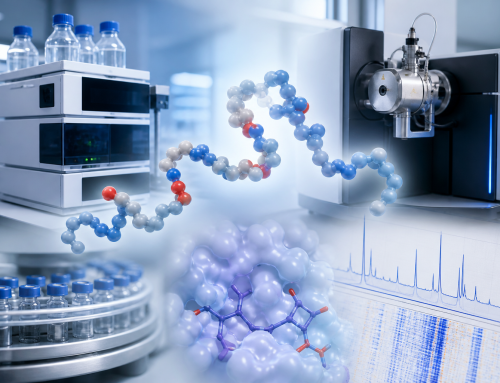
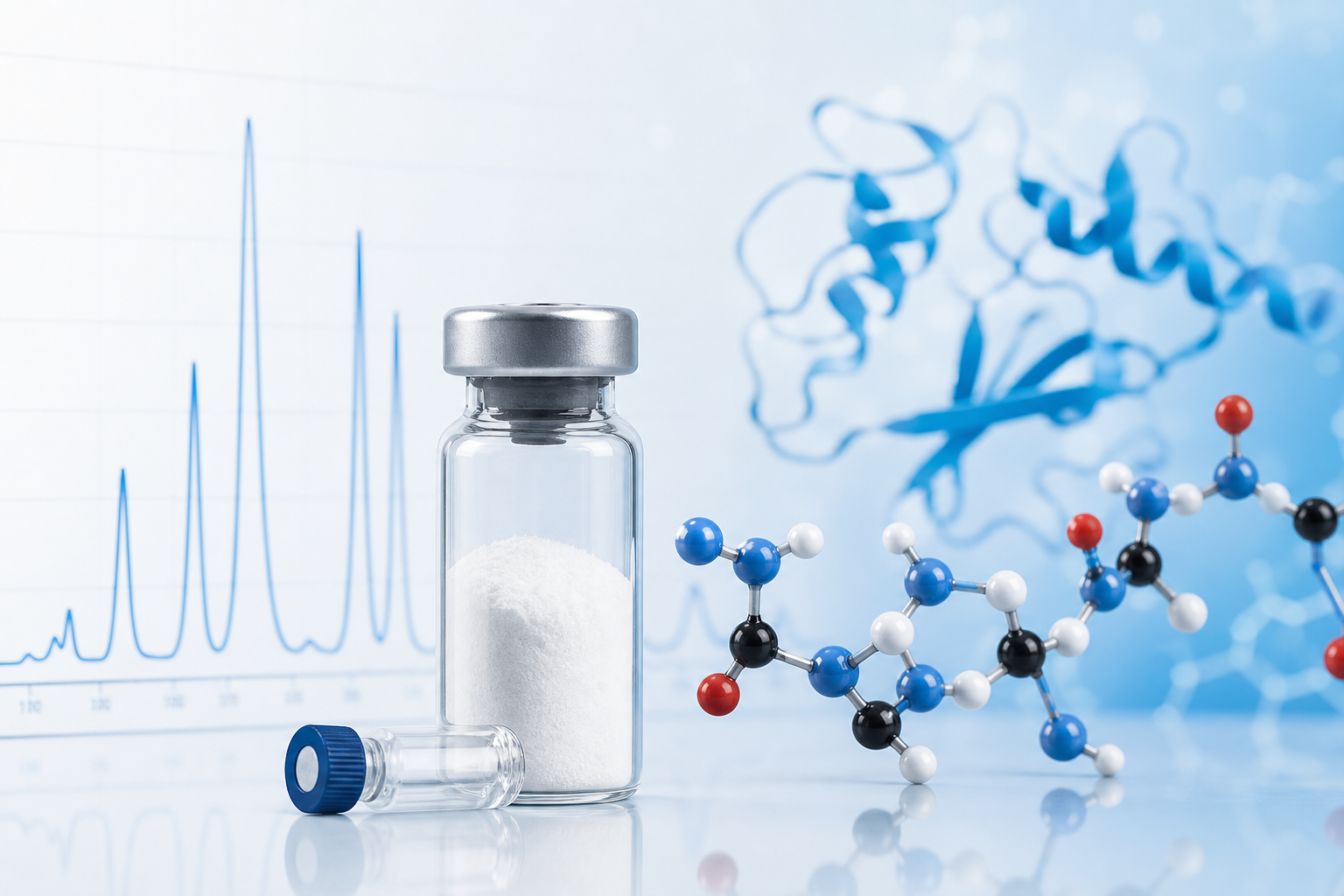
Peptide purity is one of the most frequently cited specifications in peptide procurement, method development, and experimental reporting. A value such as 75%, 85%, 95%, or 98% may appear straightforward, but its interpretation depends on how purity is measured, what is included in the calculation, and how the peptide will be used. For researchers and purchasing teams, understanding peptide purity percentages helps align material specifications with experimental requirements, analytical risk, and budget considerations.
In practical terms, peptide purity describes the proportion of the desired peptide relative to detectable peptide-related components in a sample. It does not necessarily describe the exact amount of usable peptide by weight, nor does it guarantee the absence of salts, water, counterions, or non-UV-active contaminants. For this reason, peptide purity should be evaluated together with identity confirmation, net peptide content, formulation, and the intended application.
What Does Peptide Purity Percentage Mean?
Peptide purity percentage generally refers to the relative amount of the target peptide compared with other detectable peptide species in an analytical method, most commonly reversed-phase high-performance liquid chromatography (RP-HPLC). If a peptide is reported as 95% pure by HPLC, the main peak corresponding to the desired peptide accounts for approximately 95% of the total integrated peak area under the conditions used.
This value is relative rather than absolute. It depends on the analytical method, detection wavelength, integration parameters, and the chemical properties of the peptide and impurities. A 95% purity result does not necessarily mean that 95 mg of a 100 mg vial is active target peptide. The gross vial weight may include water, salts, residual counterions such as trifluoroacetate or acetate, and other non-peptide components. Therefore, purity should not be confused with assay, potency, or net peptide content.
Purity Versus Identity
Purity and identity are related but distinct quality attributes. Purity estimates how much of the sample is the desired peptide relative to impurities detected by the analytical method. Identity confirms that the primary component has the expected molecular mass or sequence. A sample may show a high HPLC purity but still require mass spectrometry confirmation to verify that the main peak is the intended peptide rather than a closely eluting analog or deletion product.
For most research-grade peptides, identity is commonly assessed by mass spectrometry, such as electrospray ionization mass spectrometry or MALDI-TOF mass spectrometry. The expected molecular weight should match the observed mass within the acceptable range for the instrument and peptide type.
Purity Versus Net Peptide Content
Net peptide content refers to the fraction of the weighed material that is actual peptide, excluding water, salts, and counterions. It is often determined by amino acid analysis, elemental analysis, quantitative NMR, or other assay methods. This parameter is especially important when preparing solutions at accurate molar concentrations.
For example, a peptide may be 98% pure by HPLC but have a net peptide content of 75% due to bound water and counterions. In that case, weighing 10 mg of material does not provide 9.8 mg of net peptide; it provides approximately 7.5 mg of peptide material, most of which is the desired sequence. When exact dosing or stoichiometry is important, both HPLC purity and net peptide content should be considered.
How Peptide Purity Is Commonly Measured
Reversed-Phase HPLC
RP-HPLC is the most widely used technique for estimating peptide purity. Peptides are separated on a hydrophobic stationary phase using gradients of aqueous buffer and organic solvent, commonly acetonitrile. Detection is often performed by UV absorbance, typically around 214 nm, where peptide bonds absorb strongly, and sometimes at 220 nm or 280 nm depending on the sequence.
The purity percentage is calculated by integrating the area of the target peak and dividing it by the total integrated area of all relevant peaks. This approach assumes that peak area is proportional to the amount of each component. However, different impurities may have different UV responses, especially if they contain aromatic residues, chromophores, labels, or modifications. Thus, HPLC purity is an estimate based on detector response, not a direct mass-based measurement.
Mass Spectrometry
Mass spectrometry is primarily used to confirm molecular identity and detect mass-related impurities such as deletion sequences, truncations, adducts, oxidation products, or incomplete deprotection products. While mass spectrometry can provide qualitative and semi-quantitative information, it is not usually the sole method for assigning a routine peptide purity percentage.
Combining HPLC with mass spectrometry provides a stronger analytical picture. HPLC indicates chromatographic purity, while mass spectrometry helps determine whether the main peak and minor peaks correspond to the expected peptide or to related impurities.
Other Analytical Methods
Additional methods may be used depending on application requirements. Capillary electrophoresis can help assess charged variants or highly hydrophilic peptides. Amino acid analysis may be used for quantitation. Karl Fischer titration can measure water content. Ion chromatography may be relevant for counterion analysis. For regulated or clinical applications, validated methods and defined acceptance criteria are typically required.
Why Peptide Purity Percentages Vary
Synthesis-Related Impurities
Most synthetic peptides are produced by stepwise solid-phase peptide synthesis. Each coupling and deprotection step has a high but not perfect efficiency. Over many steps, small inefficiencies can generate impurities, including deletion sequences, truncated products, insertion sequences, and incompletely deprotected peptides. Longer peptides generally present greater purification challenges because there are more synthetic steps and a greater number of potential byproducts.
Some sequences are inherently difficult to synthesize. Hydrophobic peptides may aggregate on resin or during purification. Sequences rich in beta-sheet-forming residues can be prone to aggregation. Cysteine-containing peptides may form disulfide-related variants. Methionine, tryptophan, and cysteine may be sensitive to oxidation. These sequence-specific factors can influence the achievable purity and purification yield.
Modification-Related Impurities
Modified peptides, such as phosphorylated, acetylated, biotinylated, fluorescently labeled, lipidated, glycosylated, or stapled peptides, may have additional impurity risks. Incomplete modification, side reactions, positional isomers, and degradation of labile groups can complicate purification and analysis. Fluorescent dyes and hydrophobic modifications may also alter HPLC behavior and detector response.
Storage and Handling Effects
Purity is not always static after synthesis. Some peptides are sensitive to hydrolysis, oxidation, deamidation, disulfide scrambling, or aggregation during storage and handling. Lyophilized peptides are commonly stored desiccated at low temperature, protected from light when appropriate. Once dissolved, stability may depend on pH, buffer composition, temperature, concentration, and freeze-thaw frequency.
Researchers should consider whether the purity value on a certificate of analysis represents the material at release testing or whether additional degradation could occur before or during use. For sensitive peptides, preparing aliquots and minimizing repeated freeze-thaw cycles can help preserve sample integrity.
Interpreting Common Peptide Purity Grades
Crude Peptides
Crude peptides are typically unpurified materials after cleavage and deprotection, though they may undergo basic processing such as precipitation or lyophilization. Their purity can vary widely depending on sequence length and synthesis performance. Crude peptides may be suitable for preliminary method development, antibody screening in some contexts, or applications where the target peptide will be further purified by the user.
Because crude materials contain synthesis byproducts and residual reagents, they are generally not appropriate for quantitative biological assays, binding studies, structural work, or applications where impurities could confound interpretation.
Approximately 70-85% Purity
Peptides in the 70-85% purity range may be adequate for certain screening applications, epitope mapping, or non-quantitative assays where minor impurities are unlikely to affect the conclusion. They can be useful when many peptides are needed for exploratory studies and the tolerance for impurities is relatively high.
However, researchers should be cautious when using this grade in cell-based assays, receptor binding studies, enzymology, or quantitative comparisons. Impurities may have unknown biological activity, interfere with readouts, or affect solubility.
Approximately 85-95% Purity
This range is commonly used for many standard biochemical and in vitro research applications. It may be appropriate for routine binding assays, enzyme substrate studies, immunological assays, and early-stage functional testing, provided that the impurity profile is acceptable and the experimental design accounts for concentration uncertainty.
For many research workflows, 90% or 95% purity represents a practical balance between analytical quality and feasibility. The suitability of this range depends on the peptide sequence, assay sensitivity, and whether impurities are likely to be active.
Greater Than 95% Purity
Peptides above 95% purity are often selected for more demanding applications, including quantitative structure-activity relationship studies, receptor pharmacology, high-sensitivity cell assays, biophysical characterization, and reference material development. Higher purity can reduce the likelihood that observed effects are due to co-eluting or related impurities.
Very high purity, such as 98% or higher, may be appropriate for applications requiring tight control of impurity burden. However, increasing purity can reduce yield and increase production complexity, especially for long or difficult sequences. The decision should be based on scientific need rather than the assumption that the highest available percentage is always necessary.
How to Choose the Appropriate Peptide Purity
Match Purity to the Experimental Question
The appropriate purity depends on how the peptide will be used. If the peptide is used as an antigen for qualitative screening, moderate purity may be sufficient. If it is used as a ligand in a dose-response curve, an enzyme inhibitor, a receptor agonist, or a quantitative standard, higher purity and reliable content determination become more important.
When impurities could produce biological effects, bind to the same target, inhibit enzymes, or alter immune recognition, a higher-purity material is generally advisable. For comparative studies, using peptides of similar purity and content can reduce variability between samples.
Consider Peptide Length and Complexity
Short, unmodified peptides are often easier to synthesize and purify to high percentages. Longer peptides, highly hydrophobic sequences, cyclic peptides, disulfide-rich peptides, and heavily modified peptides may require more extensive purification and characterization. In some cases, achieving very high purity may be technically challenging or may result in low recovery.
Before specifying a purity threshold, researchers should consider whether the requested grade is realistic for the sequence and whether additional analytical confirmation is needed. For difficult peptides, discussing method suitability, solubility, and impurity profile may be more informative than focusing on a single percentage.
Account for Quantitation Requirements
If the peptide will be used at a precise molar concentration, purity alone is not enough. Net peptide content, counterion form, molecular weight, and hydration state should be included in concentration calculations. This is particularly important for potency assays, calibration standards, kinetic measurements, and formulation studies.
For peptides supplied as salts, the counterion contributes to the measured mass but not to the molar amount of peptide. The same peptide may have different apparent weights depending on whether it is supplied as a trifluoroacetate, acetate, chloride, or other salt form.
Reading a Certificate of Analysis
Key Information to Review
A certificate of analysis should be reviewed carefully before use. Important fields may include peptide sequence, molecular formula, theoretical and observed molecular weight, purity method and result, HPLC chromatogram, mass spectrum, counterion, appearance, storage conditions, lot number, and date of analysis. For quantitative work, information on net peptide content or assay value may also be required.
Researchers should confirm that the analytical data correspond to the correct sequence and modification state. For labeled or modified peptides, the expected mass should include all modifications and any relevant terminal groups. If the peptide contains disulfide bonds or cyclization, the analytical documentation should reflect the intended structure.
Understanding HPLC Chromatograms
An HPLC chromatogram provides more information than the reported purity percentage alone. The number, size, and proximity of impurity peaks can matter. A single well-resolved impurity at low abundance may be less concerning than multiple closely eluting peaks that suggest heterogeneity near the main product. Co-eluting impurities may not be fully resolved, and integration settings can influence reported percentages.
Method details such as column type, gradient, mobile phase, detection wavelength, and run time affect separation. A peptide that appears highly pure under one HPLC method may show additional impurities under a different method with improved resolution.
Common Misconceptions About Peptide Purity
A Higher Percentage Does Not Always Mean Better Experimental Design
Higher purity can be important, but it should be selected in relation to the assay. For exploratory or qualitative work, extremely high purity may not improve the scientific conclusion. Conversely, for quantitative or mechanistic experiments, insufficient purity can introduce uncertainty that is difficult to resolve later.
Purity Does Not Equal Solubility
A highly pure peptide may still be difficult to dissolve. Solubility is influenced by sequence, charge distribution, hydrophobicity, aggregation tendency, pH, solvent, and counterion. Purity specifications should therefore be considered separately from solubility planning.
Purity Does Not Guarantee Biological Activity
Biological activity depends on correct sequence, structure, conformation, modification state, and assay context. A peptide may be chemically pure but inactive if it is incorrectly folded, lacks a necessary modification, has an unsuitable counterion, or is degraded during handling.
Best Practices for Researchers and Purchasers
When specifying peptide purity, define the intended application and the level of analytical confidence required. Request identity confirmation by mass spectrometry and review HPLC data when available. For quantitative experiments, obtain or determine net peptide content and use it in concentration calculations. Consider counterion form and residual salts for cell-based assays or sensitive biophysical methods.
It is also useful to document peptide lot number, purity, analytical method, storage conditions, reconstitution solvent, and handling procedures in laboratory records. When comparing results across studies or institutions, these details can help explain differences in activity, solubility, or reproducibility.
Conclusion
Peptide purity percentages are important quality indicators, but they require careful interpretation. A reported percentage usually reflects chromatographic purity under defined analytical conditions, not the absolute amount of active peptide in a vial. By distinguishing purity from identity, net peptide content, solubility, and biological activity, researchers can choose specifications that fit their experimental objectives and reduce avoidable uncertainty. Careful review of analytical documentation and thoughtful matching of purity grade to application support more reliable peptide-based research.